They say to draw readers in, the more senses a writer can incorporate the better — show, not tell. Make the reader smell what soiled laundry your character is washing, make the reader taste the rosemary butter steak your character is eating, making the reader hear the mysterious rustling in the woods. Concrete over the abstract.
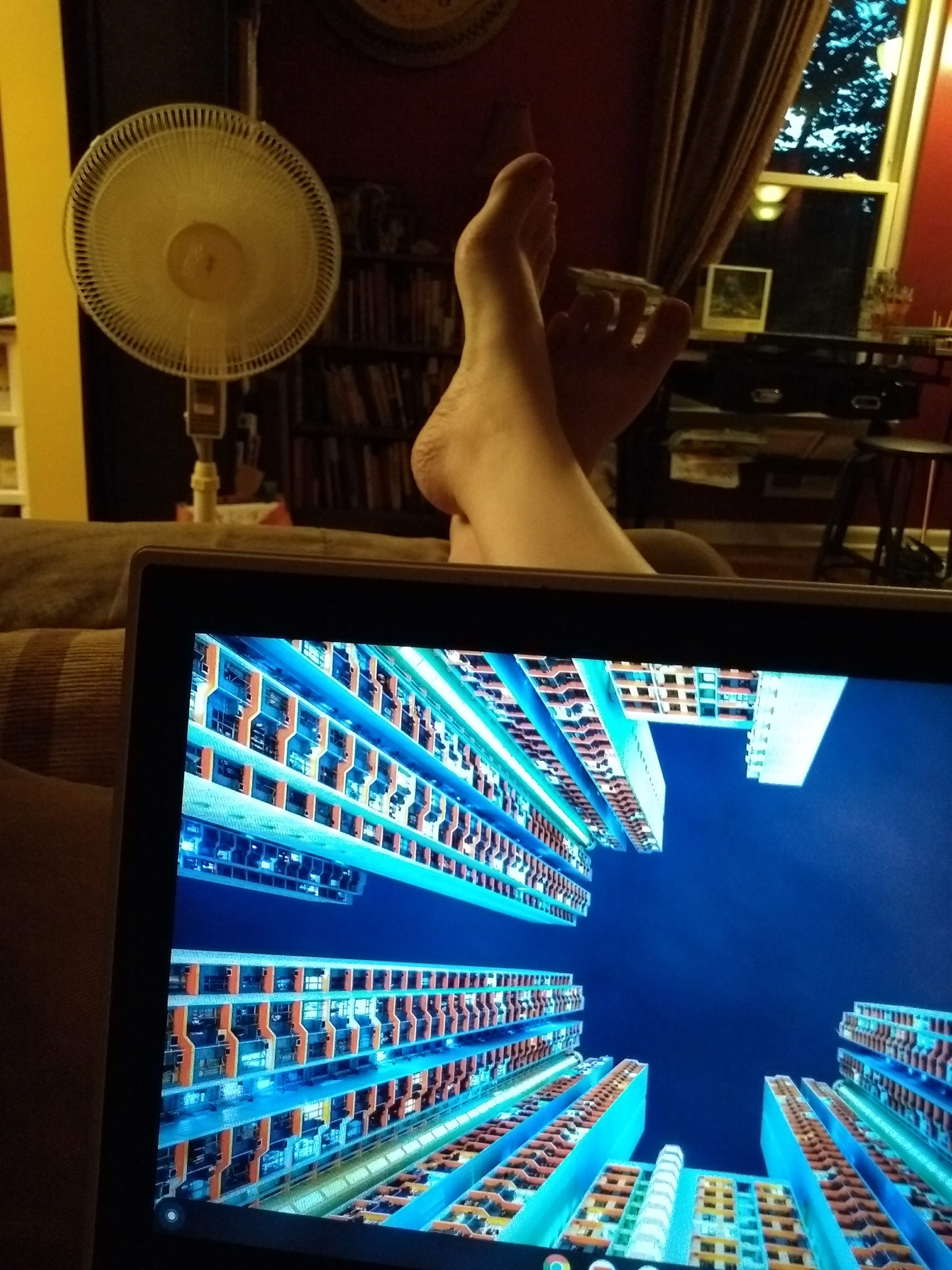
For example, I can try and make you feel the temperature in my house earlier this summer when our air conditioner was broken. I was constantly thinking: how sticky and damp the painted walls felt, how I told the kids if they just want to wear a bathing suit for a few days that would be fine, too, how irritable and unfocused my mind was unless a heavy fan was blowing directly on my face, how it was actually hotter and more humid inside the house than it was outside the house. The patina of malaise was slowly coating the activities of everyday life. I reminded myself that it was going to be fixed, but the constant beads of sweat trickling around my hairline was making me delirious.
So why am I telling you this?
It occurred to me that as my family endured this “house camping” inconvenience that robbed our sleep for several days, I had encountered this “sweaty” feeling before. I have read poems and books that describe the very things I was physically feeling yet with so much more at stake. Families for whom air conditioning is either non-existent or a luxury. The poets and authors described them with such nuance that I felt like I was transported to their open-air houses, packed apartments, or small villages.
Even though us suffering through a few days of grimy sweat is entirely insignificant compared with the poverty and marginalization of those whom I have read, there is still a small sense of overlap. If we have the eyes to see, literature is constantly showing us Venn diagrams — where do we have connection and where do our lives differ?
As a reader, our job is to take those weighty observations and say, “So in light of this… what do the comparisons and contrasts mean for my community, the world, and me?”. As a writer, your job is to keep playing with language and reading your work aloud to see if your words are carrying the sensations you want your reader to feel.

 Maple Key Tutoring