This space is for what the tagline says — just my thoughts on faithfulness in the everyday things in creation. This could be nature, it could be literature, it could be philosophy, it could be some scientific discovery. No rhyme or rhythm. Just thoughts that come from me choosing habit formation right alongside those whom I teach.
I hope anything here inspires others to ponder more deeply on what’s in front of them each day. If something resonates with you, please leave a comment. I’m a big fan of sparked conversations.
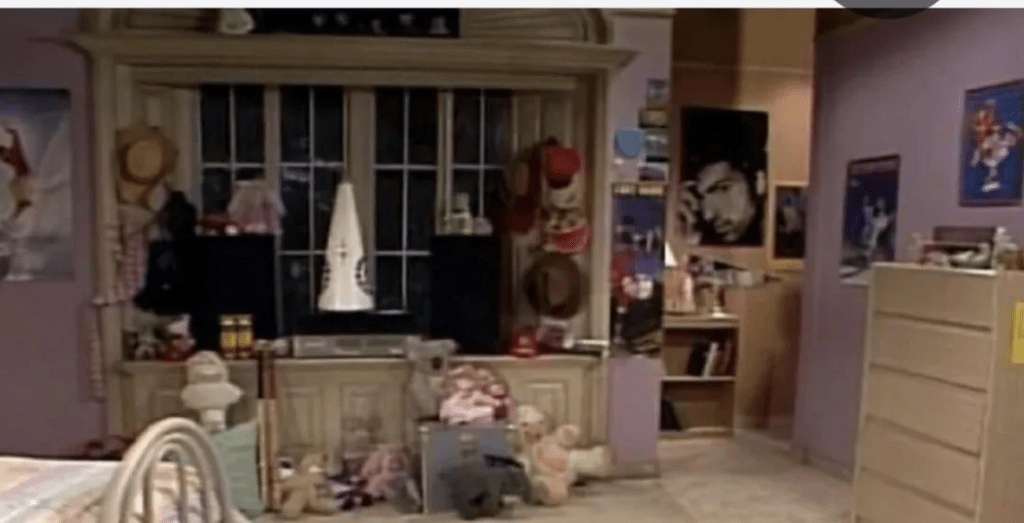
I recently watched a short video where someone pointed out how many popular TV shows of late have been promoting a very clean aesthetic for their characters to live in. Whether it’s an apartment or a house, the scenes look like they plopped the characters into an AirBnB rental (a place where the goal is decidedly for it to feel lifeless and temporary so you can spread your stuff around for a bit). The person pointed out that in the 90’s the aesthetic for things, in movies especially, there was a lot of clutter and attention paid by set designers to make things look lived in. See below: HGTV teen bedroom vs. Kelly Kapowski’s bedroom from Saved by the Bell.
There’s probably a whole different blog post waiting to be written breaking which genre of shows are doing this modern Martha Stewart magazine clean home or what mediums lean more toward it. That’s not what I’m trying to get into here.
Taken at face value, if the “no clutter look” is an actual trend, what does that say about what they are trying to project on to these characters’ lives? My teens would call it minimalist-maxxing. These characters don’t have a favorite trinket passed down from their grandmother on display or a piece of art on their fridge that their niece made them. These characters also must have a scheduled weekly house cleaner, always put things back where they found them, or never live in their home to make it dirty. It’s almost as if the clean space is the only thing that can regulate them. I believe you can have a clean home and still display what matters to you, but these shows seem to be saying something about the actual values and interior lives of the character beyond “clean spaces are good”.
One person put in the comments of the video that perhaps they were doing it to cut down on continuity errors (i.e. having a shot where a soda can was on the table and then next scene it’s magically disappeared because it was shot on another day) to which someone else replied, “My whole life is a continuity error with children! I put a remote down in one room and the next day it has moved to another room.” So true, Mr. Internet Commenter.
That got me thinking about what makes Maple Key Tutoring unique. Every week I, and my tutors, get to visit lived-in homes to discuss big ideas and the everyday-ness of life. I am thankful when I see a few cheerios on that floor that haven’t been swept up. I love seeing a handful of leftover party decorations on the table where the family had a big celebration with friends and family the night before. There are stories behind the mess, stories I get the privilege of hearing and connecting with each week.
It makes me feel like my imperfect life, and a life with a larger family, can be normal.
And judging from the feedback we get from our families, they appreciate the no pressure attitude our tutors come in with. If anything, we give full commiseration with what didn’t get put away or tidied up the way we would have wanted before the demands of the day creep in. That’s what makes our program feel so relational… because it is on every level! Any business can be transactional, but we work hard to steer away from anything other than supporting interdependence. When two of my dear friends unexpectedly passed away within a week of each other this past February, what a blessing to come to a table with crumbs each week and respond with my own crumbs when asked “How are you doing?”.
We need many diverse voices in our lives and the lives of our children and that starts with one untidy household at a time.
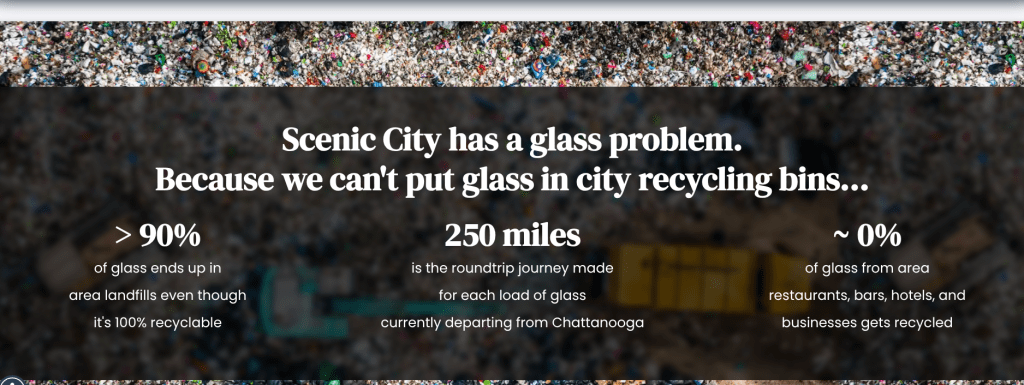
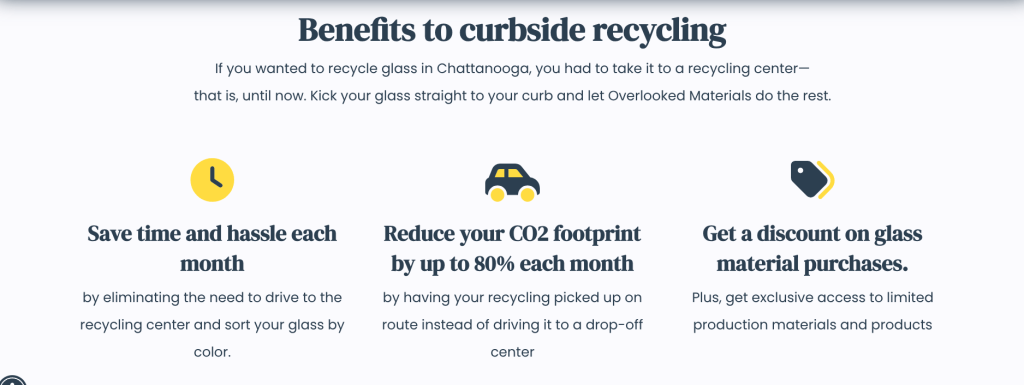
Last year I went to a documentary showing at our library about how we can continue to help reduce waste in our state. One of the things I did not realize is that my own city didn’t recycle glass even though we had a single stream recycling program. So that got me wondering what I ought to do with my glass now that I was aware…
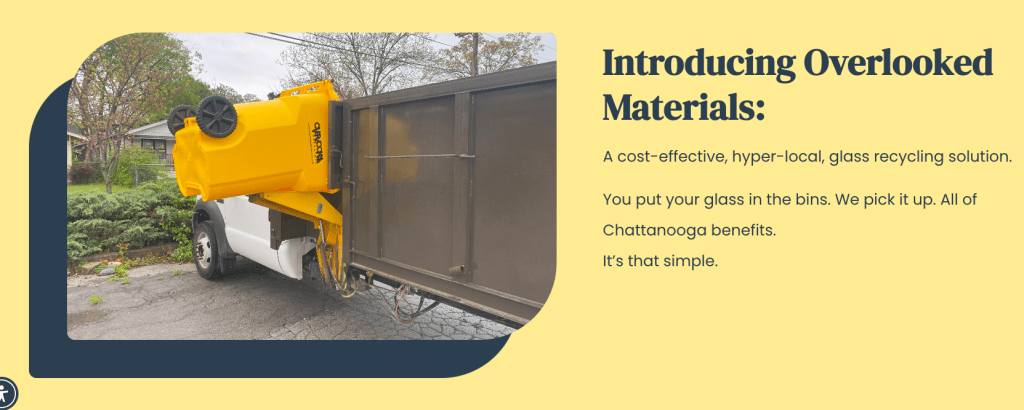
Around the time I realized my city didn’t recycle it, I also found out that the city next to me, Chattanooga, was starting a pilot program to get glass for a local company that would recycle it.
I emailed our city manager and council members about them pursuing the same grant and matching program that Chattanooga did for Overlooked Materials. It didn’t fly, but I am never one to give up on a good cause, so I convinced the library where I work to pioneer the glass recycling service as a part of our new gardening/environmental initiatives. In July, when the new fiscal year starts, we will be a hub for community glass recycling!
What do Overlooked Materials do with their glass? Currently they are innovating with the glass they tumble and grind* and they want the community in on it, too!
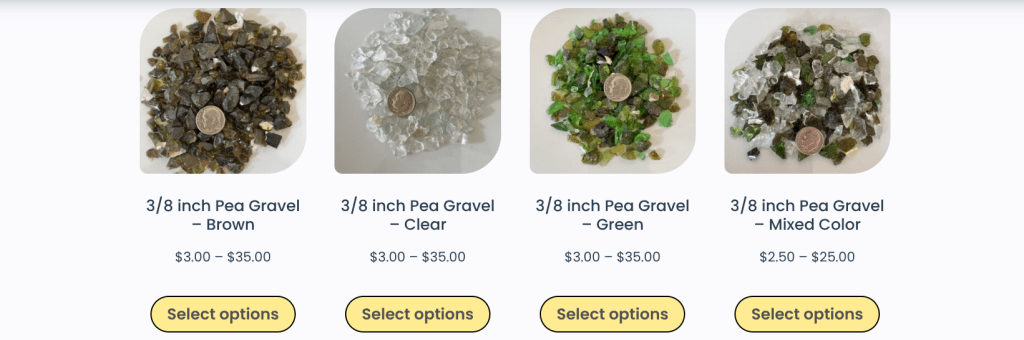
So with a small amount of my grant money, I bought some glass both coarse sand and pea gravel size. Like 50 pounds of them.
I have been using them 2 ways so far with my students and they involve potting indoor plants.
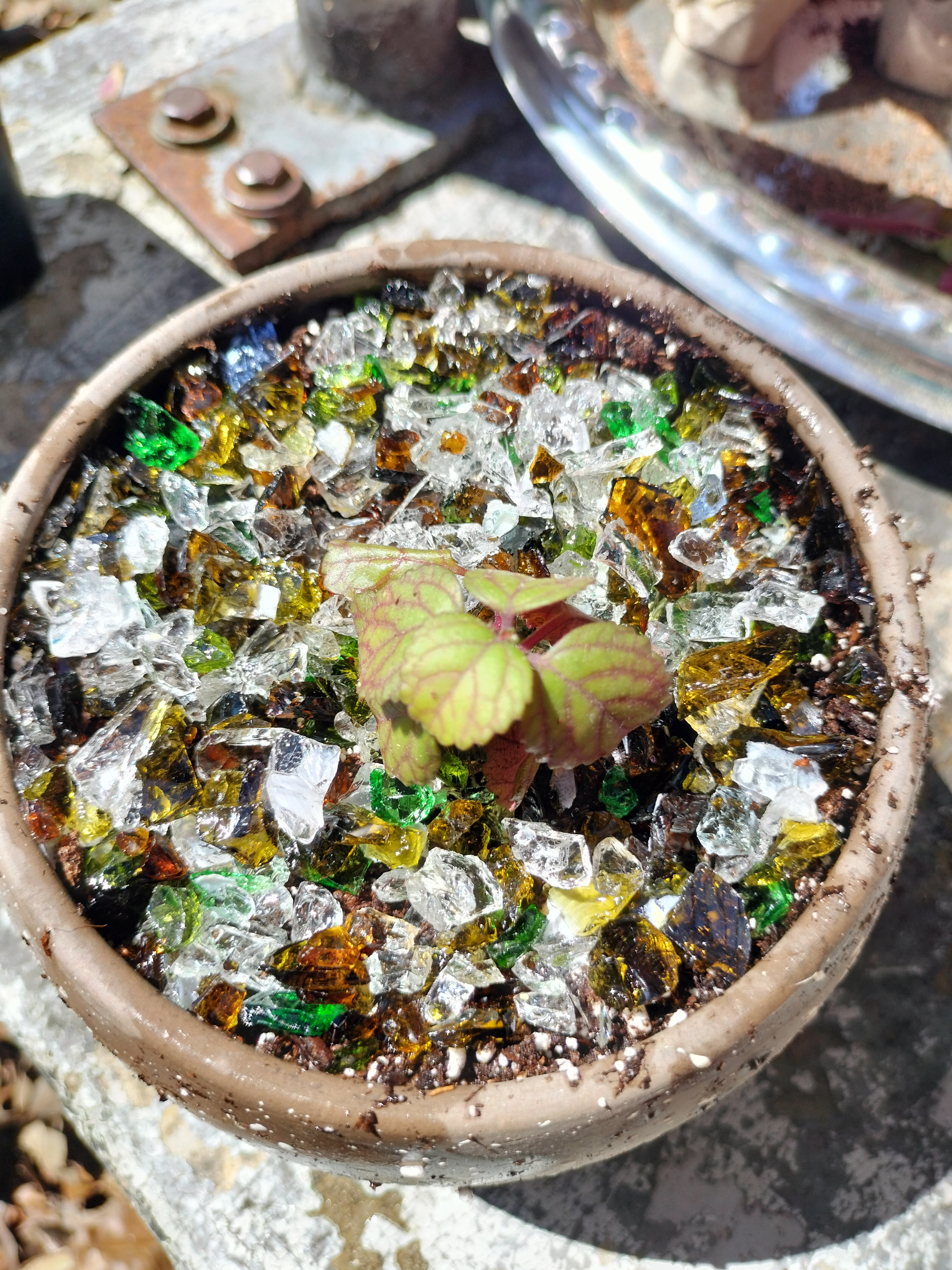
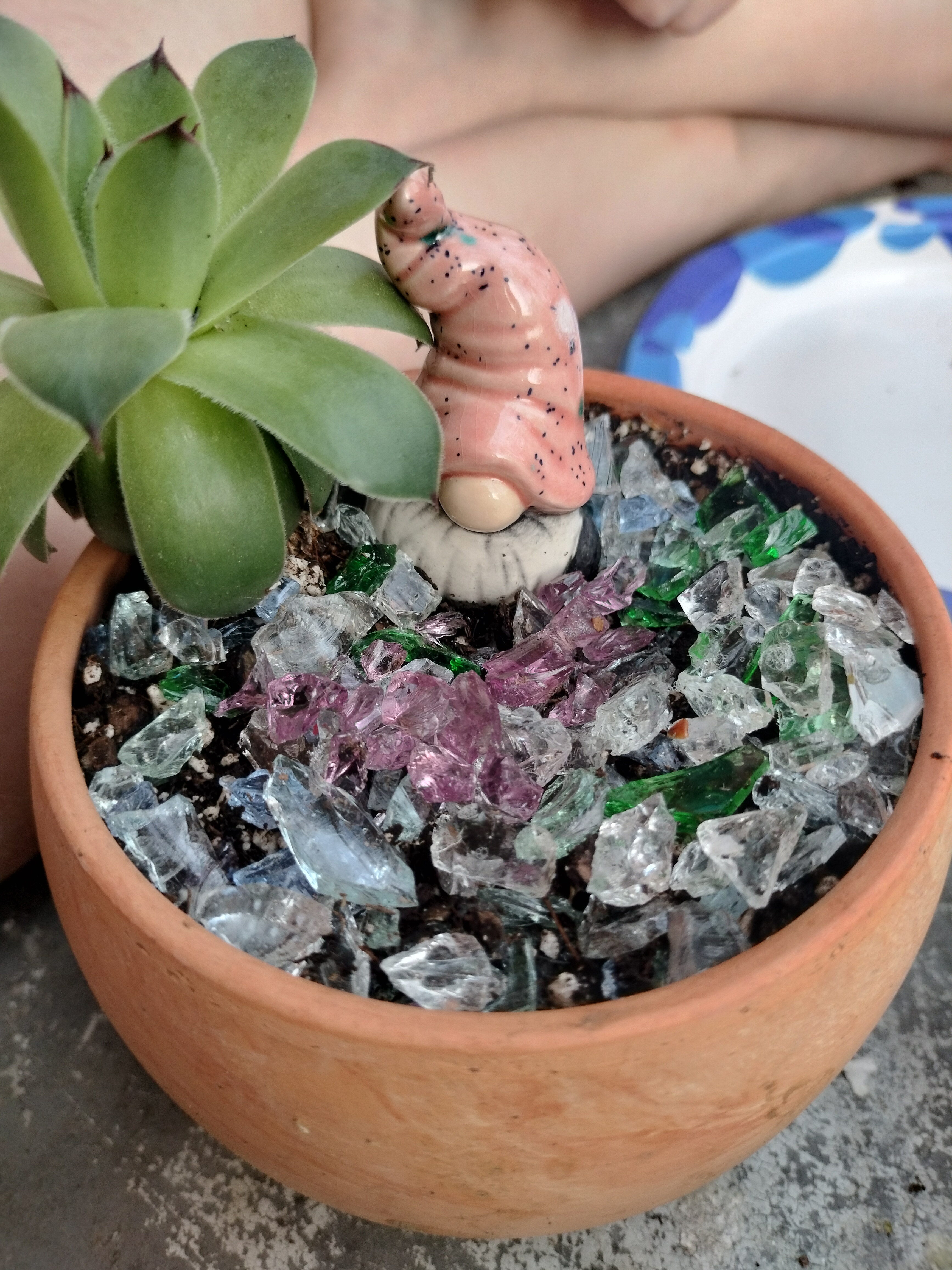
My students brought cuttings from plants they had and we potted them up using soil and coarse ground sand. We topped them off with the pea gravel. This provides silica for the plants and moisture retention. Basically, glass mulch. They had so much fun sorting through the glass like gem mining.
I can’t wait to try more things as I learn more applications, but in the meantime I have given the glass away to students to use in their potted plants at home and I am also fixing up our houseplants the library, too!
If you want the processed glass, you can order on their website in increments of 1 pound to 50 pounds with various glass colors for coarse and pebble sizes. They put your order in a locker and e-mail you the code to come pick it up at your convenience.
A big part of what we focus on at Maple Key is not just making sure we’re taken care of, but that we are looking out for everyone else. Keeping glass out of landfills, helping our soil grow plants, and creating beautiful original art says something about stewardship, us discovering what we were created to do with our time and resources. We are better when we partner together with our communities.
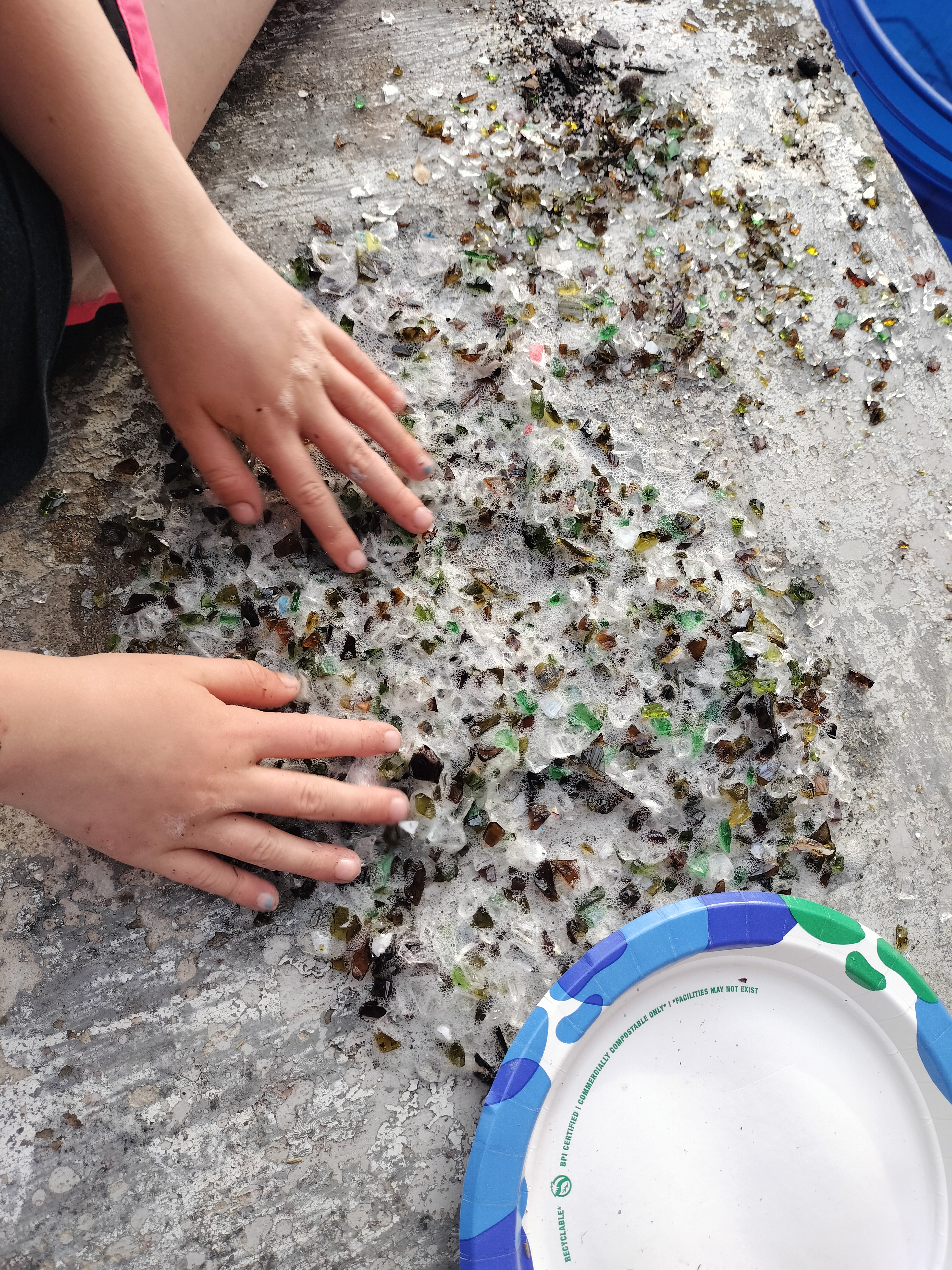
*A side note, when I went to pick up my order I had to go into the warehouse area and they had some GORGEOUS pavers and coasters made with some of the glass. Art + recycling is always wonderful to see. Also, the man working on the pavers told me that he squirts some dish soap in water to rinse the glass and help any paper float to the top. He seemed so excited about the work they were doing!
As many of you know, I am a mostly self-taught gardener. I have experimented with all kinds of things at my home and with my students at the farm. Some of the lessons I have learned over the years from failure and success:
– Kale germinates quickly and can grow just about anywhere. It’s my GOAT green. – My front yard doesn’t get as much direct sunlight as I would like, so sometimes my growing options are limited – My very shady backyard is good for herbs only – Bush beans are my go-to summer plant. They always do well and produce more when you pick them. – Onions and garlic are an easy choice to plant at the farm because they are so low-maintenance and get the sun they need. – Carrots still frustrate me. Such a little success rate for all the videos I have watched!
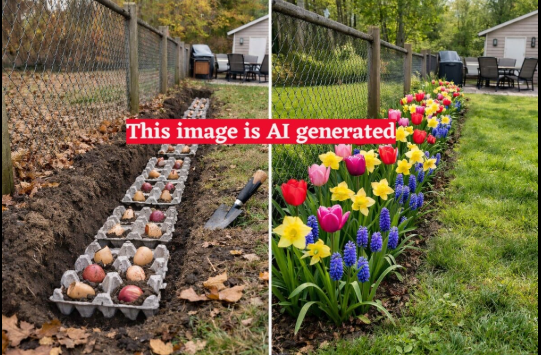
That last one, makes me feel a bit like Captain Ahab, a little obsessed with how I can find that white whale of a resource that will help me grow carrots. By looking on the internet though, I have been increasingly disturbed by the number of videos and images that are clearly AI generated targeted at beginner gardeners. Some of the videos/images are about shortcuts to planting onions, or tulips, or garlic. For instance, one of the most popular ones is about how you can plant a bunch of bulbs by digging a trench, putting the bulbs in egg cartons, and then covering them with dirt. Look at the one below:
This is wrong on a number of levels (same bulb but 3 different varieties of plants?!).
Using the internet is now like having to use daily all the skills I learned from playing spot the difference with side by side images. Did you notice any differences in the one above? (Hint: Look at the patio and the house/shed and you’ll find some).
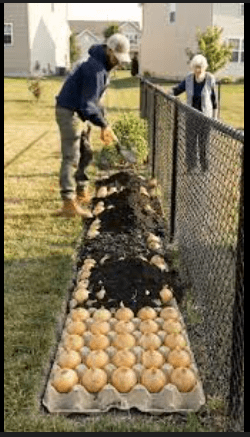
What about this one on planting onions:
THE ONIONS ARE ALREADY FULL GROWN SIZE! Are those egg cartons for ostrich eggs?
So what purpose do these videos serve? My guess is revenue generators on YouTube. The more views, the more $. Unfortunately, these people are only sowing figurative seeds of disinformation, not literal seeds that benefit others. I would hate to see someone get soured on gardening because they spent a lot of money after falling for a short video with no sources instead of, say, asking a tulip grower to explain why they do what they do with their bulbs.
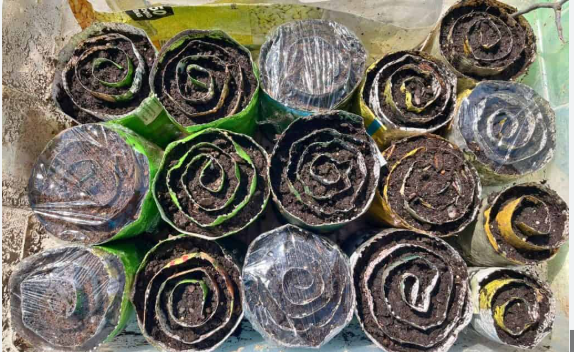
Shortcuts in the garden are great if they actually work and save us labor. A great modern example is seed snails; they are the new trend and some gardeners are seeing really great results. Others find it too messy and fiddly and just keep using trays. There is so much about gardening that just depends on preference and weather conditions.
My hope for you and for my students is that we can all take a crash course in media literacy by discerning what is “Gardenmaxxing” internet garbage and what is actually helpful by getting outside and playing in the dirt ourselves. It’s good to take some low stakes risks based on solid research in order to learn.
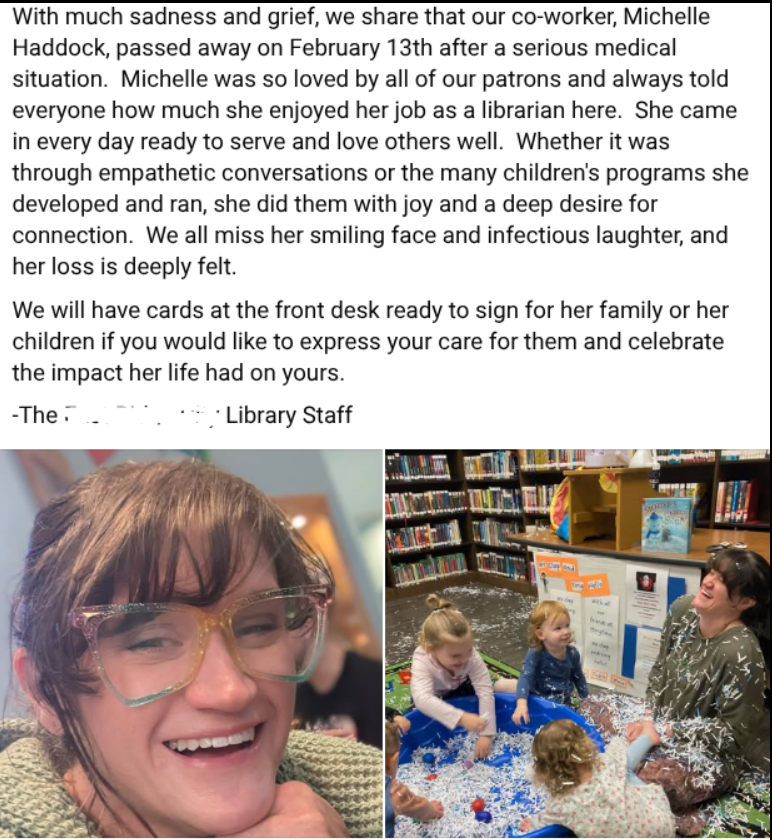
Grief is not a topic I usually write about on this blog, but on February 4th and 13th I lost two very good friends to unexpected medical events. Both were moms in the prime of raising their boys. Two women who genuinely loved working with children and embracing them unconditionally.
The one I wanted to highlight here at Maple Key is our own tutor, Michelle Haddock who passed away after a severe asthma attack. She was able to be with us for the first week on the farm this year and wrote responses to all the students’ journals. She faithfully tutored one of our students in poetry, creative writing, and literature at the downtown library every week and loved her special connection with her.
Before she came to work for Maple Key, we got to know each other through our work at a local small library. I knew Michelle and I were going to be good friends after she was hired when she began talking about all the children’s literature she enjoyed reading. We would chat all the time about the programming we were working on along with all of our visions for the future of the library. She co-wrote the grant we were awarded in order to bring gardening to the library. Every day she had so much joy, knowledge, and humbleness in her spirit that she freely gave to others in her life. The other tutors at Maple Key and the library are still in deep mourning over her encouraging heart no longer being with us.
Here is what the library posted on its Facebook page:
It has been a difficult few weeks figuring out moment by moment how to manage deep feelings of loss while comforting others in the same loss. You just hug, cry, make a meal, write a condolence card, send a text to your other hurting friends and do it all over again the next day. That’s all you can do when you still can’t get your mind around the absence, the loss of what could have been.
Michelle loved to write and read and reflect. Our co-worker remembered she had started a blog to capture some of her greatest joys — her own children. Her post for her oldest son on his birthday beautifully explained her whole heart:
I have continued to fail you, over and over and over again…. and you forgive me, over and over and over again. You have the most resilient and forgiving spirit of any person I have ever met. Perhaps, it is simply because you have no choice. Walking two newbie parents through life requires one to have thick-skin, to survive all their missteps. But what is so precious about your forgiveness, as I watch you extend it to others and feel it given to myself….is that it is done so completely. Once you decide to forgive, the slate is washed clean. My hope for you as you enter this new part of your life- the part where many of the hurts that you will carry through the rest of your life will occur- is that you keep that superpower of yours, to forgive with your whole heart.
My other hope for you is that you will know, that you know, that you know….that you are worthy. I hope that you retain your tender heart. I hope that you keep your fiery spirit. I hope you never, ever forget that you are desperately loved.
Michelle also loved poetry, so I am concluding this post with one of the best of them — Mary Oliver
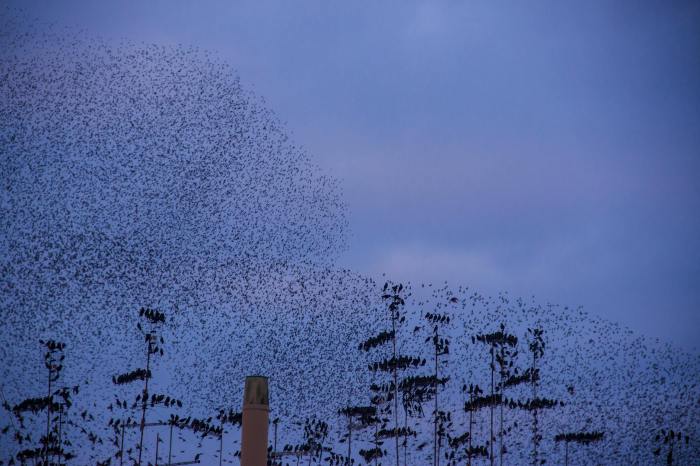
“Starlings in Winter”
by Mary Oliver
Chunky and noisy, but with stars in their black feathers, they spring from the telephone wire and instantly
they are acrobats in the freezing wind. And now, in the theater of air, they swing over buildings,
dipping and rising; they float like one stippled star that opens, becomes for a moment fragmented,
then closes again; and you watch and you try but you simply can’t imagine
how they do it with no articulated instruction, no pause, only the silent confirmation that they are this notable thing,
this wheel of many parts, that can rise and spin over and over again, full of gorgeous life.
Ah, world, what lessons you prepare for us, even in the leafless winter, even in the ashy city. I am thinking now of grief, and of getting past it;
I feel my boots trying to leave the ground, I feel my heart pumping hard. I want
to think again of dangerous and noble things. I want to be light and frolicsome. I want to be improbable beautiful and afraid of nothing, as though I had wings.
With having our largest group ever this year (12 students), we have had to get creative about how we do certain activities. This often means breaking up into smaller groups, but having another tutor there every week makes this possible! Recently, we took two weeks to write a specific kind of poem called a villanelle.
I chose this activity because I had just been to my own local writer’s group where we wrote a villanelle collaboratively (thanks, Olivia!) and I thought this might be an interesting opportunity to do the same thing with my students.
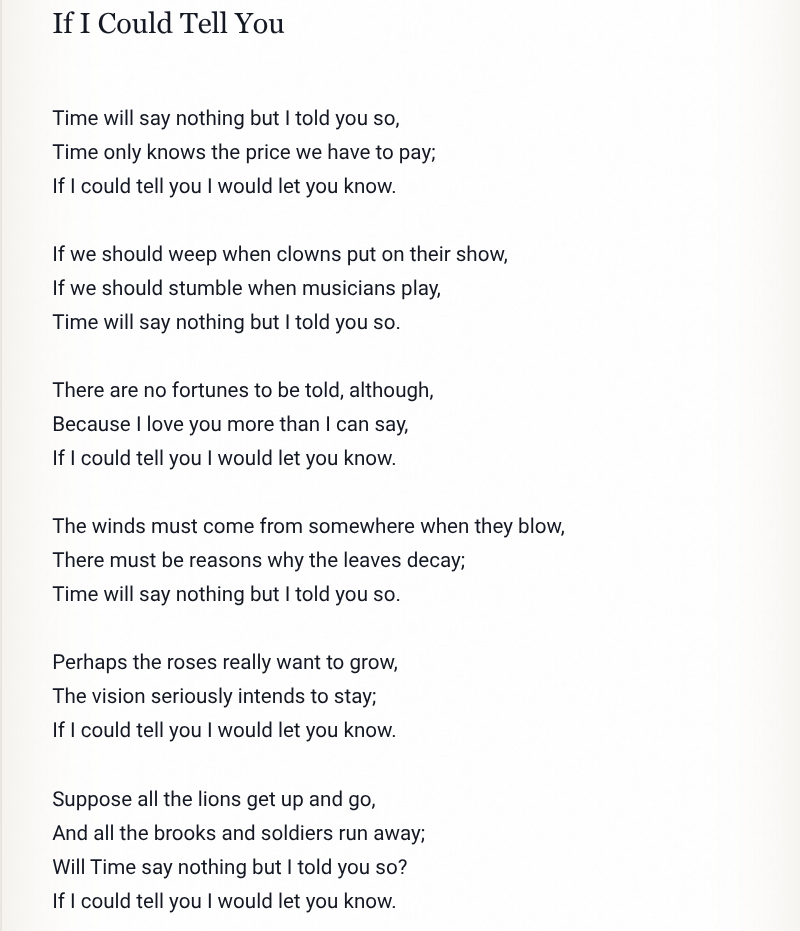
I read them some famous villanelles and then took a line to incorporate from this one by poet W.H. Auden
Each group brainstormed some ideas that would lend to strong imagery and then shared lots of laughter around figuring out rhymes that fit within it. Someone would spit out a line and their group would accept, reject, or rework it until it seemed like it belonged. For middle schoolers, this collaborative effort took a lot of time and patience and was frustrating at times, but it was also so much fun watching us frantically count on our fingers to make sure we had 10 syllables for each line! I love that both poems turned out to be nature related — fireflies and fields.
As leaders, my tutor, Ashley, and I mainly facilitated the students’ ideas, not trying to steer anything in a direction or shoehorn something in, but rather learning with them as a part of the creative process. Here are the results:
Perspectives of Fireflies
Fireflies in the dark forest night glow Why do they flicker with unearthly light? If I could tell you I would let you know
Where’d they go when the world was white with snow Did Winter miss their warm, engulfing light? Fireflies in the dark forest night glow
Spring winds call them with their inviting blow Do flowers push up to call them with might? If I could tell you I would let you know
Lazy summer nights tell them where to go Do their hearts burn with great envy or spite? Fireflies in the dark forest night glow
They dance under the stars with their wee toes When the leaves fall do they dance or do they fight? If I could tell you I would let you know
They swim in the slippery white moonbow Running with silvery, sparkly sprites Fireflies in the dark forest night glow If I could tell you I would let you know
(Currently Untitled)
The vast field where the wildflowers grow Asters, goldenrod whisper with the wind “…If I could tell you I would let you know”
The creek is low as it hums its solo The long stalks of velvety clover bend The vast field where the wildflowers crow
The sparrow sings, its white wingtips it shows The dandelion sways, its seeds it sends “…If I could tell you, I would let you know”
The lone oak, its branches spread, its leaves blow The crickets sing a song that never ends The vast field where the wildflowers flow
13 The creamy clouds drift across the sky, slow 14 The orange sunset and the horizon blend 15 “…If I could tell you, I’d let you know…”
16 Horses whinny, feeling free, letting go 17 Sweet silence and secrets they will not lend 18 The vast field where wildflowers sow 19 “…If I could tell you, I’d let you know”
We are all searching in a way Sometimes you don’t even know it We are all yearning for something And we don’t know how to get it
We search and search for Just.one.thing Love. That simple little word Just one syllable
Yet it is more important Than any other word So, my friends There is one thing in life
That you must do. Give love It’s simple really Just make your corner of the world better
From time to time I will feature student work here on the blog (always with their permission). Belle is working on an original poetry collection this year. She started with some poetry prompts, but she has been writing her own poetry for a while before being given those. Belle is an avid reader and it comes through in her writing projects and poetry. She has an ear for what hits the right note and reads her work aloud with such poetic precision. I love working with students like Belle who are in full control of their writing — opinions, edits, revisions. I take a big back seat and let her tell me where she wants her writing to go. I sincerely hope she works as an author, poet, book editor, or in book acquisitions someday. She has the drive and skill to do it!
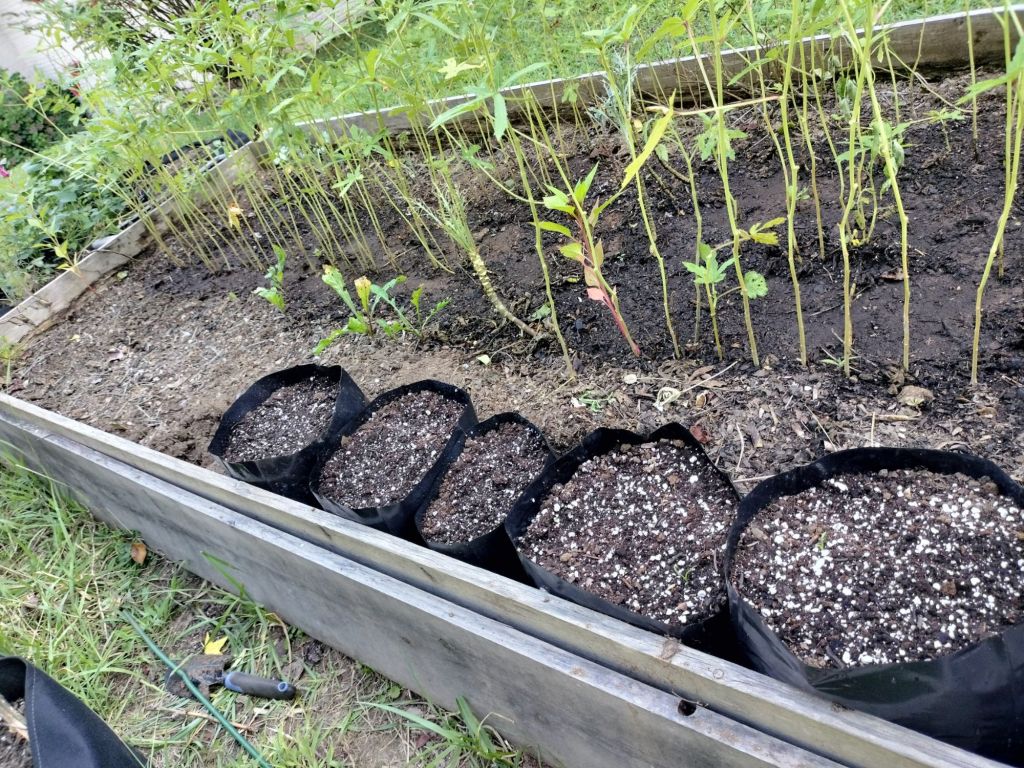
The raised bed at my house has been frustrating me. Each season I keep amending the soil only to find it going back to root balls and compact soil. This fall I have decided I have agency, and am going to completely redo the bed…into containers.
Normally, I wouldn’t go through the hassle since I have so little margin already with my time, but a fortuitous (but also sad) thing happened this month — our local horticulture supply store decided to close its doors forever and mark everything 50 percent off. So I went a little crazy (more on that in a minute) and one of the purchases was something I had never tried before — very inexpensive grow bags that have holes pre-punched in the bottom.
I bought them in various gallon sizes and while I also obviously plan to use them for Maple Key, I have other places I can share the love of gardening such as the library I work at or the homeschool tutorial my children go to.
As you can see, I am still growing spindly, but producing okra right now, so I am doing the bed bit by bit. I am taking the compact, dusty soil (that’s partly my bad!) and putting it in a paint bucket, adding homemade compost and vermiculite to provide nutrients, good bacteria, and aeration for the soil. Then, I dish it back out in each bag.
I really think this is going to be much easier to manage than what I had been doing and it’s just one more reminder that you can always change what you’re doing in gardening if it’s not working for you! Nothing about gardening is locked in, so do what’s best for your season of life and environment.
Now onto my big purchase…!
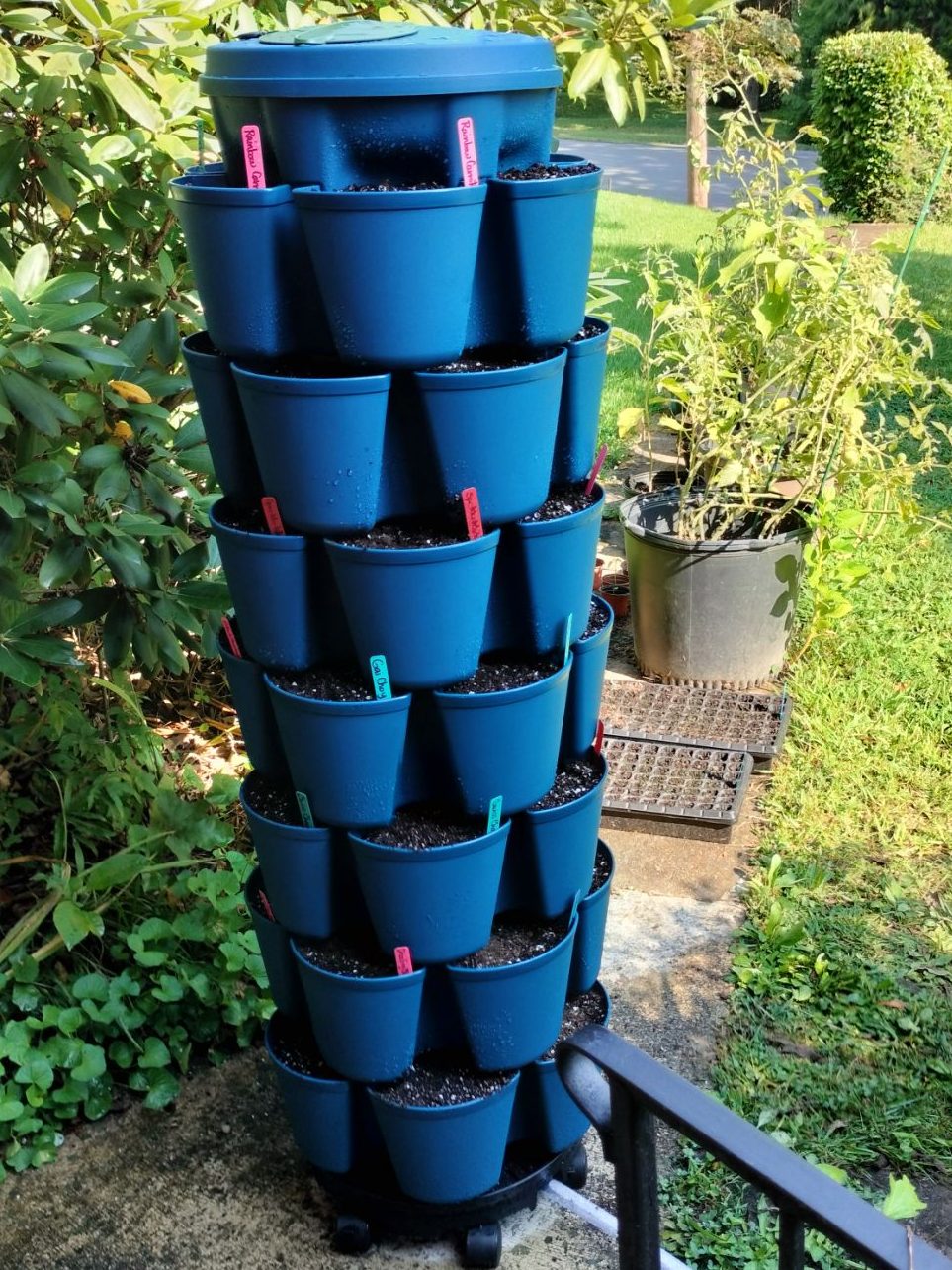
The other big change I am trying this year (again, thanks to the going-out-of-business sale) is vertical gardening. I bought a GreenStalk 7 tier planter with a bottom spinner! I was already excited about it (less pests, less bending down, right outside the door), but then I found out they are a local-to-Tennessee business, just up the road in Knoxville. That made me proud that this innovative, family-owned business is exporting such a great product all over the world! I even convinced my friend to buy a matching one with me and my mom to buy the 5 tier design, so we’re all planning for some great fall harvests.
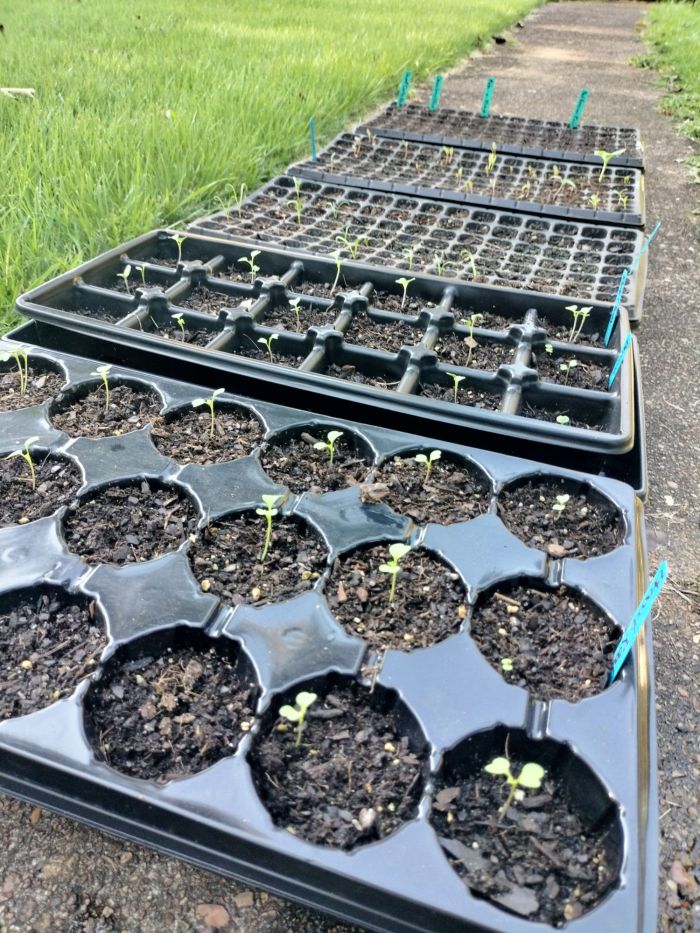
After spending the money on the planter and the ProMix soil, I didn’t want to shell out for plants, so I started everything from seed. So far, the kale, spinach, bush beans, and radishes have all popped up and I am sure the others will, too at some point. This is another great experiment that I am hoping to bring to the library (so we can start our own library gardening programs) and the farm to add to our growing list of trials to see what grows!
Honestly, it’s great to have jobs that all tie into each other in some way, so that when I do good work over in one area, another one benefits from the new knowledge! At the library we are currently applying for a $1000 grant to get GreenStalk vertical gardens for the library so that we can make gardening accessible to all age ranges and demographics — children, elderly, differently abled.
I can’t wait to talk to Maple Key students about my new way of playing and planning in the garden that supplements what we’re doing in the traditional garden beds. My hope is to inspire them with even more things to put in their bag of gardening tricks for when they desire to start their own gardens. I want them to always carry a sense of play, have fun, learn new things 🙂
Tonight I sat down with my daughters at the dining room table preparing my heart to paint with my new watercolor set. I finally made the upgrade to watercolors in tube form instead of pre-made palette cubes. I got out two used palettes from the art table and realized that they had old paint in it from my daughter’s school and one new, completely blank palette that my husband planned to use. This posed an obstacle to my painting desires.
With the old palettes, they needed to be cleaned out to put new colors down. With my husband’s I had to choose which 20 colors I wanted to fill in the slots when I had 36 colors to choose from (including metallics!). In other words, I had to do the leg work of making decisions and preparing the palettes before I ever set down to do anything on the page.
Long story short, I never got around to doing anything other than adding some bronze highlights to something I had already painted because I was so tired from all the prep.
I saw this painting situation as a metaphor for administrative work. I had already spent hours earlier this morning working on contracts for tutors and getting dates lined up for events that aren’t even happening until close to the school year starting, but it involved salaries and per hour math, stipends, and the like so I had to make sure all the right names and amounts were listed on the documents. After the hours I spent glued to my computer, it felt like my summer with my girls was already dwindling away and it just started, though I knew logically there was still much free time to be had.
When you own your own business, administration is a part of the job even when you’d rather play or rest more. Intentionality is so much of what Maple Key does in every corner of the program and it shows through. A business doesn’t work if you show up and enable great things, but manage it poorly (Trust me, I have several doctor office stories to share on that front). So every year we try in small ways to work smarter, not harder. This year I am incorporating a task management component to doing work to keep me doing bite size chunks instead of being overwhelmed and communicate even better to others about what is expected in terms of deadlines.
Administration is hard to monetize. Most people don’t factor that in when considering the value of something. When my husband got his first job in the home office of an international missions organization, he said they never had enough donors willing to give to administration. Many sent gifts for a specific program they heard about overseas and demanded that 100% of it go to that country — the humdrum, behind-the-scenes work in an office building wasn’t compelling; however, the organization tried year after year to make people understand that the home office was vital to the organization’s health and existence.
This is the pep talk I must give myself –administration has a high, often unseen value — when I want to “have administered” instead of actually doing the “administrating”.
“Hey! I have an idea for our tutoring time I’d really like to do today,” said my student as I sat down at her dining room table.
“Sure! What did you have in mind?” I said, waiting for a fun surprise.
“Next week is our last week together with the group and I wanted to write a poem for each of the girls who are graduating or leaving.”
“That sounds like a great idea,” I responded. “Let’s see how we want to go about doing that.”
So we sat at the table and gave her one example she could draw from if she chose. I showed her what I wrote for one of the graduating students to share in front of the other parents and students .
If I could give out an award for bravery, it would be all yours. You came into Maple Key last school year mere weeks after moving here to TN from your whole world in CA. As we listened to tales of your new life, your new house and new animals, it always made me wonder, “How is she handling all these new changes so well?” You came in each week willing to jump right in for gardening, watercolor, or a good laugh. If someone were looking in from the outside, they would have never known that you hadn’t lived here long or been a part of our group for years because you embraced your new life here. This year you rallied all the girls together not only to go to the middle school dance, but for you all to get ready together. The stories that came from that event – both anxious and hilarious – might not have happened if you hadn’t assured them that there would be something for everyone.
One of the things I admire about you is that you don’t let setbacks get in your way because you believe there is a great big world out there for you to delight in and discover. I have seen time and time again, if you don’t know how to do something you always find a way to learn and adapt. If something annoys you, you have the self awareness to acknowledge it but don’t hold a grudge against the situation. You have a true entrepreneurial spirit, a jack of all trades who will be in high demand for whatever she sets her sights on in the future. But most of all, you are the kind, gentle big sister we needed this year.
I told her that I would take these paragraphs and make it into a poem so she could see how I pulled out adjectives and ideas from what I wrote and included other things I knew about the student she was writing about.
A Long Journey
You did it: – The plane rides that made you anxious – Embracing a new set of friends – Training new animals – Becoming a DIYer
You are filled with: – laughter – leadership – love – delight – dreams – discovery
You share tales of your old life, as it tries to blend in with the new – Gnarly -Smoothies -Sunshine – Goats – Horses – Gardening
You always find a way to learn and adapt You are the kind, gentle big sister we all needed this year
As I said, I just made that poem up on the spot, not trying to overthink any particular line. The point was not for my poem to shine, but for her to see a way forward as she visualized the person she was writing about and play around with form. Just that 5 minute little exercise gave her a boost to finish up her own inspired creative endeavor after I left.
When the time came, I was so anxious to hear what she had come up with! This 7th grader read her poems in front of the other students and parents with confidence. One of the students graduating was her older sister and when she shared the title “Trailblazer”, the waterworks were coming from many eyes in the room.
What a joy it is to be a part of that facilitation process where students’ ideas are incorporated and they can assess their own and others’ growth over time. Goodbyes are always hard at the end of the year, but seeing students leave with hearts and minds full and younger students ready for another year of inspiration in August certainly helps ease the transition of hugs and tears.
Friendships and Feuds: Learning to See Past Beefs in Strawberry Girl
We all have that friend that is complicated. The friend that is hard to deal with but not an enemy, just one you don’t get along with all the time. Friendships are not something that you should take for granted, they are something to be cherished and well loved. Some people can be hard to understand but once you get the feel of them you can see what they are like. In the book Strawberry Girl, two kids, Shoestring Slater and Birdie Boyer, share this kind of friendship. They are not friends all of the time, but they will come to one another if they need something. The two kids have very different backgrounds, one came from Carolina and the other already from Florida, where the story is set. They learn to be friends because their families are so different and because they are honest with each other as well as being literal neighbors and schoolmates.
Though the Boyers and Slaters are neighbors, they have very contrasting lifestyles. The Boyers have a lot of land and hard working animals and good, healthy children. The Slaters have less land, less food for their family, and they have animals who get less attention, therefore are less tame. The Boyers are polite and well looked upon because of their kindness to others. The Slaters are looked down upon because they are poor (we see Mr. Slater spending most of the little money they earn on alcohol). Also several of them (but not all) are obnoxious and rowdy. The fact that Shoestring is not like the rest of his family, being more sensitive and caring, he understands the Boyers more. He trusts Birdie and that makes it a lot easier for them to be friends. Birdie also trusts in Shoestring even if she doesn’t always trust his family.
The first day Birdie went to school, she got a bad impression of the Slaters. Shoestring’s brothers attacked the teacher and that made Birdie more fearful of them. The brothers acted out of their shame, like most bullies do. Shoestring is different from his brothers because he does not have as much pride, but he also does not like to be looked down upon either. It seems like he is able to be a different person at school versus the pressure he feels to be like his dishonest father at home. At school he uses his literal name, Jefferson Davis Slater, instead of Shoestring, indicating he is different than his family. He wants to try and change things for the Slaters and sees the Boyers as perhaps a “new start”, even when his father forbids him to help them various times in the book. For instance, he still chooses to reach out to Birdie to tell her about the pliers in his father’s back pocket that he will use to cut the Boyer’s fence.
Later in the book, Birdie is proud to introduce Shoestring to the teacher, Mrs. Dunnaway, because he is different from his scary, bullying brothers. He assures his frightened teacher that he is not here to fight, but “come to git book-larnin’” (189). He shows more compassion and pays closer attention to his feelings than his family. She is not ashamed to be Shoestring’s friend and defends him because she has had experience with his capabilities. She tells Mrs. Dunnaway, ”But Shoestring…I mean, Jeff’s different!…He ain’t rough and wild like Gus and Joe!” (190).
Even though they are good friends they can have conflicting feelings and they don’t always have the same point of view. This actually makes their friendship stronger. After Mr. Boyer chops off the top of Slater’s hog’s ear, Shoestring comes to warn Birdie as an act of friendship, but as a son still strongly defends his family. “Iffen your Pa don’t leave our hogs alone, Pa means what he says: he’ll git him yet! I just come over to tell you” (50). Birdie says, “her voice bitter with scorn” that Mr. Slater is being a coward by sending his son to be his messenger (51). After their shouting match they realized they didn’t want their Dad to get their guns out and escalate the situation. “Birdie thought for awhile. This was a surprise. It looked as if Shoestring didn’t want trouble any more that she did” (51).
At the candy pulling event Birdie is looking to have fun, but she gets partnered with Shoestring who “was glum as if he were at a funeral” (88). Birdie wants to play with those who are able to enjoy the day and she has dismissive thoughts about Shoestring and his family even as he is trying to tell her why he’s upset. He trusts her and cares for her family enough to share his father’s malicious plots with her. Shoestring sees her as someone who is trusting, one of the few who can at times see past their poverty and his Dad’s foolish decisions. Birdie is always inviting the Slaters to events and to their house both because she has taken a liking to the Slater sisters and sees them as needing help. Thus, Birdie’s experience as an older sister helps her naturally take care of Shoestring’s younger sisters and his mother. She understands what they need and this dynamic helps strengthen the bond between her and Shoestring.
We all have complicated friends, but to make the friendship work or not work it “takes two to tango”. Birdie and Shoestring both really want to be friends with each other and believe that the other person has their best interest in mind even when they raise their voices to each other. They don’t leave their problems hanging; they hash it out. They protect each other around their own family, they are honest with each other and defend each other. Strawberry Girl shows that two people from different places can become friends and trust one another by overcoming family differences and personality differences. Birdie and Shoestring provide a role model friendship for readers to experience.
Works Cited Page
Lenski, Lois. Strawberry Girl. J. B. Lippincott & Co. 1945.
From time to time I will feature student work here on the blog (always with their permission). Emma and I worked on this essay in our 2024/2025 tutoring time after finishing Strawberry Girl by Lois Lenski. After given a list of options, she gravitated toward the themes around friendship. We brainstormed some contrast and comparisons and the paper was finished in about a month. Emma’s passionate voice and thoughtfulness really comes through in this paper and it’s no wonder because she herself is a loyal, welcoming friend. Taking a book written 80 years ago and infusing its meaning with modern eyes while keeping the integrity of the text is phenomenal for a 7th grader, and Emma pulled it off wonderfully. We also laughed at the title for the paper she came up with for 5 minutes after looking at thesaurus for conflict!