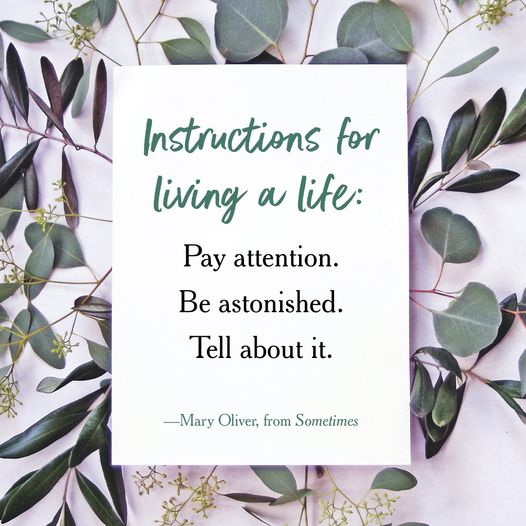
If you’ve never read Mary Oliver’s poetry, you’re missing out on the sublime. I can say this because for most of my life I haven’t been a patient person with poetry. I don’t recall it being taught to me with joy, often only purpose and meaning. I thought it always needed to steep in my mind for it to be worthy of consideration. The economy of words it required made me feel insecure about forming a decent interpretation. I hate admitting that. I feel the weight of guilt — literature majors are supposed to have an innate love of the word in all forms, right? It wasn’t until I understood that poetry could simply be approached with delight (as opposed to only seeking joy in the clever meaning or rhythm) that things started to change course. I thought and taught differently.
Enter Mary Oliver. She just passed away in 2019 and was eulogized like this:
“Mary Oliver isn’t a difficult poet,” Franklin says. “Her work is incredibly accessible, and I think that’s what makes her so beloved by so many people. It doesn’t feel like you have to take a seminar in order to understand Mary Oliver’s poetry. She’s speaking directly to you as a human being.”
Oliver told NPR that simplicity was important to her. “Poetry, to be understood, must be clear,” she said. “It mustn’t be fancy. I have the feeling that a lot of poets writing now, they sort of tap dance through it. I always feel that whatever isn’t necessary should not be in the poem.”
Oliver’s world is simultaneously whimsical and serious without melodrama. Her collection called Dog Songs could be read to all ages and guaranteed to produce more than a few tears of joy and grief. I started reading these poems with the Maple Key girls and the anticipation is high on which of Mary’s canines we will have the pleasure of meeting next week.
God bless you, Mary. If somebody had told me about you when I taught high school, I would have read you every day to my class. The world is a bit sadder without your wholehearted presence speaking to our tender souls.

 Maple Key Tutoring