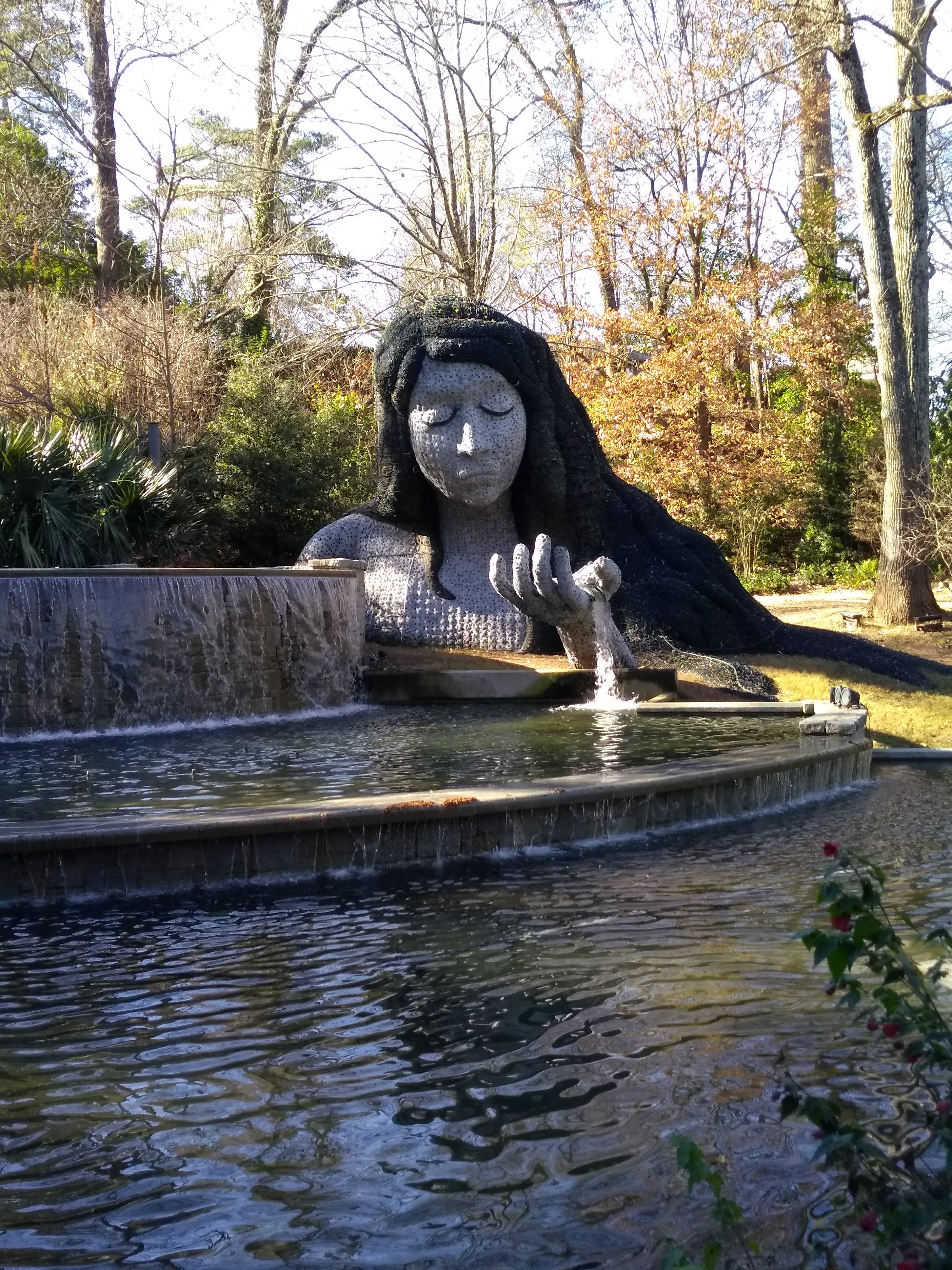
One way I encourage families to keep a family culture of being outdoors is through a “hack” we learned about several years ago — reciprocal memberships. Where we are in Chattanooga, we have access to a place called Reflection Riding which is a member of the American Horticultural Society. This association allows its members access to any other affiliated gardens on their list for a discounted price or usually FREE. Financially speaking, it’s a no brainer to join. Here’s some math:
Visit Atlanta Botanical Gardens once = $126 for our family of 6
Family membership to Reflection Riding = $70 AND we can go to any of the 330+ gardens for discount or free.
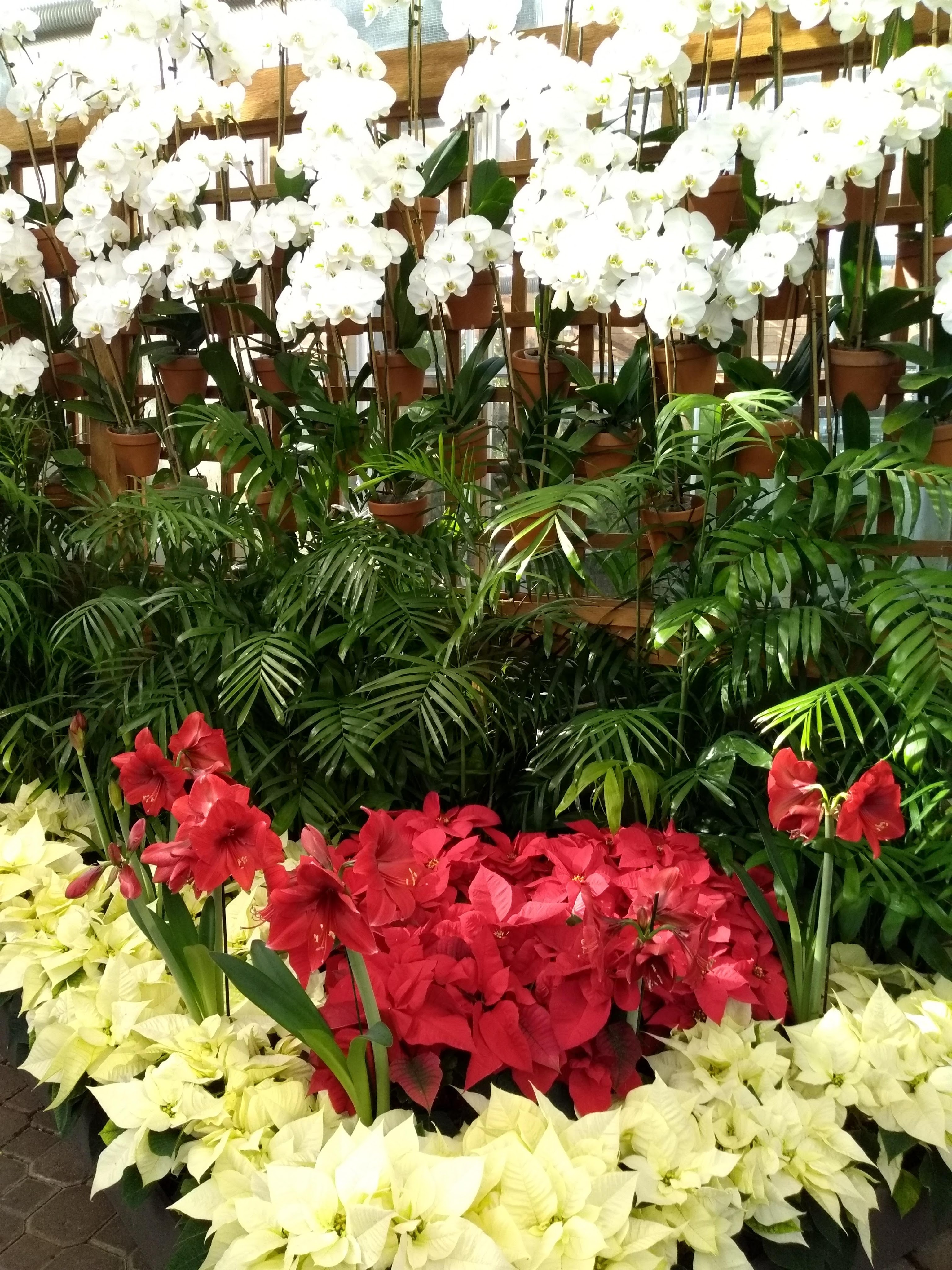
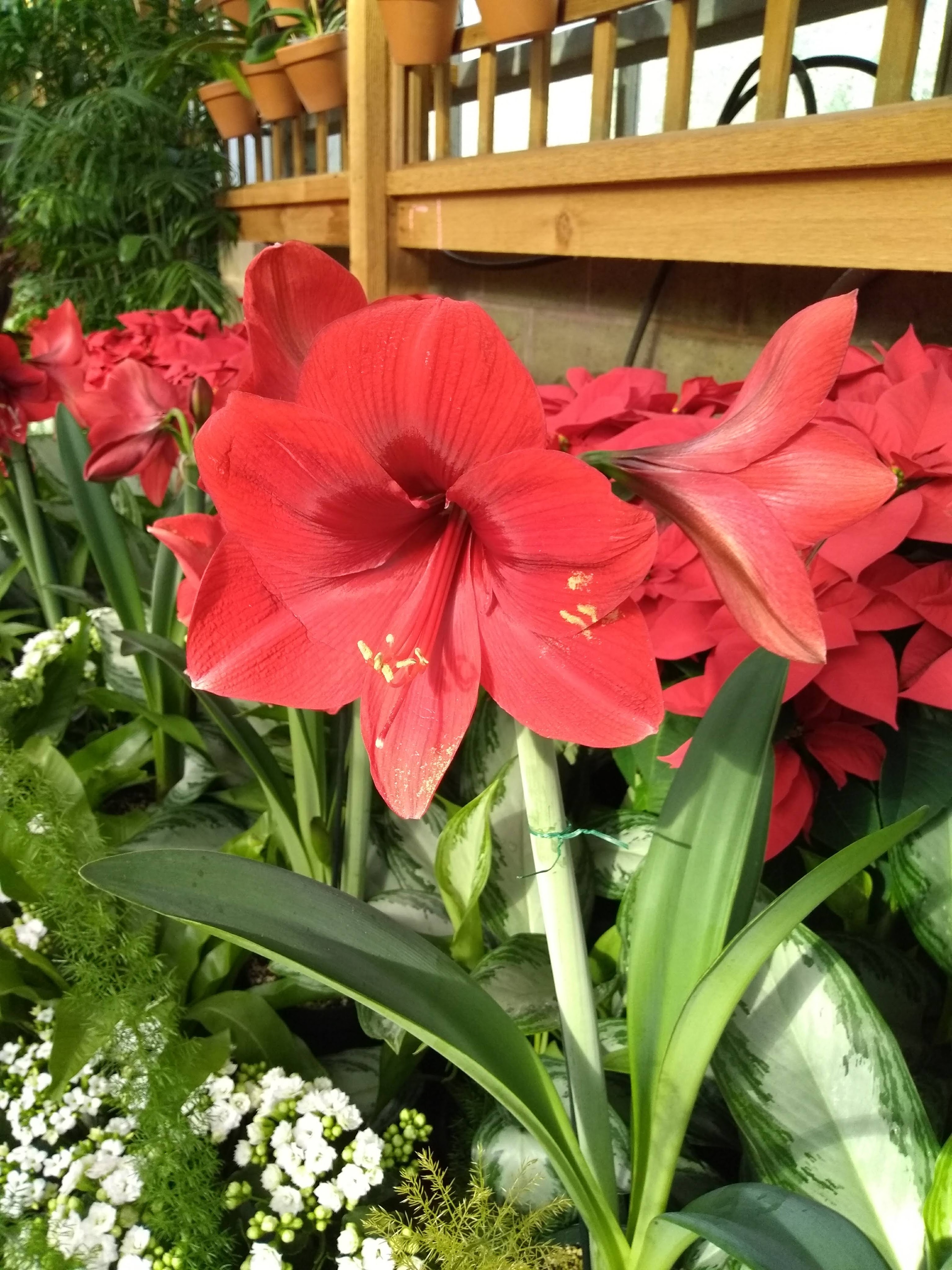
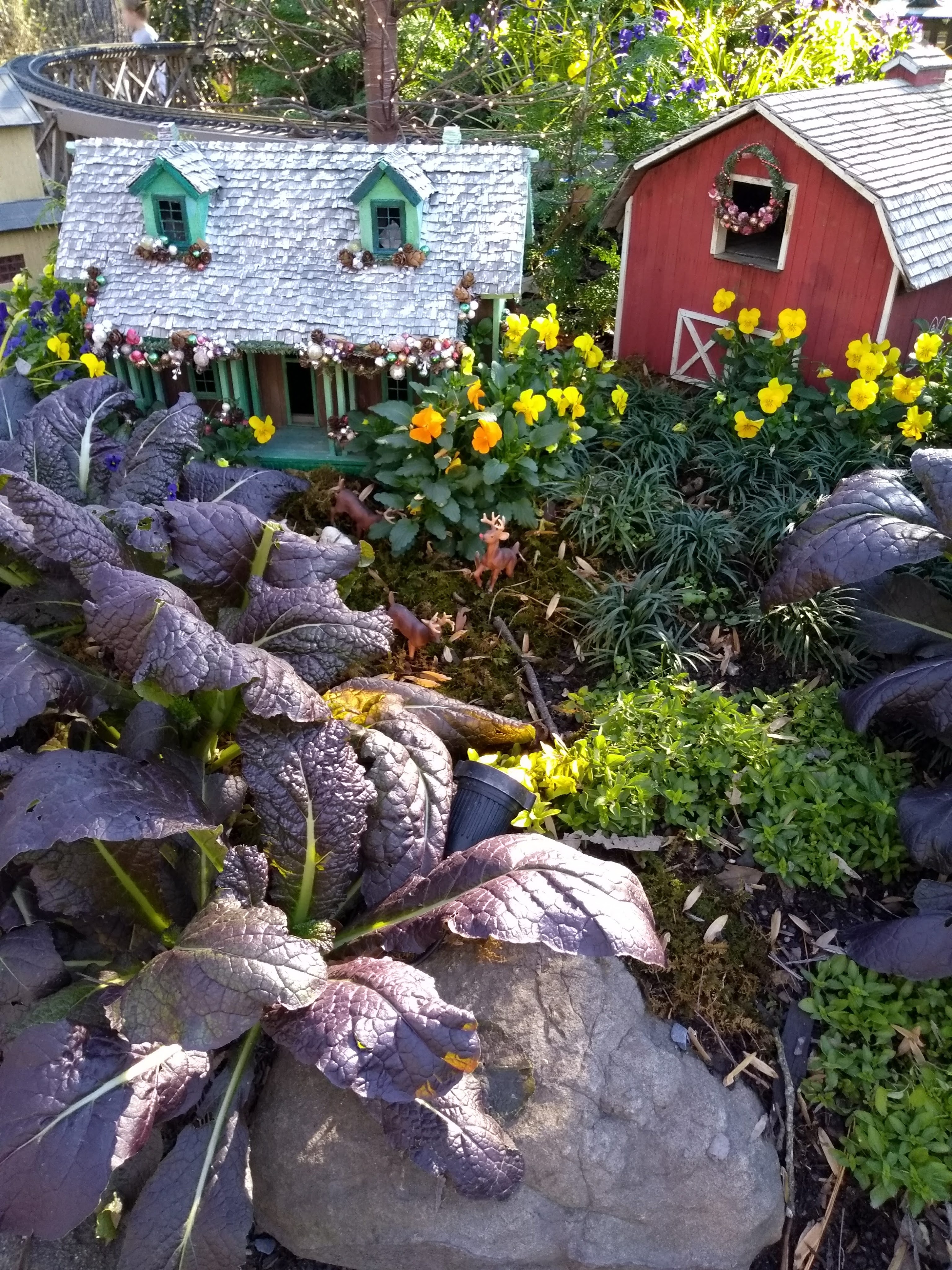
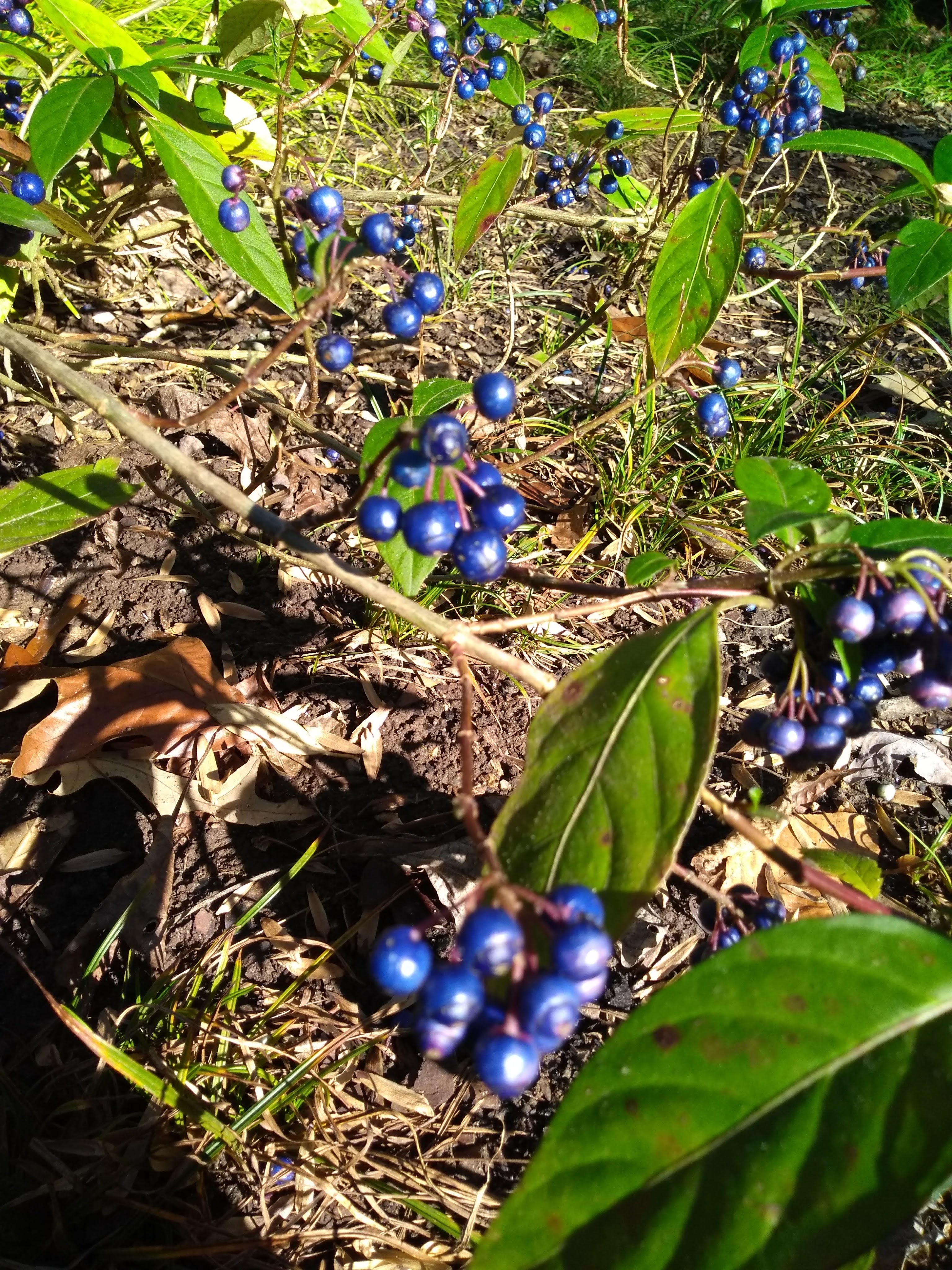
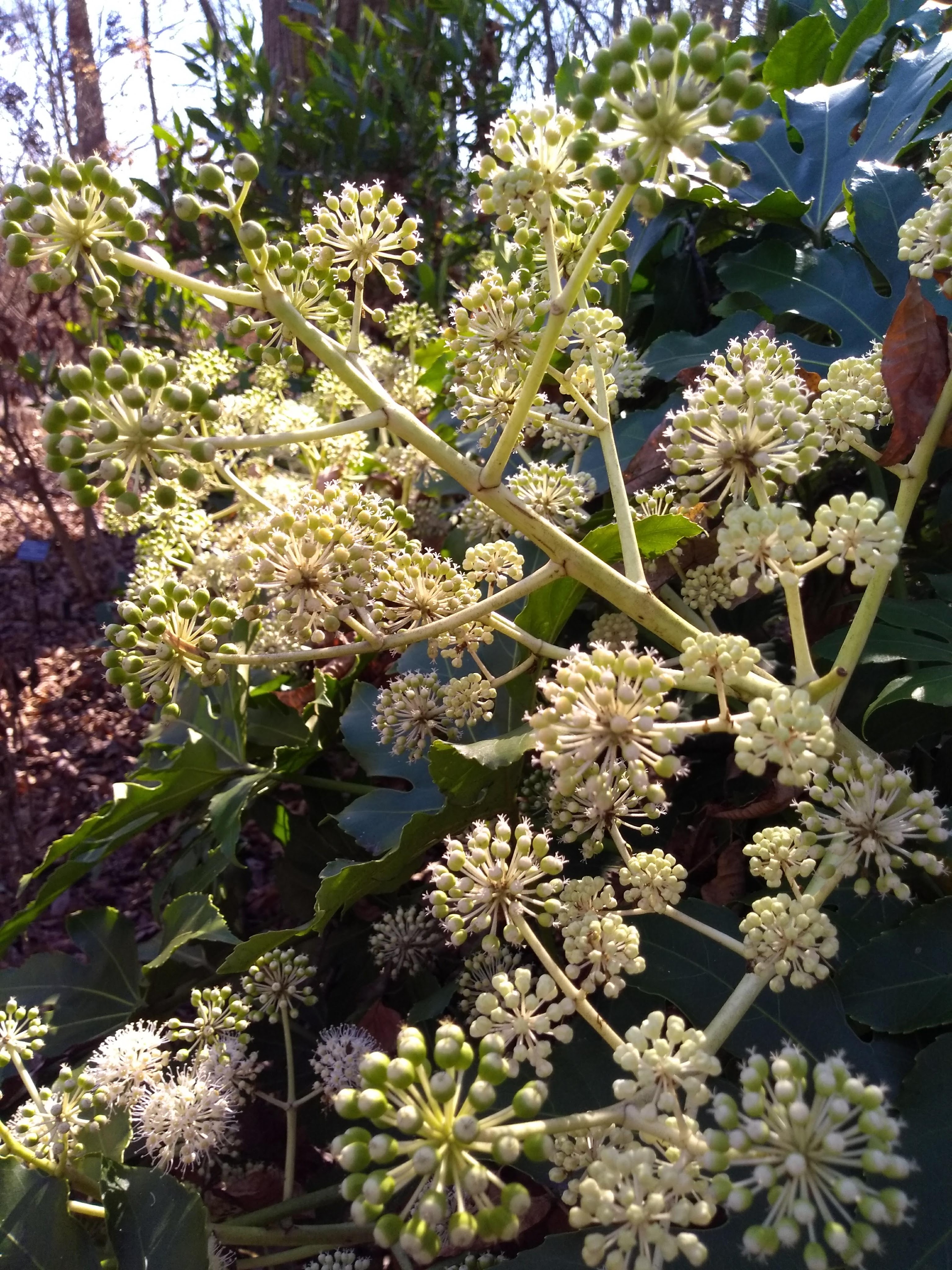
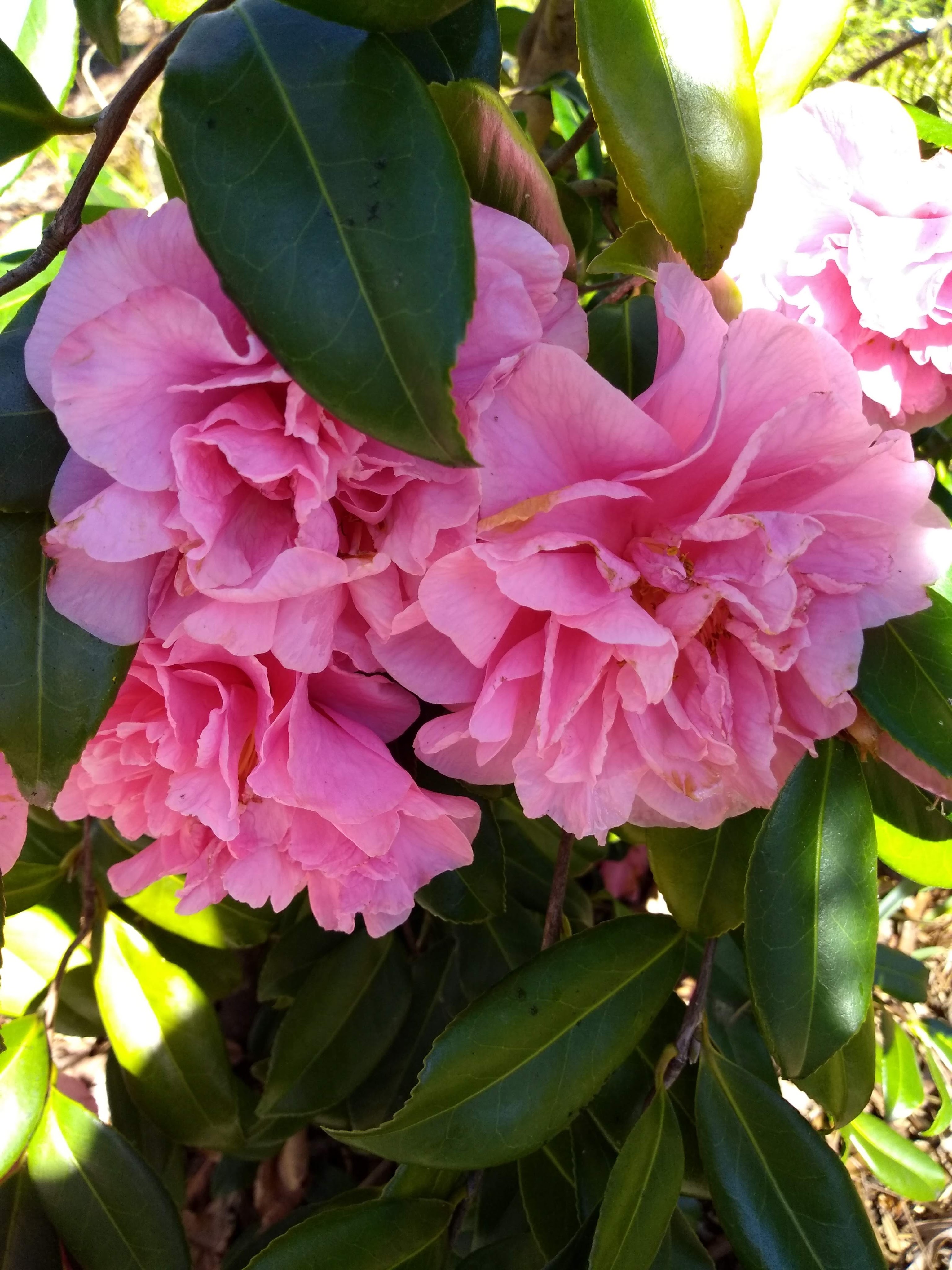
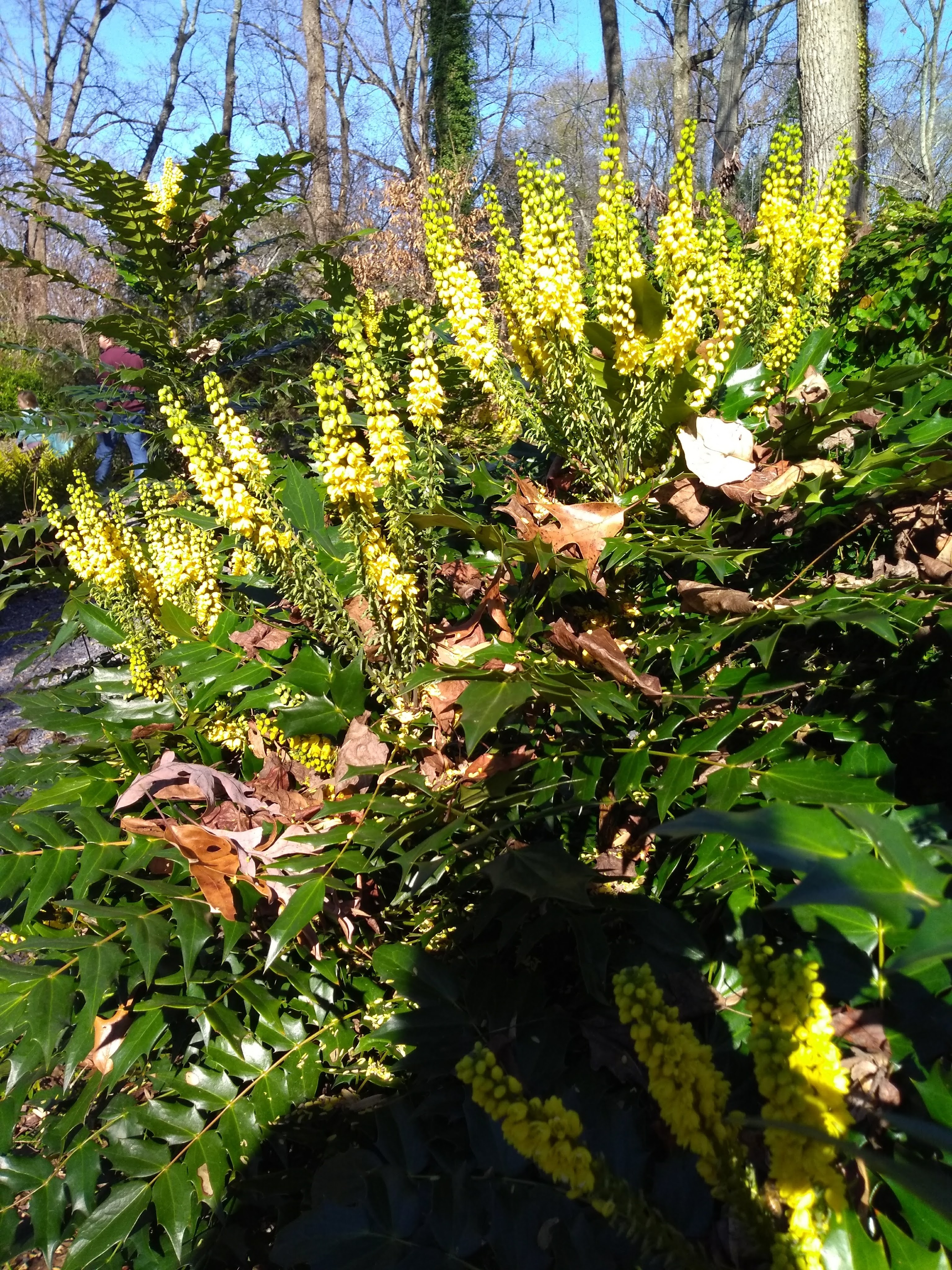
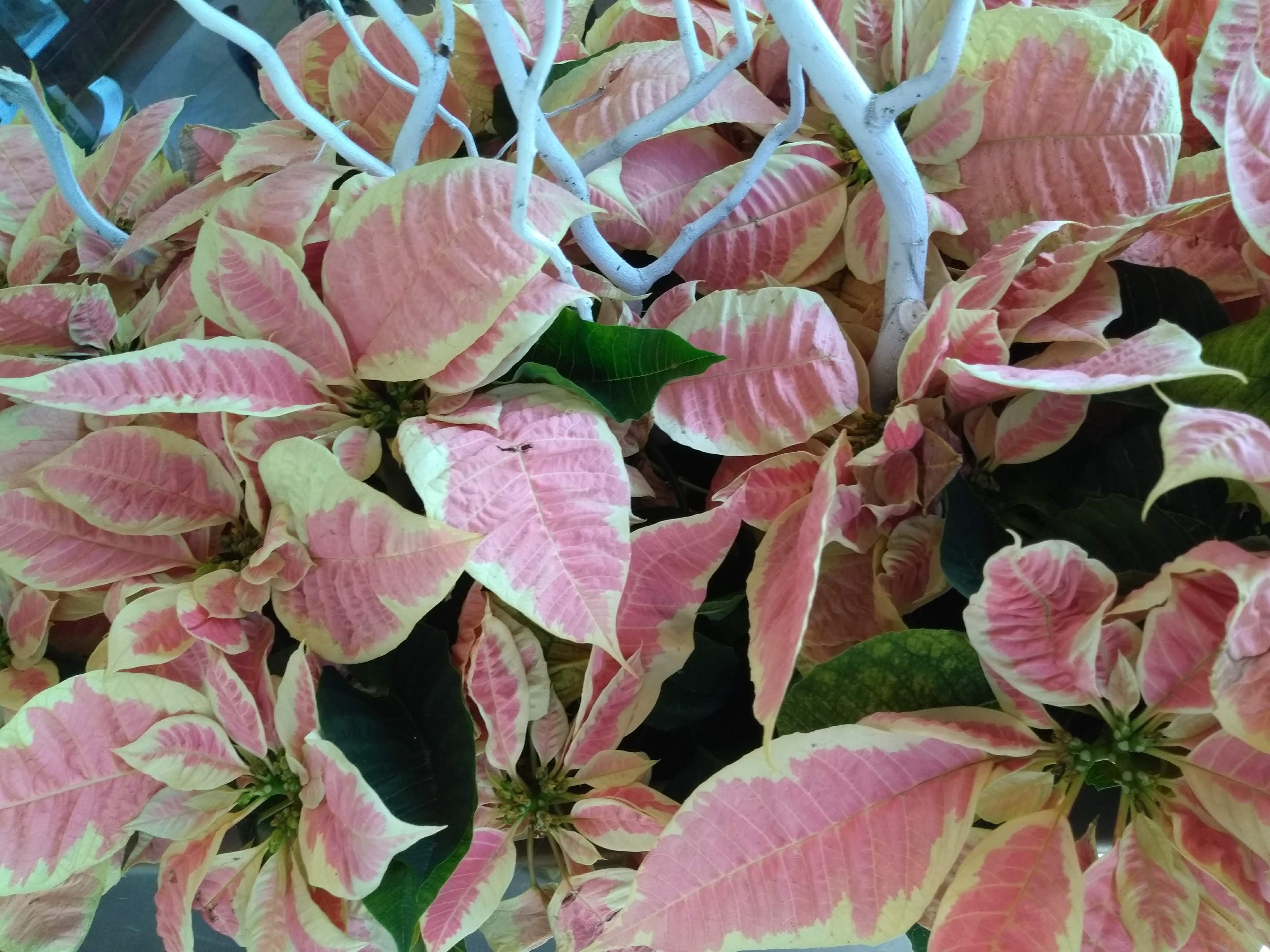
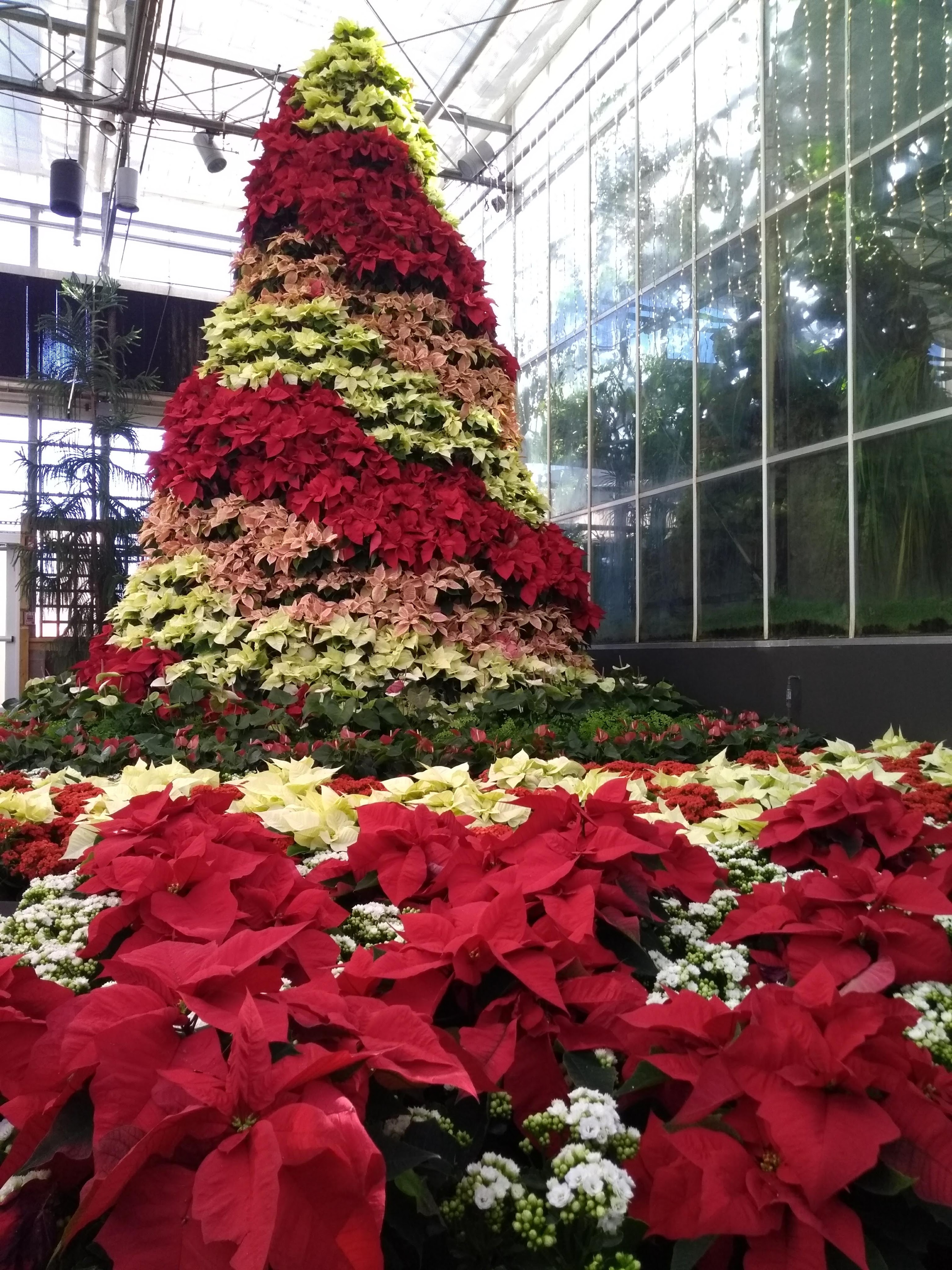
If you have access to gardens that offers these benefits, take advantage of them for you and your family, especially in the winter season when you might be less encouraged to be outdoors. Sometimes you get a surprise like we did yesterday, having a beautiful day in the upper 50’s. In addition, some places have greenhouses year round. Seeing how they will decorate the poinsettia tree (see below) is one of the highlights of the winter break for us. Actually, it might be the largest reason we created the tradition of going every year right before Christmas!
Displays at the Atlanta Botanical greenhouse never get old!
This is by no means an exhaustive list of my 2021 reads, but since it is getting close to the start of a new year (presumably when people make resolutions to read more widely), I will pick a handful that I think are worth your time. They are listed in no particular order.
Everything Sad Is Untrue by Daniel Nayeri
Finding Langston by Lesa Ransome-Cline
What Happened to You? Conversations on Trauma, Resilience, and Healing by Dr. Bruce Perry and Oprah Winfrey
Skunk and Badger by Amy Timberlake
Where Stars are Scattered by Victori Jamieson and Omar Mohamed
Disability and the Church: A Vision for Diversity and Inclusion by Lamar Hardwick
Jacksonland: President Andrew Jackson, Cherokee Chief John Ross, and a Great American Land Grab by Steve Inskeep
Prayer in the Night: For Those Who Work or Watch or Weep by Tish Harrison Warren
On the Spectrum: Autism, Faith, and the Gifts of Neurodiversity by Daniel Bowman, Jr.
Talking Back to Purity Culture by Rachel Joy Welcher
Dog Songs and A Thousand Mornings by Mary Oliver
Wintering: The Power of Rest and Retreat in Difficult Times by Katherine May
The Children of Men by P.D. James
This Too Shall Last by K.J. Ramsey
The Warmth of Other Suns by Isabel Wilkeron
Farewell To Manzanar: A True Story of Japanese American Experience During and After the World War II Internment by Jeanne Wakatsuki Houston
Turning of Days : Lessons from Nature, Season, and Spirit by Hannah Anderson
The Sum of Us: What Racism Costs Everyone and How We Can Prosper Together by Heather McGhee
It could have been my imagination, but the air felt much more biting on the walk home from church at noon. In my mind, the day should always promise more warmth as the hours go by, not less. We walked anyway.
Walking to and from church is a normal occurrence for our family. We pass the apartment buildings behind our home, the local cemetery, the Methodist church, the title pawn shop. Then we cross the busy four lane road (which has no crosswalk), past the used tire store on one side and emergency service vehicles on the other. The final stretch is the row of homeowners, their various and sundry yard ornaments, and curious yappy dogs.
Today, however, the walk was a bit blustery even for our usual dogged determination for exercise and insistence on the children being more pedestrian (in all uses of the word) than they would normally care to be. Despite having to cross the traffic-filled street together at lunchtime, the route is very close to a straight line from point A to point B, so none of our children could ever get lost. Even the three year old knows to walk on the correct side of the road at all times, but we still have varying paces. My husband’s lumbering 6’3″ stride is not the same as my impatient I-feel-like-I-had-3-cups-of-coffee-already stride, nor is it the same as our preschooler whose inconsistent stride is always based on her whims.
So being vigilant, but still several paces ahead so as to encourage our 3 year old to reach the warmth of our home faster, I suddenly saw her stop on the side of the road and shriek with delight. What could have caused this burst of exuberance in such a chilly climb up the hill?
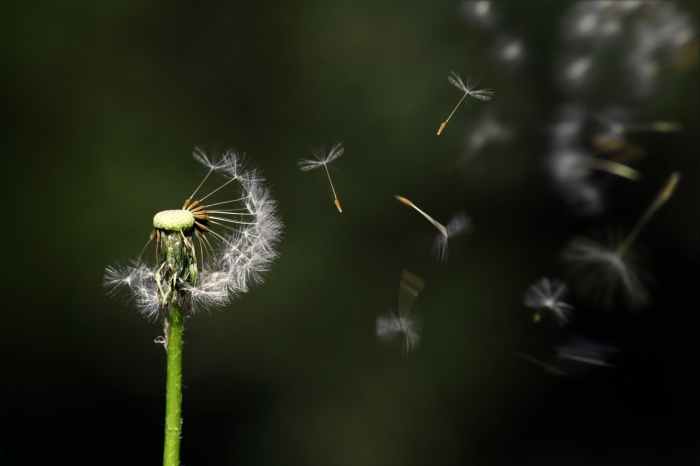
She found a lone dandelion.
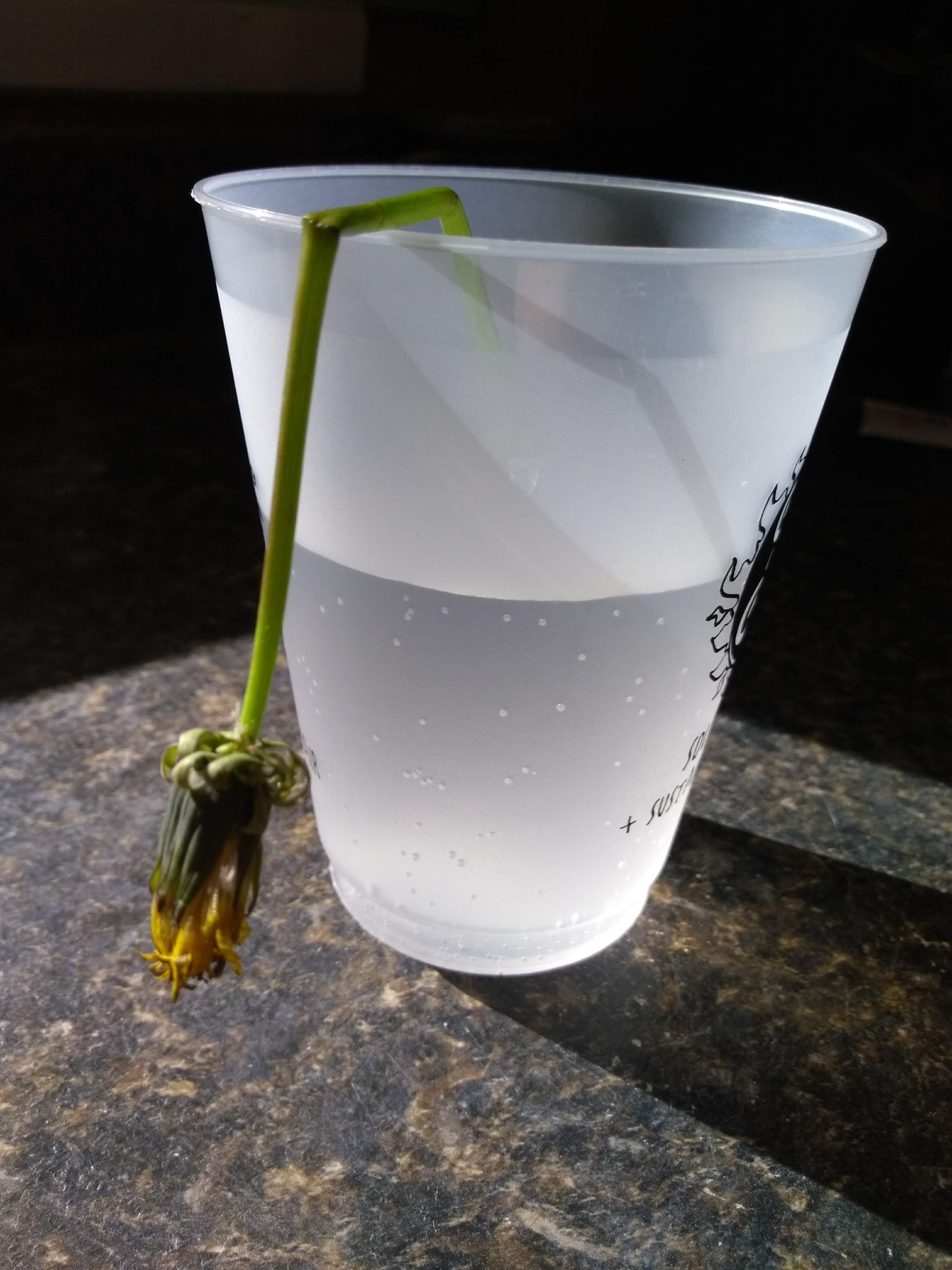
Being so low to the ground, a burst of sunniest yellow had caught her eye amidst the dull and dark browns while the rest of us just motored on past so we could reach our destination. She laughed so naturally as she picked it for me to put in my coat pocket. Once inside, I started talking with my husband and getting out the leftovers to heat up for lunch, forgetting all about the flower. Out of the corner of my eye I saw our daughter filling up a clear plastic cup half full of water from the fridge.
“No, that’s too much for you to drink. You need to get a straw and then take it to the table.”
Frustrated in being redirected and misunderstood she said plainly, “No, it’s for the flower, Mommy!”
She hadn’t forgotten it.
I don’t know if her instinct to give the flower water came from watching her 7 year old sister do this all year round with “shot glass bouquets” from the yard or if she just knows that flowers need water to even have a chance at surviving in a house. She wasn’t thinking about how quickly it would wither once brought inside; she wanted to preserve and share the beauty of God’s creation as best as she knew how. Either way, her exceeding childish joy and loving care for something we older people ignore or pull up as a nuisance gave me a needed opportunity to reflect on the Lord’s Day.
“Consider how the wildflowers grow: They don’t labor or spin thread. Yet I tell you, not even Solomon in all his splendor was adorned like one of these! If that’s how God clothes the grass, which is in the field today and is thrown into the furnace tomorrow, how much more will He do for you—you of little faith?” Matthew 6:27-28 (HCSB)
My husband reminded me that this passage from the Sermon on the Mount is actually a meditation on the first commandment, where Jesus tells His listeners that in God there is no need for worry because He is the provider. The Greek in verse 27 essentially translates into “be discipled by this flower”. In our age of instant and easy answers, how strange it is to be taught how to orient your life by a plant. And yet that is what I was called to on the roadside — to notice that He is still giving me an opportunity to push out distraction and comfort to see His wonder and provision that was so evident to my little girl. Being outdoors with my children is a constant reminder that I am too addicted to the illusion of self-sufficiency and far too rational to seize moments of discipleship that have been there all along.
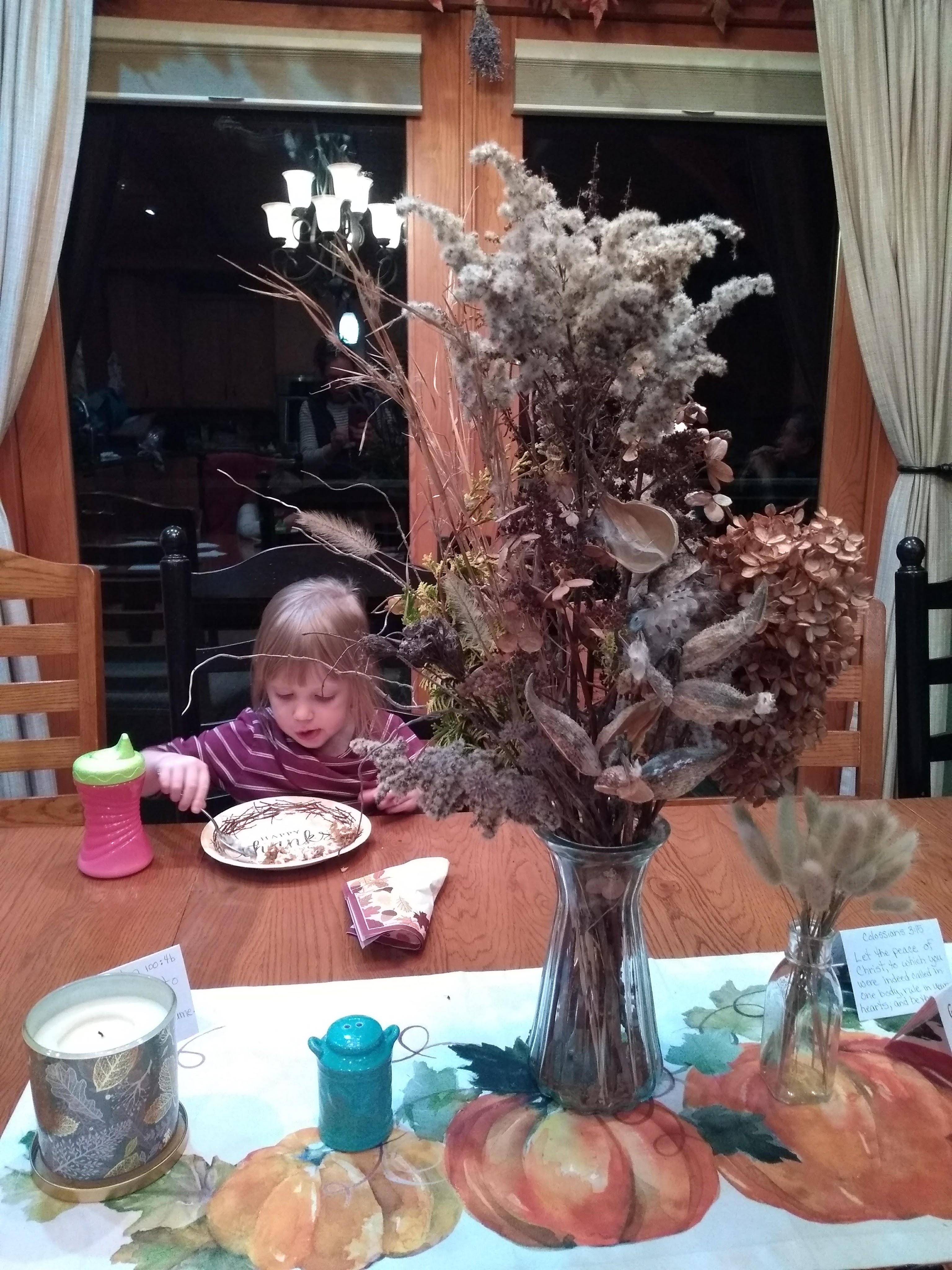
Last week my family and I drove up to see my in-laws in North Carolina for Thanksgiving. It’s a day where we usually think of bright pumpkins and yellow and green striped gourds with fall leaves in a cornucopia. However, I saw a different side of the season this year while taking a walk with my husband and two of our daughters down to a frozen pond.
I’m actually ashamed to say that I never noticed it before then; I had walked that property in the fall many times over the 15 years my husband and I have been married. This year the shades of bronze from all the spent plants on their 23 acres (and neighboring property) sang to me. The milkweed pods with their wispy white interior and curved shapes, the playful beige fluff of the goldenrod stalks, the crispy four-lobed pattern of tan hydrangea petals, the scraggly splash of lemon yellow from the witch hazel.
The next day we took pruners and a leftover cardboard box, snipping anything bronze, off-white, or muted yellow. After reaching the garage, I sat and made an arrangement of mostly dead things. As I worked, it struck me that what I was constructing was the opposite color palette of those bright fall images you see in Thanksgiving kid crafts and Hobby Lobby decorations. The items in the vase were devoid of the colors we are used to identifying them by, which would signify to many that the “abundance” has already passed or the usefulness of the plants were withered or diminished. But that’s not what my eyes saw as I strolled down the chunky gravel road.
I noticed two things:
1. Even if the color and shapes had changed some of these plants, it did not detract from their fundamental beauty. The textures, shades, and lines were simply stunning. It was almost like once their usual color was stripped away you could see aspects of their character that would have otherwise been concealed.
2. The arrangement wasn’t there to show creation’s abundance had left and was no more, but its beauty was actually a reminder that abundance is still here, albeit a different, but no less lovely form. It served as a reminder these plants will show up (and show off) abundantly again next year and for years to come.
One of the Nature Connection videos (from John Muir Laws) the Maple Key girls and I watched was on drawing and making collections based on a theme you notice as you spend time outdoors. I truly believe I noticed the shades of bronze last week because my eyes are getting sharper. Not literally, of course (I inch closer to the big 4-0 each year!), but rather through being diligent to listen to Laws’ lessons on what it means to live a reflective life outdoors. He gives his viewers better eyes to observe even when they don’t know they’re supposed to be looking.
What a gift to be able to notice God’s generosity through walking in His free wonders and delights.





 Maple Key Tutoring