Slurry and Shakshuka

In our house, my husband is really the gourmet guy; I am merely a sharp recipe follower with many good foundational skills. He intuits and sticks things into his foodie algorithm like Remy from Ratatouille. However, he would be the first to say that he has put in the time through many miscalculations, off flavors, and Alton Brown when he was a teenager. Part of the core of the Maple Key girls’ program is to empower them to learn through mistakes, so my daughter’s latest kitchen creation made me think about how this plays out in real life.

We make the rule in our house that you are welcome to practice your cooking skills as long as you clean up after yourself. It’s really more a rule for me than the kids because it helps me not micromanage and gives them more independence. They always ask for assistance if they need it.

Sometimes that means we get a delicious North African delight like Shakshuka. Our daughter nailed it all the way down — attention to detail in the recipe, taste, presentation.

And then sometimes something like the slurry comes out.
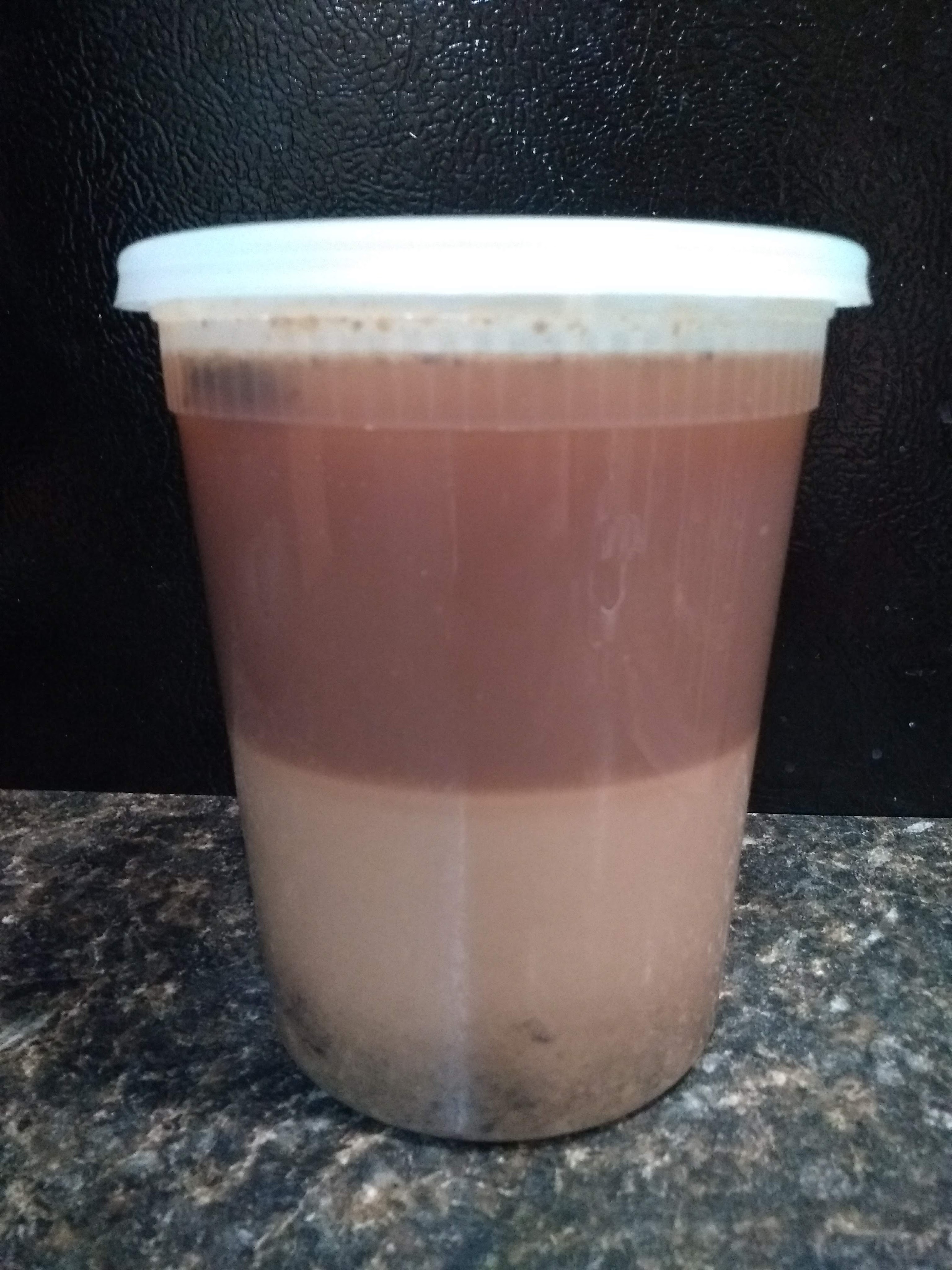
This was supposed to be soothing ginger tea with cardamom pods and other spices. My daughter knew we didn’t have fresh ginger, so she said she would fudge it a little bit with what I can only guess is ground ginger (and a heap ton at that). I have no idea what it was supposed to taste like, but she and her younger sister tried to have some. They both only took a few sips and politely left them on the counter. My daughter cleaned it all up and said, “Mom, don’t put that recipe in the bad pile. I want to try it again when I can really make a better effort with all the ingredients.”

Perhaps some of you would say, “Well, that all could have been avoided if she had listened to you about the ground ginger.” I would respond, “You’re right. She might have, but the lesson she learned about substituting ingredients, stepping out and making an effort of curiosity, and being brave enough to give it another try someday was worth the sludgy mess. I can’t teach her that.”

I am sure your kids have read so many books about scientists and artists who learned from their own blunders. Sometimes the cheesecake is still a little wobbly, sometimes the muffins are overbeaten, sometimes the casserole is soggy despite your best efforts. I’m all for teaching and facilitating excellence in the kitchen (especially where safety is concerned) but a recipe gone awry is something everyone experiences, so let it happen in safe community where we can laugh about it and learn from it.


As a bonus here was a birthday fail we made a few years ago when my husband attempted to make Australian frog cakes. They were so hideous that we still laugh about what a disaster that was. The recipe said we could use buttercream as an alternative to fondant. It clearly lied.

Lament and Gratitude

The end of the school year is has come. Last night the girls performed their Shakespeare with friends or showed their various coordinated dances. They all said they are sad to not see their buddies so often, but are excited to be home and have lots of unstructured time this summer.

In reflecting on life after another school year, I opened my commonplace book where I write down quotes from books I’m reading. One passage I wrote was talking about why teachers teach specifically (but I think the sentiment applies to engaging with humanity in general), saying, “You must do without the traditional pedagogic luxury of believing that the people you teach are lazy, rude, or entitled. You do it instead, knowing that they are all straining under the load of their own grief.”

It reminded me of a conversation with a friend about how a gratitude journal and a lament journal go hand in hand. We agreed you can’t see either thing rightly unless you can acknowledge both. If everything’s about gratitude then you have to hide the hard things. If everything’s about the hard things, then you find nothing to be grateful for. I know all too well which side I err on. My prayer is that God would continue to show us those who are straining under the load of their own grief so we can be salt and light in a heavy world. And once we see them that we would not turn away from them, but instead first do our own heart work to be able to give in abundance and service.

Who Will You Become?

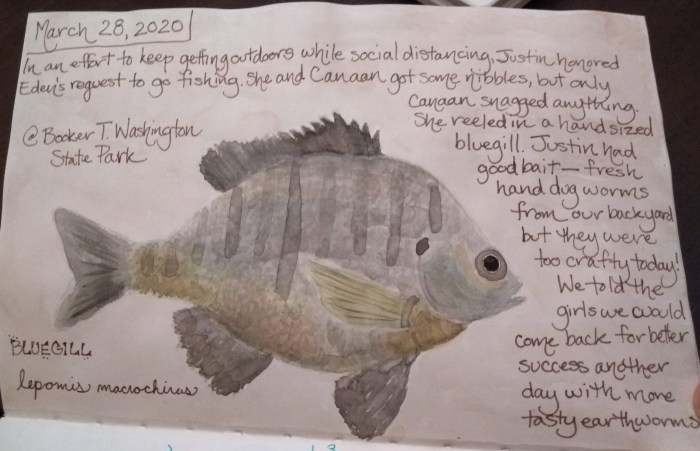
In September 2019 I started the habit of keeping a nature journal with the simple conviction to stick with it. It really began with one question. “What kind of person will I be if I commit to this?”

High Point Farms


A Person with the Habit of Attention
My husband and our oldest daughter are the kind of people who can identify and spot animals at a glance (especially out in the wild). Historically, I have been the person in our family who is still trying to see what they’re looking at 30 seconds later after the animal has moved on. That is slowly changing the more we get outside and through my journaling. I start to know what shapes to look for and my hearing is getting sharper. I find myself asking questions and pointing things out instead of always being the one listening to others’ interesting finds. I physically experience God’s creation with newness. 

A Person Who Shares the Joy of the Seasons
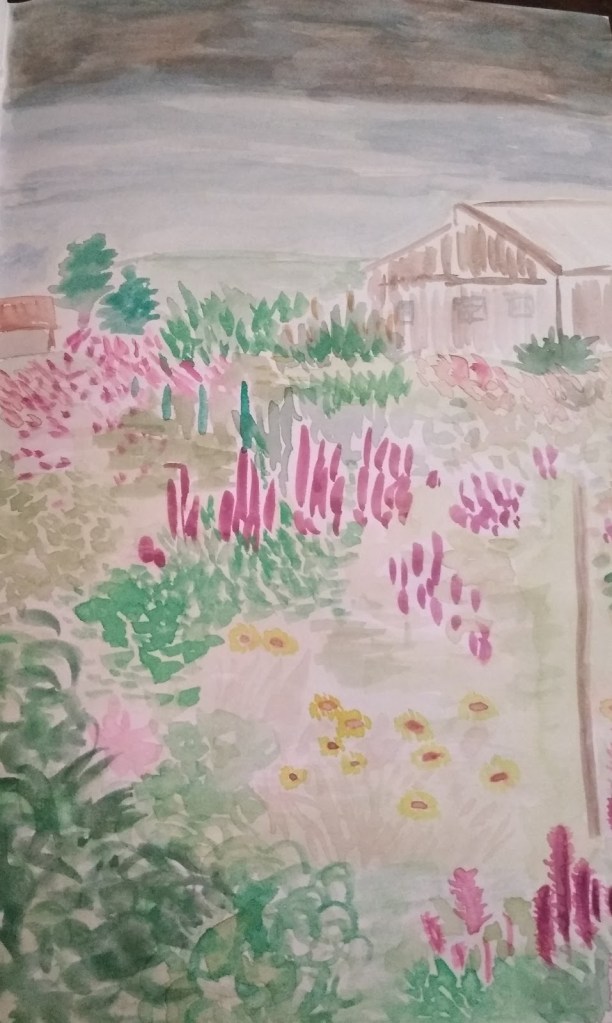
Journaling has helped me recognize signs of the seasons and share them with others. The girls next door, who come over after school, take walks around our quarter acre lot with me or our girls and can identify our flowers and trees. One of them said, “You guys have so many plants growing in your yard!” and I responded, “Yes, and we all get to watch them grow all year round, don’t we?”. I told them my husband was really the one who taught me all this and one said, “He taught you. You teach us. We can teach our children some day!” Keeping an eye on all the growth together reminds me of one of our favorite books, Planting a Rainbow by Lois Ehlert. Through collage art, she shows how mother and daughter go through the seasons of bulbs sprouting, bushes being planted, and seeds shooting up beautiful flowers.           

A Person Who Integrates Disciplines
I’m an English major — an arts and humanities lover through and through. I can read, paint, draw, and write for days without strain of boredom. I never took physics or chemistry in high school because I thought there was a chance I would get a low grade –I took ecology instead. In college I took two environmental science courses at a community college to avoid any higher science. In hindsight, I wonder if my running away from “science” was actually the slender thread of a dormant interest in nature. Once I began homeschooling, I started to dabble in drawing and painting wildlife with the kids. Admittedly, it was more about the art than the plants and animals, but nature journaling has changed my perspective entirely on science. When you journal nature you learn more about physics, chemistry, botany, geology, and the list goes on. You ask questions you didn’t know you needed to ask which lead to more questions. You notice patterns you never saw before. Your brain starts doing this automatically. Nature journaling opened up a part of me that never appreciated math or science in the ways I do now.  

Birds at our feeder during quarantine

     
A Person Who Is a Better Artist
Drawing and painting when out in the wild or even from a computer screen makes you a better observer. Your eyes start to see more nuances in color, texture, shading, and proportion. Building a discipline of seeing the same things over and over like a leaf or a bird helps layer your memory to spot it again. Your memory improves so that your hand knows the right amount of pressure for a pencil or brush. It knows how watery your paint needs to be to get the right consistency. Both my husband and I have said the more time we spend in journaling the more payoff we see in our improvement.      

A Person Who Cares More about Stewardship
I don’t think it’s possible to spend time outside (as much as is necessary to journal, at least) and not care about God’s handiwork in a more intimate way. Seeing firsthand all the ways plants and animals are helped or harmed by our footprints makes you more sensitive to the urgency of creation care. At least twice a year, my girls and I go on a “trash walk” down the street behind our house. It has ditches that invite all manner of litter. It helps us recognize that stewardship can also mean cleaning up a mess we did not make. 

As it is officially spring (and almost summer!), I hope these thoughts will give someone reading an itch to start journaling either by themselves or with their kids this year. 

Welcome!

Thanks for stopping by!

This space is for what the tagline says — just my thoughts on faithfulness in the everyday things in creation. This could be nature, it could be literature, it could be philosophy, it could be some scientific discovery. No rhyme or rhythm. Just thoughts that come from me choosing habit formation right alongside those whom I teach.

I hope anything here inspires others to ponder more deeply on what’s in front of them each day. If something resonates with you, please leave a comment. I’m a big fan of sparked conversations.