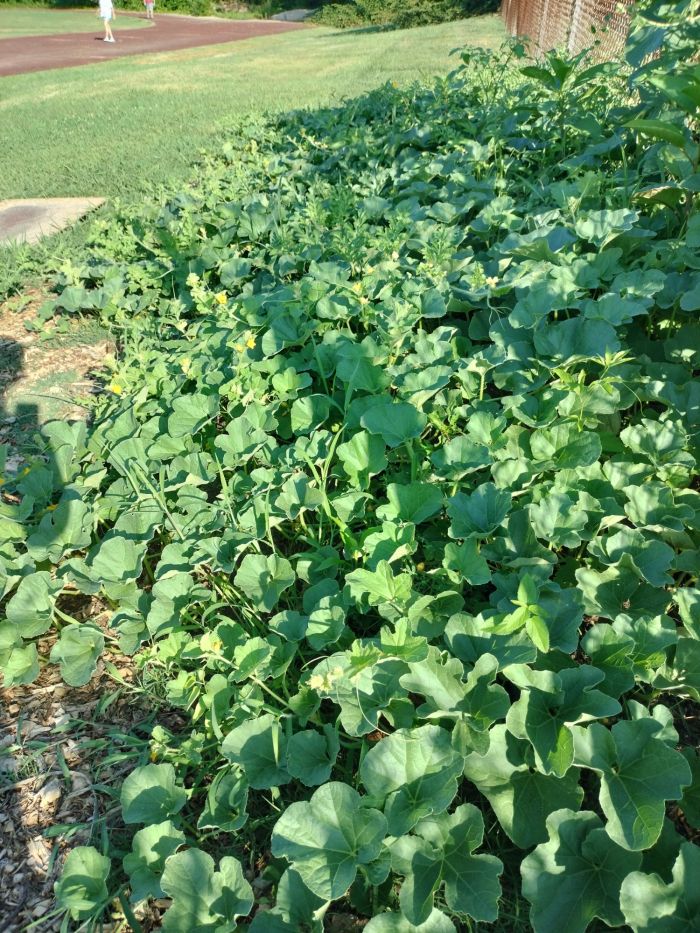
It’s been a very hot summer here in Chattanooga, Tennessee. Little rain and temps in the upper 90’s. I am convinced the only way people are keeping their plants alive is through drip irrigation. And yet despite the drought, I see a lot of people still finding ways to keep the gardening spirit alive around here.
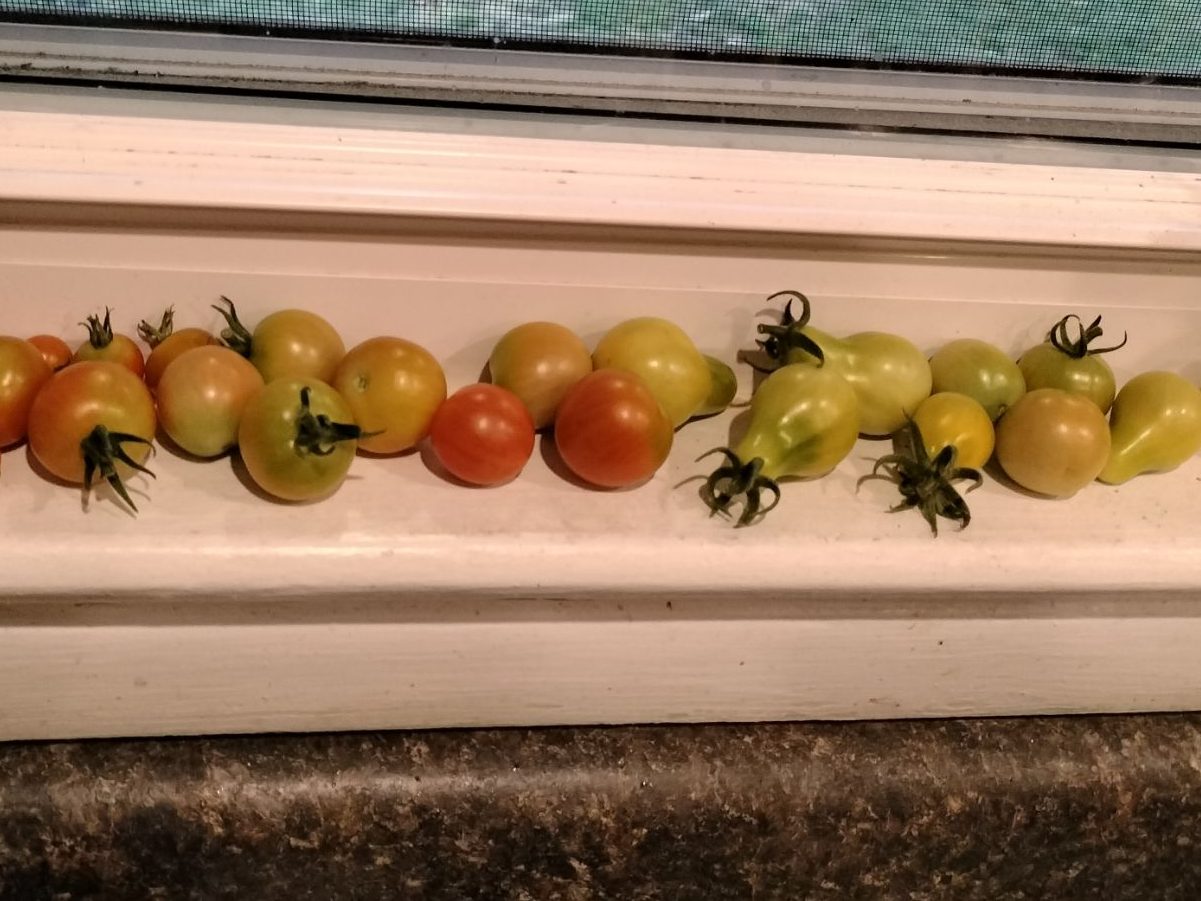
Ripening in the windowsill…
I recently visited my city’s local high school with my neighbor who teaches environmental science there. She acquired some local grants to get a garden going for her students. She has sturdy raised beds and a ground melon patch going. While I was there, some students came to help us prune the very abundant tomato plants. I asked one of them how they got into gardening, as a lot of people her age aren’t spending their summers oohing and ahhing over tomatoes. She said she worked at the local Dollar Tree and earlier they had some grow kits come in around February. She got curious and the rest is history — she has a thriving tomato plant at her house and is using some of the dirt from the kit to try other things.
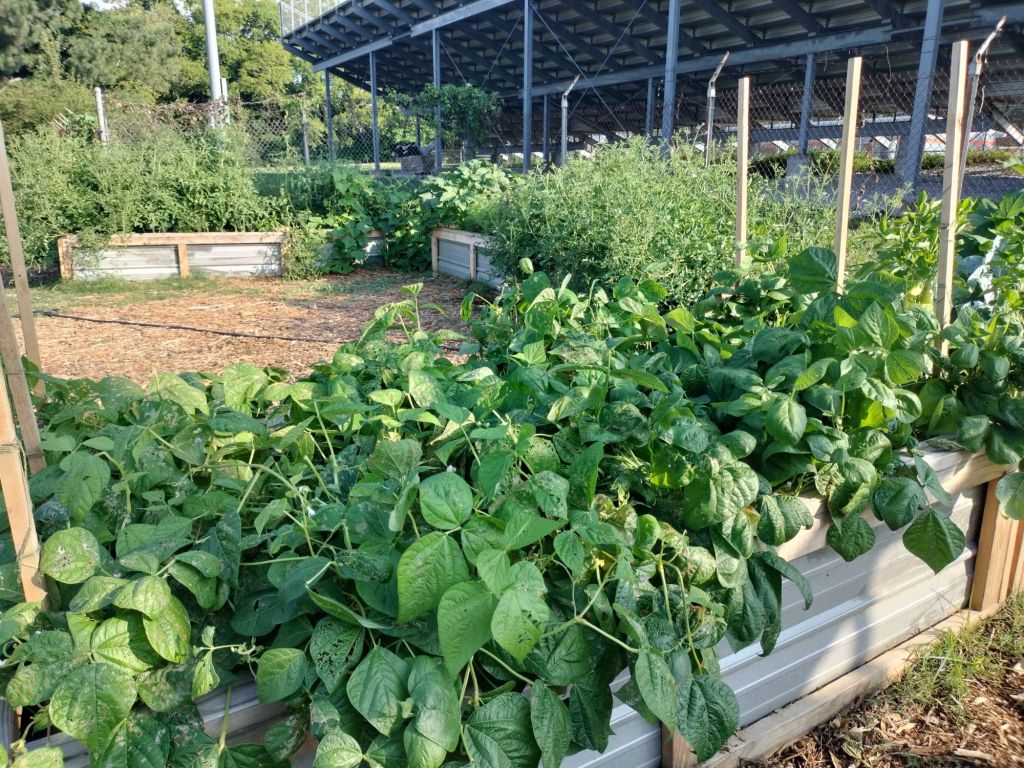
Bush beans, tomatoes, squash, cucumbers!
I was really encouraged by her answer because let’s be honest, there is a start up cost to gardening. Containers, potting soil, plants, seeds, water, tools. It adds up so quickly every year. This rising senior started small, kept costs low, saw success, and now wanted to know more and expand her own garden. Inspiration comes from so many unexpected places!
In a similar vein, this local headline caught my eye last week about one more place in our area that is recognizing that children and their communities need gardens.
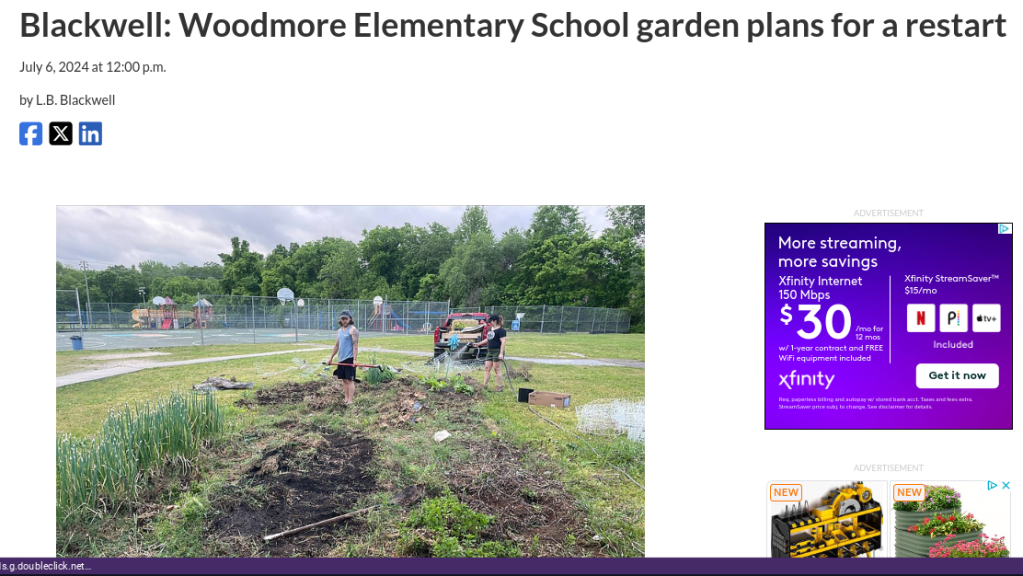
They built a garden from scratch and then found out they had to move the whole operation somewhere else on campus due to needing a portable classroom in that area (I would die if someone told me that I had to do that much labor over!). But they rallied again and are rebuilding their garden so the children can be involved and eat fresh produce snacks once more during recess time. What memories those teachers are instilling in their students just by letting them be a part of growing their own community’s food (particularly in an area that is considered a food desert).
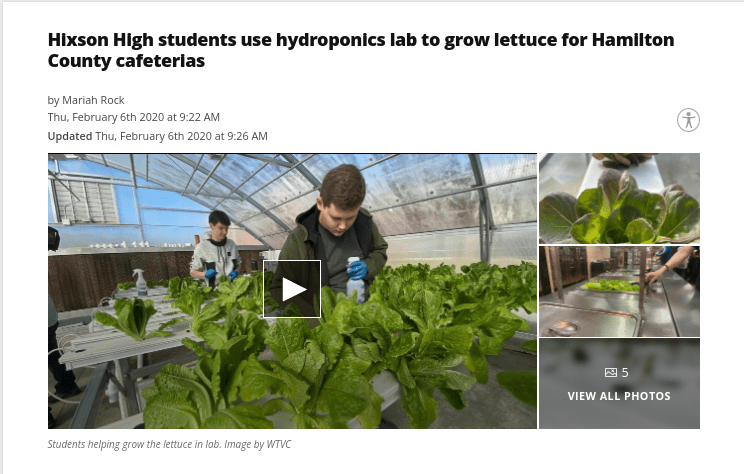
Similarly, a local high school is helping provide healthier options in the school cafeterias through hydroponics!
The school my older girls go to also focus heavily on being outdoors and having a horticultural presence in the area. This spring, they raised money through a big plant sale. All plants were grown from seed in their greenhouse by students and the teacher. I purchased a Cherokee purple tomato plant and it is continuing to do really well in the front yard.
In addition, the community center in our city has improved its community garden this year. I dropped by and noticed all the cherry tomatoes and basil ready for any child or adult hanging out at the playground to pluck and eat.
Stories like this give me hope. Having lived in this area almost my whole life, I can say that school gardening was not going on in the 1990’s and if community gardens existed as I am seeing them now, I was completely unaware. Thanks to the internet and social media, I see churches, schools, and city governments pushing for revitalization through various gardening opportunities. I am thankful to be a part of this process and excited to see what decades of gardening exposure — literally just being around gardens on the regular — normalizes for my children’s generation.

Time for picklin’…
 Maple Key Tutoring