2021 Reads

This is by no means an exhaustive list of my 2021 reads, but since it is getting close to the start of a new year (presumably when people make resolutions to read more widely), I will pick a handful that I think are worth your time. They are listed in no particular order.

  • Everything Sad Is Untrue by Daniel Nayeri
  • Finding Langston by Lesa Ransome-Cline
  • What Happened to You? Conversations on Trauma, Resilience, and Healing by Dr. Bruce Perry and Oprah Winfrey
  • Skunk and Badger by Amy Timberlake
  • Where Stars are Scattered by Victori Jamieson and Omar Mohamed
  • Disability and the Church: A Vision for Diversity and Inclusion by Lamar Hardwick
  • Jacksonland: President Andrew Jackson, Cherokee Chief John Ross, and a Great American Land Grab by Steve Inskeep
  • Prayer in the Night: For Those Who Work or Watch or Weep by Tish Harrison Warren
  • On the Spectrum: Autism, Faith, and the Gifts of Neurodiversity by Daniel Bowman, Jr.
  • Talking Back to Purity Culture by Rachel Joy Welcher
  • Dog Songs and A Thousand Mornings by Mary Oliver
  • Wintering: The Power of Rest and Retreat in Difficult Times by Katherine May
  • The Children of Men by P.D. James
  • This Too Shall Last by K.J. Ramsey
  • The Warmth of Other Suns by Isabel Wilkeron
  • Farewell To Manzanar: A True Story of Japanese American Experience During and After the World War II Internment by Jeanne Wakatsuki Houston
  • Turning of Days : Lessons from Nature, Season, and Spirit by Hannah Anderson
  • The Sum of Us: What Racism Costs Everyone and How We Can Prosper Together by Heather McGhee
  • The Code of the Woosters by P.G. Wodehouse
  • A Walk in the Woods by Lee Blessing


Consider the Wildflowers

It could have been my imagination, but the air felt much more biting on the walk home from church at noon. In my mind, the day should always promise more warmth as the hours go by, not less. We walked anyway.

Walking to and from church is a normal occurrence for our family. We pass the apartment buildings behind our home, the local cemetery, the Methodist church, the title pawn shop. Then we cross the busy four lane road (which has no crosswalk), past the used tire store on one side and emergency service vehicles on the other. The final stretch is the row of homeowners, their various and sundry yard ornaments, and curious yappy dogs.

Today, however, the walk was a bit blustery even for our usual dogged determination for exercise and insistence on the children being more pedestrian (in all uses of the word) than they would normally care to be. Despite having to cross the traffic-filled street together at lunchtime, the route is very close to a straight line from point A to point B, so none of our children could ever get lost. Even the three year old knows to walk on the correct side of the road at all times, but we still have varying paces. My husband’s lumbering 6’3″ stride is not the same as my impatient I-feel-like-I-had-3-cups-of-coffee-already stride, nor is it the same as our preschooler whose inconsistent stride is always based on her whims.

So being vigilant, but still several paces ahead so as to encourage our 3 year old to reach the warmth of our home faster, I suddenly saw her stop on the side of the road and shriek with delight. What could have caused this burst of exuberance in such a chilly climb up the hill?

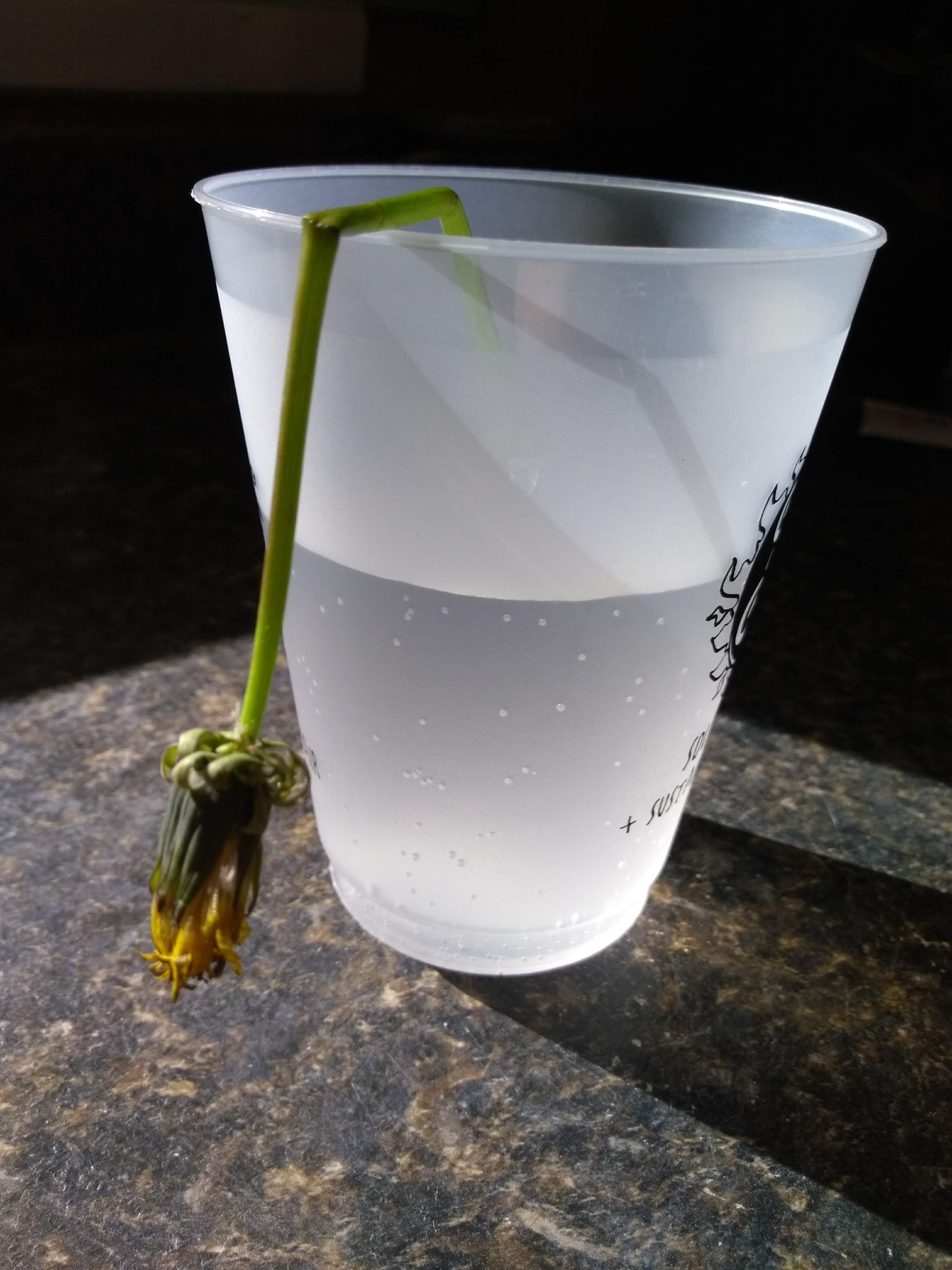
She found a lone dandelion.

Being so low to the ground, a burst of sunniest yellow had caught her eye amidst the dull and dark browns while the rest of us just motored on past so we could reach our destination. She laughed so naturally as she picked it for me to put in my coat pocket. Once inside, I started talking with my husband and getting out the leftovers to heat up for lunch, forgetting all about the flower. Out of the corner of my eye I saw our daughter filling up a clear plastic cup half full of water from the fridge.

“No, that’s too much for you to drink. You need to get a straw and then take it to the table.”

Frustrated in being redirected and misunderstood she said plainly, “No, it’s for the flower, Mommy!”

She hadn’t forgotten it.

I don’t know if her instinct to give the flower water came from watching her 7 year old sister do this all year round with “shot glass bouquets” from the yard or if she just knows that flowers need water to even have a chance at surviving in a house. She wasn’t thinking about how quickly it would wither once brought inside; she wanted to preserve and share the beauty of God’s creation as best as she knew how. Either way, her exceeding childish joy and loving care for something we older people ignore or pull up as a nuisance gave me a needed opportunity to reflect on the Lord’s Day.

“Consider how the wildflowers grow: They don’t labor or spin thread. Yet I tell you, not even Solomon in all his splendor was adorned like one of these! If that’s how God clothes the grass, which is in the field today and is thrown into the furnace tomorrow, how much more will He do for you—you of little faith?” Matthew 6:27-28 (HCSB)

My husband reminded me that this passage from the Sermon on the Mount is actually a meditation on the first commandment, where Jesus tells His listeners that in God there is no need for worry because He is the provider. The Greek in verse 27 essentially translates into “be discipled by this flower”. In our age of instant and easy answers, how strange it is to be taught how to orient your life by a plant. And yet that is what I was called to on the roadside — to notice that He is still giving me an opportunity to push out distraction and comfort to see His wonder and provision that was so evident to my little girl. Being outdoors with my children is a constant reminder that I am too addicted to the illusion of self-sufficiency and far too rational to seize moments of discipleship that have been there all along.

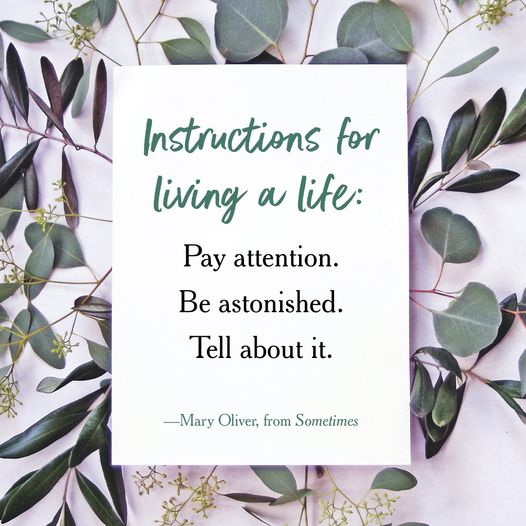
Be Astonished


If you’ve never read Mary Oliver’s poetry, you’re missing out on the sublime. I can say this because for most of my life I haven’t been a patient person with poetry. I don’t recall it being taught to me with joy, often only purpose and meaning. I thought it always needed to steep in my mind for it to be worthy of consideration. The economy of words it required made me feel insecure about forming a decent interpretation. I hate admitting that. I feel the weight of guilt — literature majors are supposed to have an innate love of the word in all forms, right? It wasn’t until I understood that poetry could simply be approached with delight (as opposed to only seeking joy in the clever meaning or rhythm) that things started to change course. I thought and taught differently.

Enter Mary Oliver. She just passed away in 2019 and was eulogized like this:

“Mary Oliver isn’t a difficult poet,” Franklin says. “Her work is incredibly accessible, and I think that’s what makes her so beloved by so many people. It doesn’t feel like you have to take a seminar in order to understand Mary Oliver’s poetry. She’s speaking directly to you as a human being.”

Oliver told NPR that simplicity was important to her. “Poetry, to be understood, must be clear,” she said. “It mustn’t be fancy. I have the feeling that a lot of poets writing now, they sort of tap dance through it. I always feel that whatever isn’t necessary should not be in the poem.”

Oliver’s world is simultaneously whimsical and serious without melodrama. Her collection called Dog Songs could be read to all ages and guaranteed to produce more than a few tears of joy and grief. I started reading these poems with the Maple Key girls and the anticipation is high on which of Mary’s canines we will have the pleasure of meeting next week.

God bless you, Mary. If somebody had told me about you when I taught high school, I would have read you every day to my class. The world is a bit sadder without your wholehearted presence speaking to our tender souls.

A 5 Cent Sticker

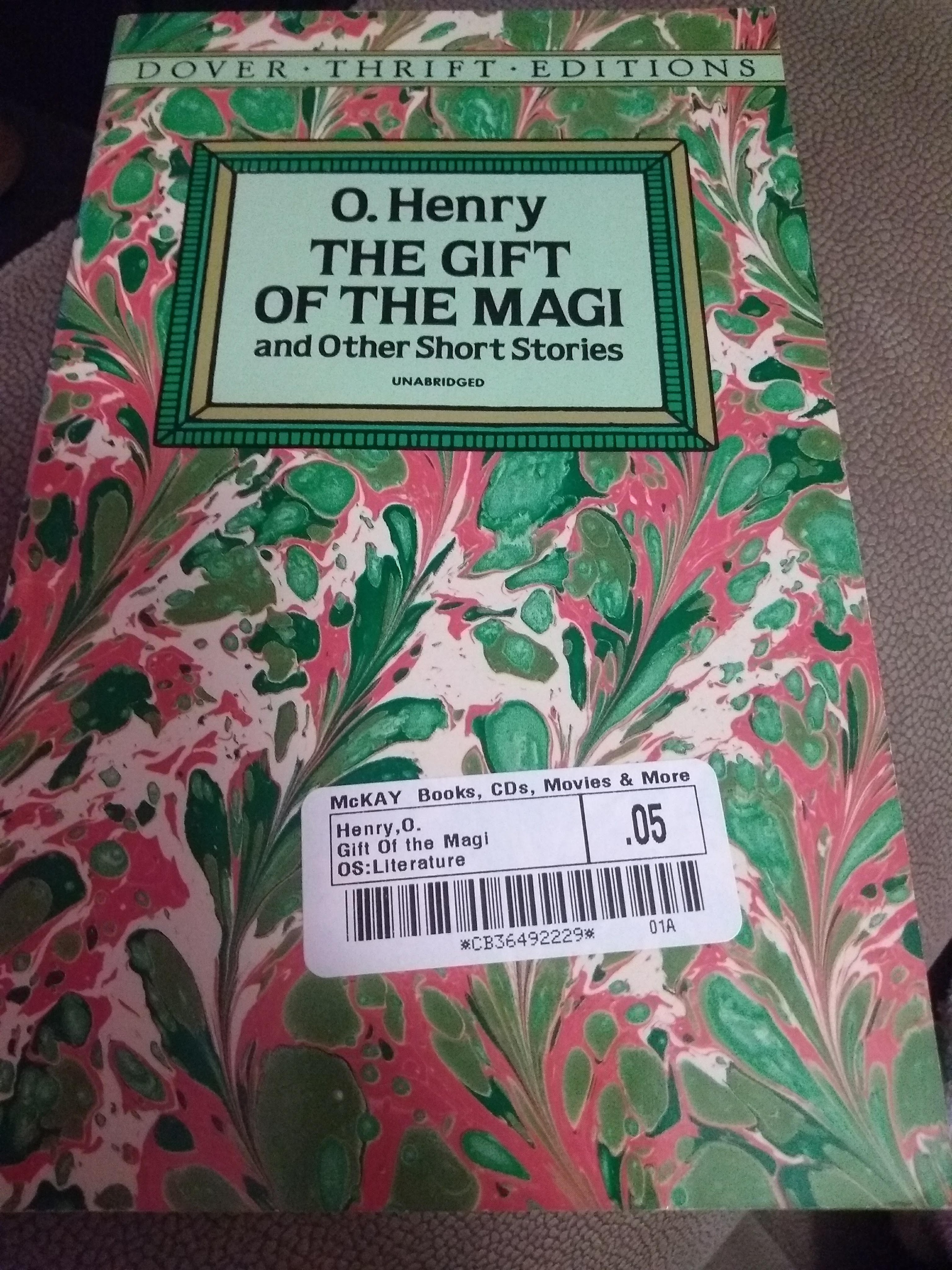
Never judge a book’s value by its 5 cent sticker. These O. Henry short stories have been a perfect way to end out our evenings during Fall Break. The kids keep saying, “Wait. That’s it?” and I keep saying, “It’s a short story. You are left to ponder the future of these characters you’ve been so briefly introduced to.”

In that moment, it struck me that we read a lot of chapter books but not short stories. Chapters are vignettes with the expectation that a) more helpful information is to come and b) loose ends will likely be tied up. Not so with the short story. They really are their own literary form — a whirlwind romance of words. In terms of accessibility, the genre feels like a binary — Aesop’s fables are short short stories and then you graduate to collections like this with elevated language (written from 1906 – 1911 and the language reflects it) or more modern short stories with very adult themes.

Short stories are tough to write because you have to create believable characters the reader wants to invest in, yet be willing to let them go in a very small amount of time. For instance, in “The Last Leaf” Henry tells us about two artists, Sue and Johnsy, the indifferent town doctor along with the eccentric neighbor in the apartment downstairs. Just a handful of characters to create this heartwarming tableau about the cost of friendship as Johnsy develops pneumonia and is bedridden, believing her fate will be sealed when the last ivy leaf falls off the vine outside her window.

Some people have criticized O. Henry’s style, his penchant for twist endings, saying he is a predictable, manipulative writer. But to my 7th grader, her breath was authentically taken away when the story ended tonight. Her voice cracked and the words, “Oh. That was so… touching” surprisingly tumbled out of her mouth. She was fully invested in the characters which is what made the twist a powerful literary device. Here’s hoping I can find (or any of my readers can recommend) more worthy short stories to share with my students and family.

What Awaits us in the Woods

My older 3 girls started taking swim lessons this fall. They wanted to gain some confidence in the pool and learn new skills, so two days a week we head to a local university where college students run both a swim program and a gymnastics program for children.

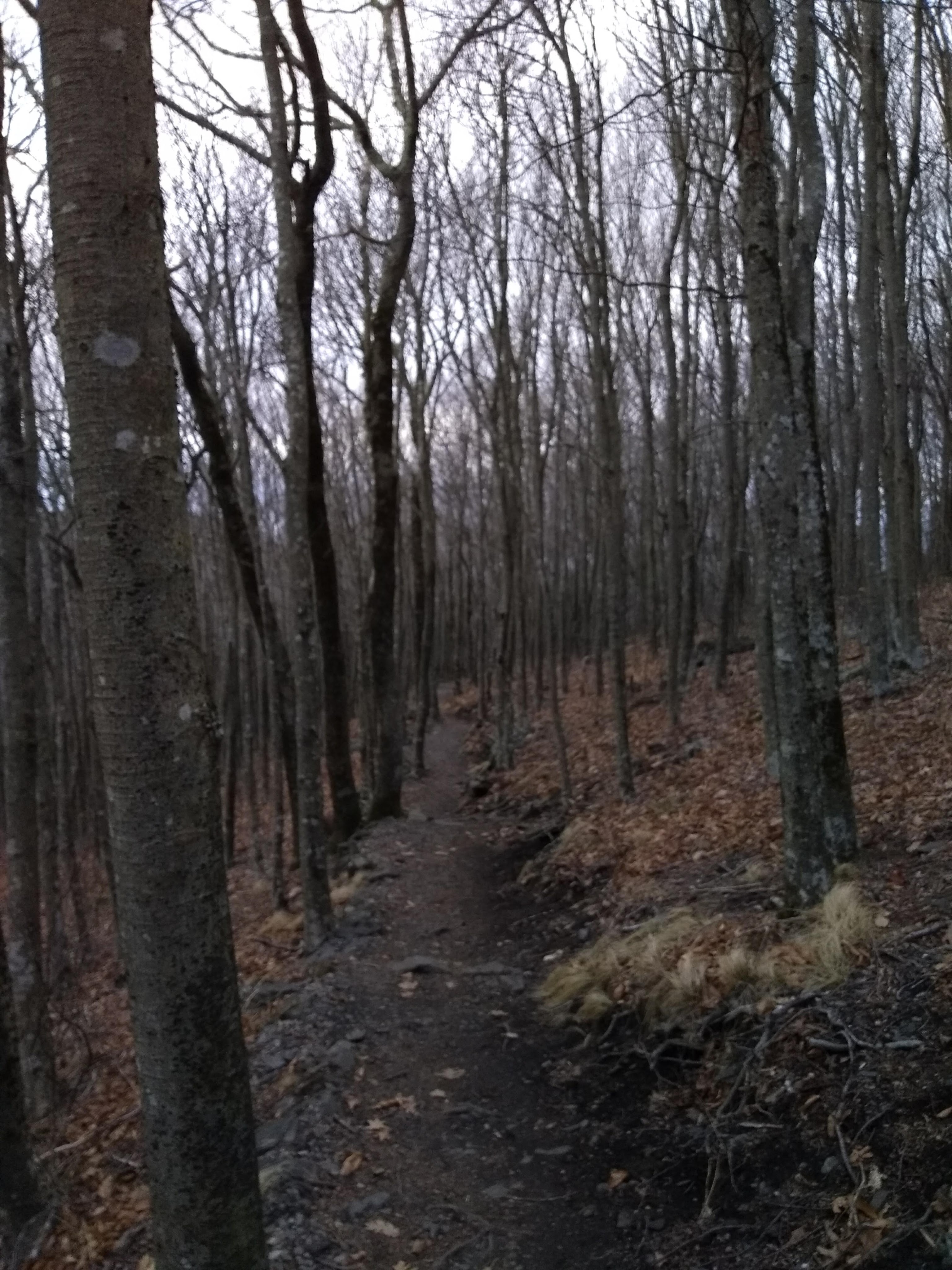
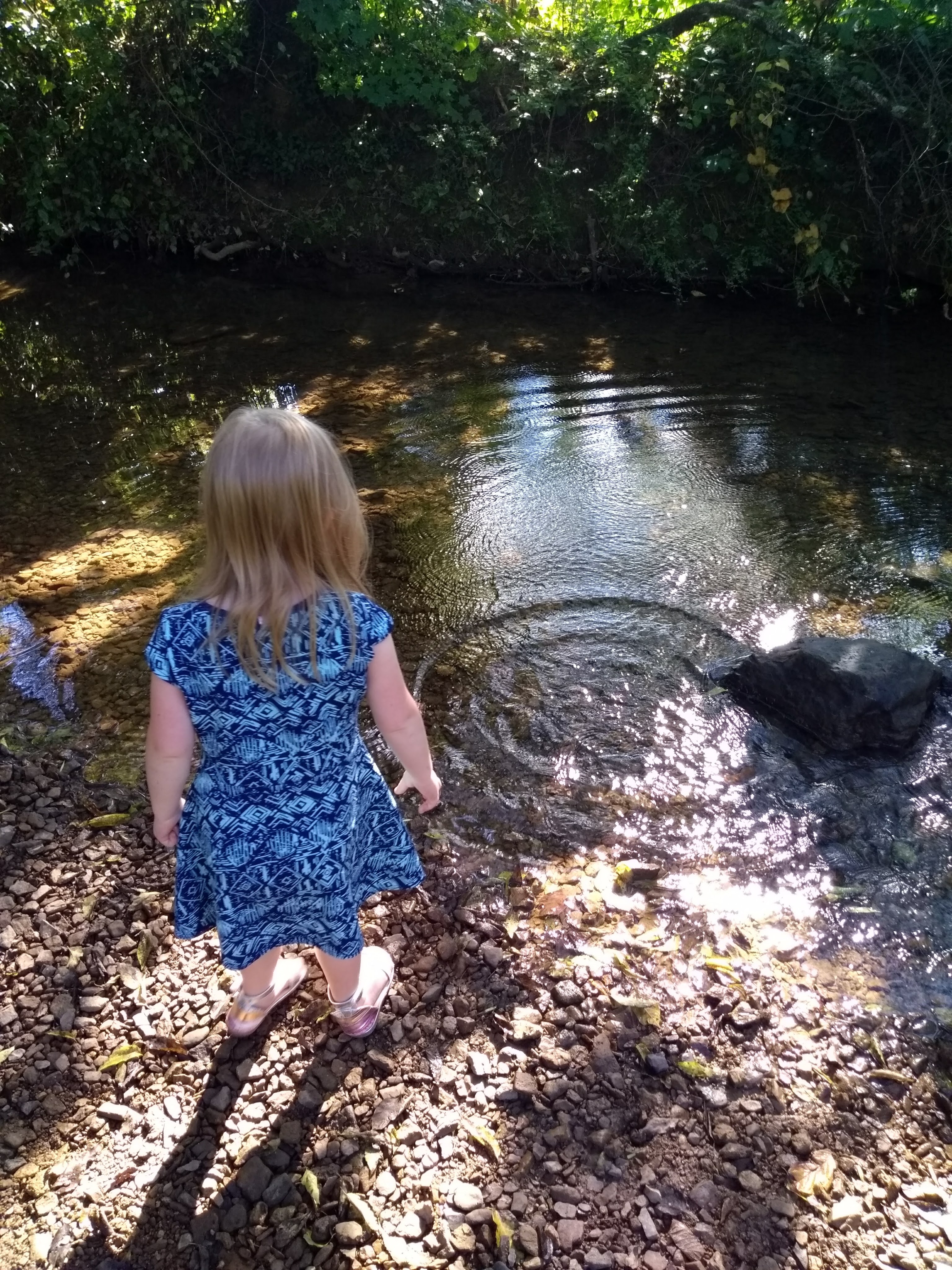
During that time I take our 3 year old out on a nature walk on campus next to a creek. I enjoy that special time with her because she goes to a preschool program from 9-2 on those days. She and I have no agenda. Just walking and seeing what awaits us in the woods.


As we got to the end of the trail today, she asked if she could throw rocks in the water and “make music” with her splashing. I told her yes and watched her pure joy for several minutes. It struck me how different my unhesitating response is to her than when my oldest was her age. It has taken me more than a decade to grow into a mom who can say yes to their many requests about exploring the outdoors on their terms. Watching a lot of webinars from experienced early childhood educators has helped me revisit the limitations I used to set out of my exhaustion or anxiety. Their refrain is always the same: Just let them play. Let them learn about the world in their own way.

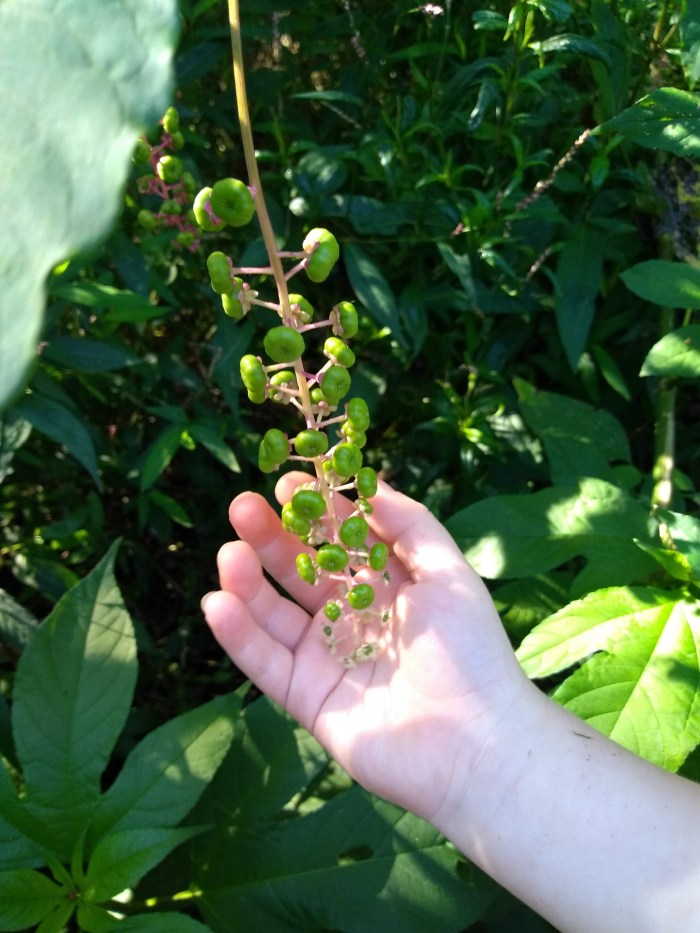
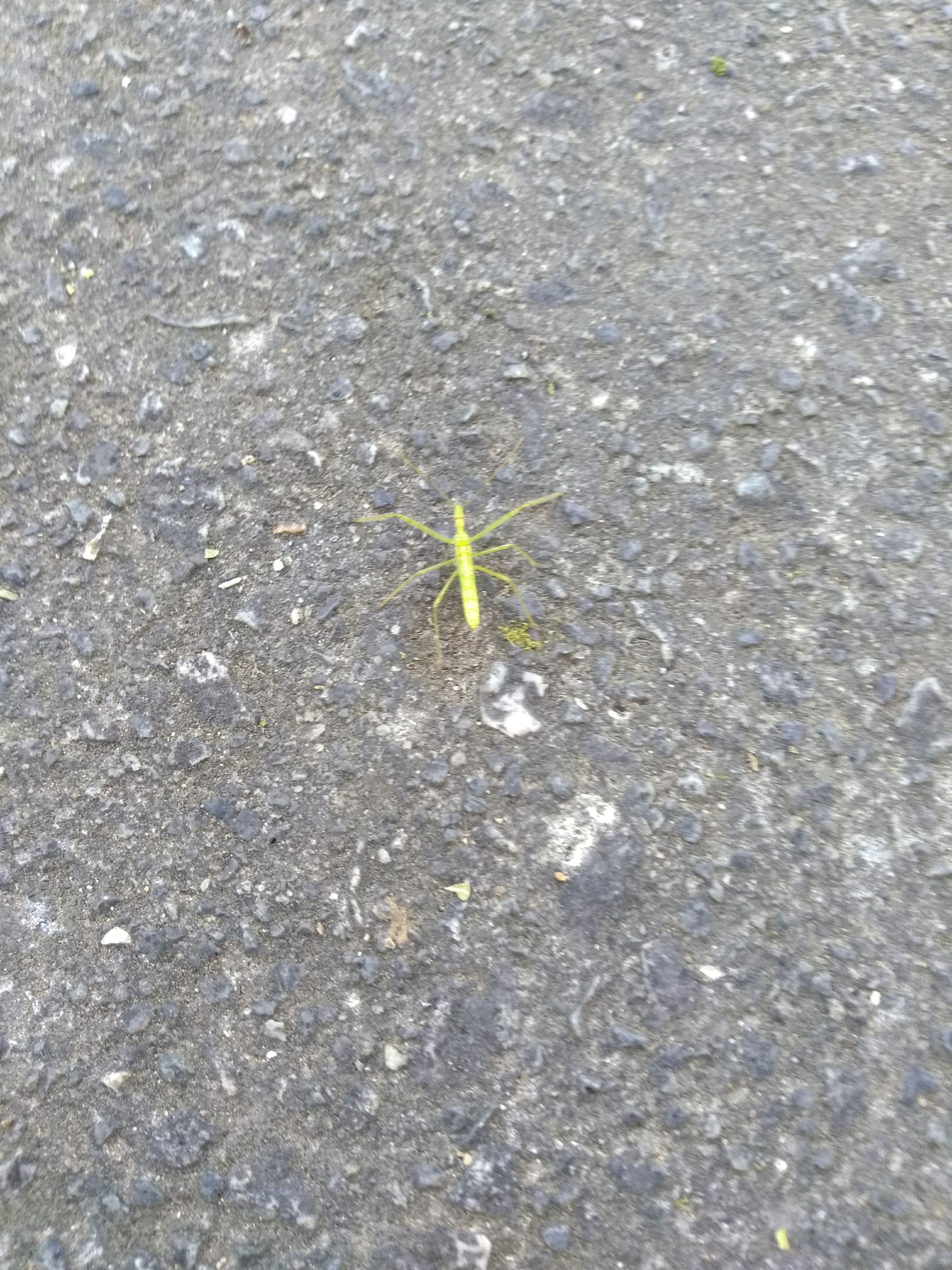
So I did. She tossed stones, carefully held and observed a pokeberry, asked me to take a picture of a small green bug she spotted, requested a smartweed plant be put behind her ear, wondered how to pronounce the plant I picked up (‘Osage orange’), and took her precious sweet time coming back to the building when we needed to collect sisters to go home.

I can’t believe she spotted this guy!

If there is a takeaway from these little excursions of ours it’s that every time we in the larger culture make time for these moments, we are teaching the next generation that accepting nature’s invitation is a worthy pursuit. Eventually observing nature will no longer be a pursuit, but a lifestyle that has “snuck up on you” as we say in the South. My husband has steered our family in this direction in the most humble and patient ways, and yet he always foremost credits his grandfather who grew up surrounded by gardens and animals as showing him a slower, more intentional way to live.

Ranking View or Side View

Several weeks ago, the girls and I were discussing an essay by Alfie Kohn called “The Costs of Overemphasizing Achievement”. I wanted his reminders that much harm can be done when we lose sight of what it means to be a lifelong learner. As we talked, a brilliant metaphor popped out of someone’s mouth. She said, measuring your personal best is kind of like an Olympian runner deciding which view he’s going to take when the race is over– the view where they are all ranked from ‘best to worst’ or the side view where the camera has to slow down so much to even see the hundredth of a second difference in their performance. The first view says that getting a medal and glory is the highest goal, but the second view says “we all trained incredibly hard with what we had and that’s the best we could give that day”. A ranking view is vertical and hierarchical, whereas the side view shows a horizontal effort from everyone and a driving passion.

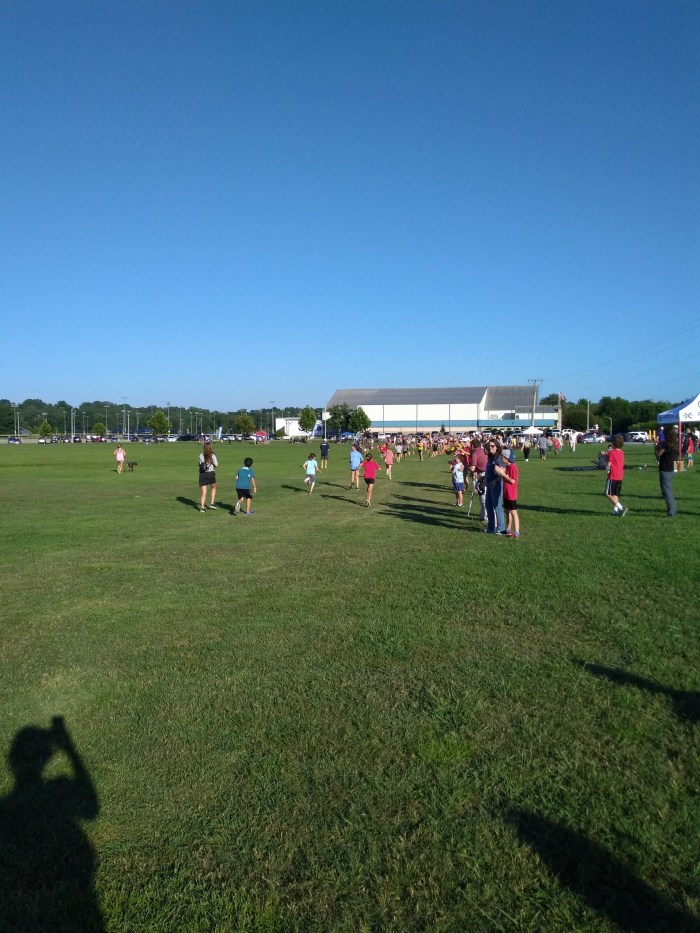
I’m 25 years older than the girls in the program, but I told them that I am still learning these lessons, especially as a parent. I often rank myself — coming in 9th place for “consistently provided kids swimming lessons” or 5th in “children have matching socks to wear”. Busy days like today particularly catapult me into a ranking view of motherhood. Kids arrive home from school, back to back appointments, pick up something from Walgreens, drop off library books that are due, go to a cross country meet, come home to make dinner, bathe toddler and get her to bed, finish mixing pumpkin pie filling for tomorrow, unload and load dishwasher, write this blog post and struggle to keep my eyes open.

Mercifully, most days aren’t quite this full, but I was reminded of a saving grace that helps me take the side view of parenting — MaMa’s spaghetti. It’s a running joke in my family about how when my sister and I visited my grandparents in Nashville, MaMa would always have a crockpot full of spaghetti to greet us. She did this for years, and as I was quietly told after she died, it was because my grandma wasn’t the best cook but always wanted to provide something that would be well received by the grandkids. For a bit of context, MaMa was the youngest in her large family and both her parents died when she was very young, causing her to get tossed around to various siblings for a time. She also married young by today’s standards and worked a lot when PaPa was on the road playing steel guitar; she didn’t exactly have the time or emotional energy to pour herself into creative cooking. If I get a text from my mom asking what my kids will eat when they come over, I sometimes reply, “MaMa’s spaghetti is always a hit!”

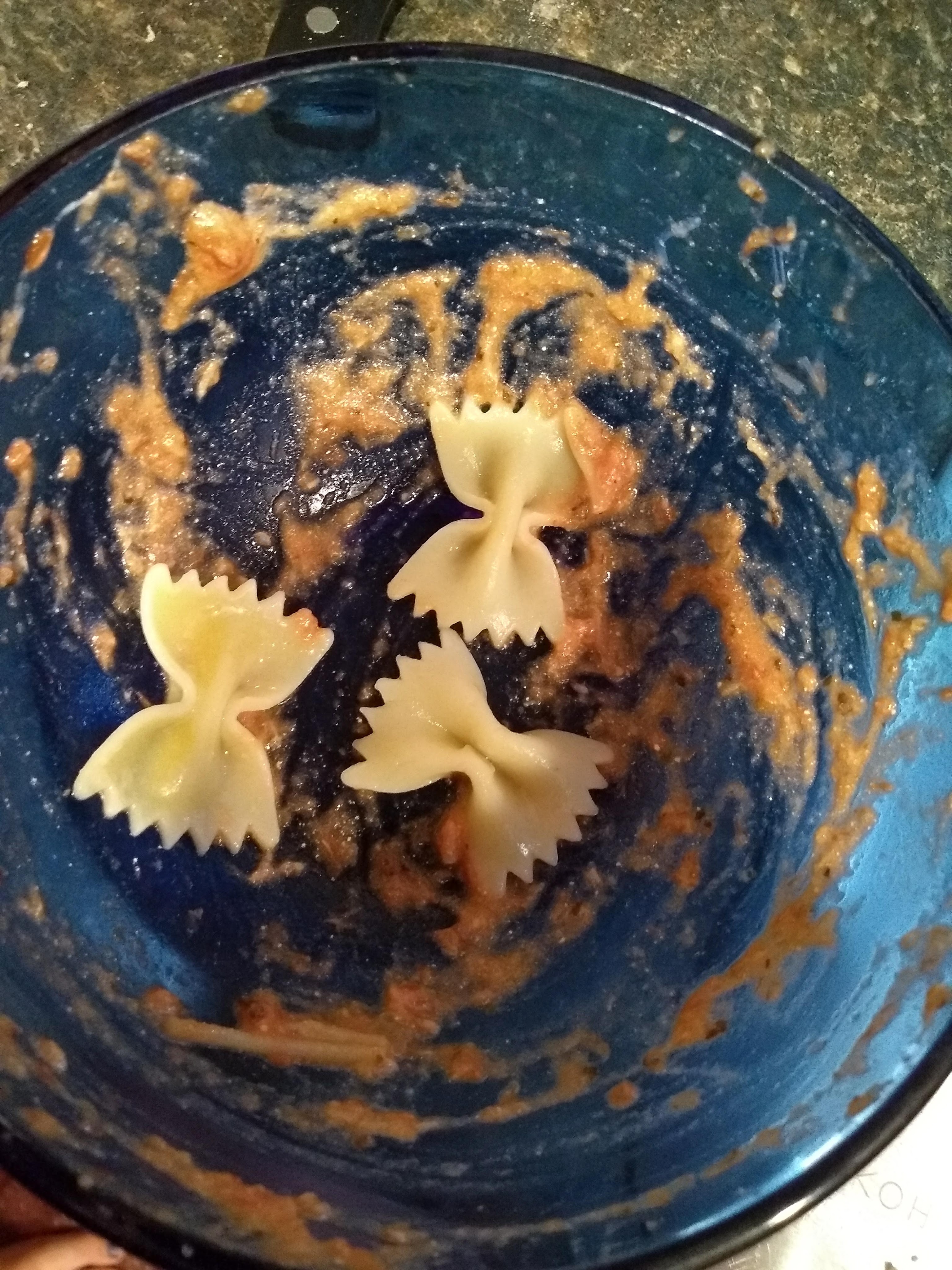
So on a night like tonight that is packed with needs, I am thankful that my children still enjoy me fixing them various bowls of pantry pasta — angel hair, farfalle, or rotini. 3 generations of moms sharing a small ritual when the creativity has left their brain, but the generosity has not left their heart. Just the small act of us being around the table helps drown out the I-should-be-feeding-them-a-more-balanced-meal noise. The rotini is tri-colored. That’s vegetable enough for this evening.

Sweltering in Summer

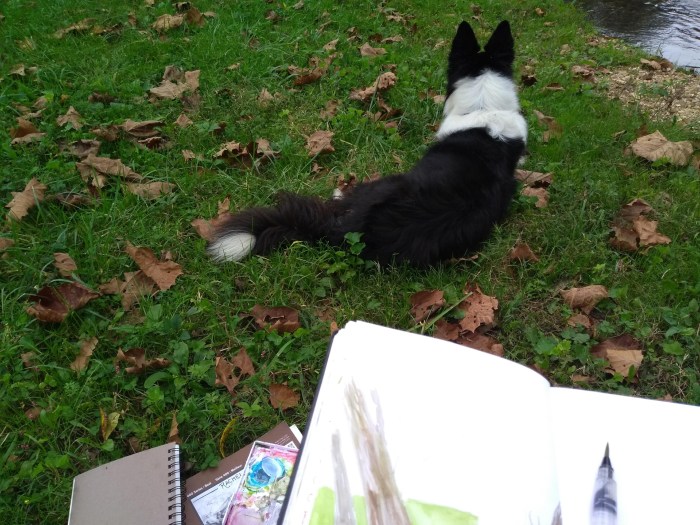
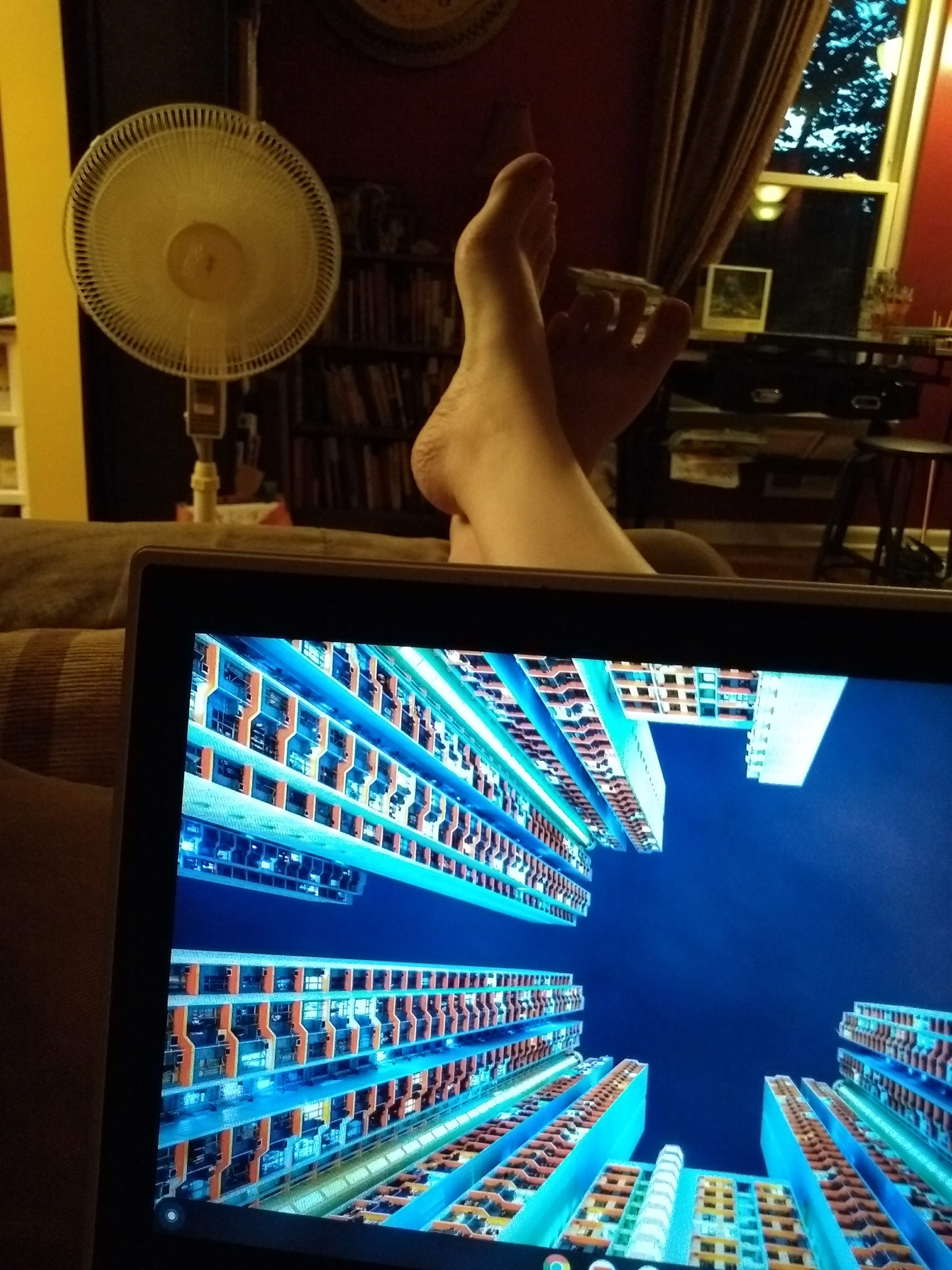
The view from my house this summer

They say to draw readers in, the more senses a writer can incorporate the better — show, not tell. Make the reader smell what soiled laundry your character is washing, make the reader taste the rosemary butter steak your character is eating, making the reader hear the mysterious rustling in the woods. Concrete over the abstract.

For example, I can try and make you feel the temperature in my house earlier this summer when our air conditioner was broken. I was constantly thinking: how sticky and damp the painted walls felt, how I told the kids if they just want to wear a bathing suit for a few days that would be fine, too, how irritable and unfocused my mind was unless a heavy fan was blowing directly on my face, how it was actually hotter and more humid inside the house than it was outside the house. The patina of malaise was slowly coating the activities of everyday life. I reminded myself that it was going to be fixed, but the constant beads of sweat trickling around my hairline was making me delirious.

So why am I telling you this?

It occurred to me that as my family endured this “house camping” inconvenience that robbed our sleep for several days, I had encountered this “sweaty” feeling before. I have read poems and books that describe the very things I was physically feeling yet with so much more at stake. Families for whom air conditioning is either non-existent or a luxury. The poets and authors described them with such nuance that I felt like I was transported to their open-air houses, packed apartments, or small villages.

Even though us suffering through a few days of grimy sweat is entirely insignificant compared with the poverty and marginalization of those whom I have read, there is still a small sense of overlap. If we have the eyes to see, literature is constantly showing us Venn diagrams — where do we have connection and where do our lives differ?

As a reader, our job is to take those weighty observations and say, “So in light of this… what do the comparisons and contrasts mean for my community, the world, and me?”. As a writer, your job is to keep playing with language and reading your work aloud to see if your words are carrying the sensations you want your reader to feel.

Flower in the Crannied Wall

Flower in the crannied wall,

I pluck you out of the crannies,

I hold you here, root and all, in my hand,

Little flower—but if I could understand

What you are, root and all, all in all,

I should know what God and man is.

Alfred Lord Tennyson

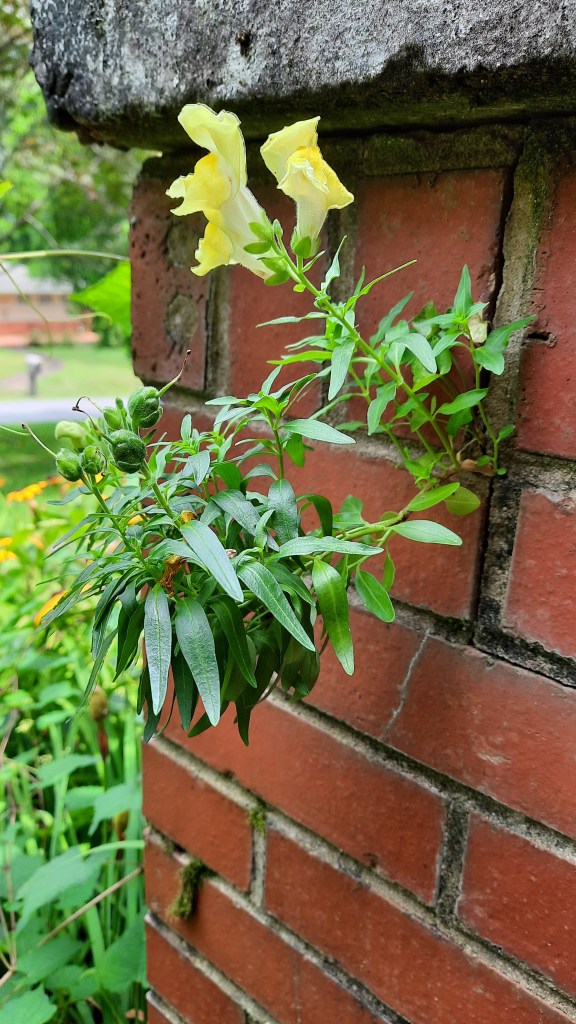
This poem by Alfred Lord Tennyson is what my 6 year old is working on for recitation this term in her tutorial. I had her read me the title and was about to proceed when I thought to ask, “Do you know what the word cranny means?” She didn’t “dictionary define” it but instead said something I didn’t expect, “Mom, is it like the snapdragons we found growing out of the wall in the front yard?”

YES.

I smiled and said, “That is the perfect picture for this poem!”

She read it through twice and asked what it meant, so we talked for another minute about the poem. However, the joy for both of us was not “the point of the poem is…” (like so many of us were taught to treat poetry) but the shared connection to it from our own front yard. As she gets older and revisits the poem for insight, that picture will be etched on her heart.

Being in nature, noticing the most seemingly insignificant things can lead to much inquiry. I asked my husband (who knows all the plant things) how that large cluster of plants could grow out of a crack. He said a seed must have somehow gotten in there and with all the rain we have had, decided to live.

Truly an everyday miracle from God.


Lament and Gratitude

The end of the school year is has come. Last night the girls performed their Shakespeare with friends or showed their various coordinated dances. They all said they are sad to not see their buddies so often, but are excited to be home and have lots of unstructured time this summer.

In reflecting on life after another school year, I opened my commonplace book where I write down quotes from books I’m reading. One passage I wrote was talking about why teachers teach specifically (but I think the sentiment applies to engaging with humanity in general), saying, “You must do without the traditional pedagogic luxury of believing that the people you teach are lazy, rude, or entitled. You do it instead, knowing that they are all straining under the load of their own grief.”

It reminded me of a conversation with a friend about how a gratitude journal and a lament journal go hand in hand. We agreed you can’t see either thing rightly unless you can acknowledge both. If everything’s about gratitude then you have to hide the hard things. If everything’s about the hard things, then you find nothing to be grateful for. I know all too well which side I err on. My prayer is that God would continue to show us those who are straining under the load of their own grief so we can be salt and light in a heavy world. And once we see them that we would not turn away from them, but instead first do our own heart work to be able to give in abundance and service.