Grief Has No Timeline

Grief is not a topic I usually write about on this blog, but on February 4th and 13th I lost two very good friends to unexpected medical events. Both were moms in the prime of raising their boys. Two women who genuinely loved working with children and embracing them unconditionally.

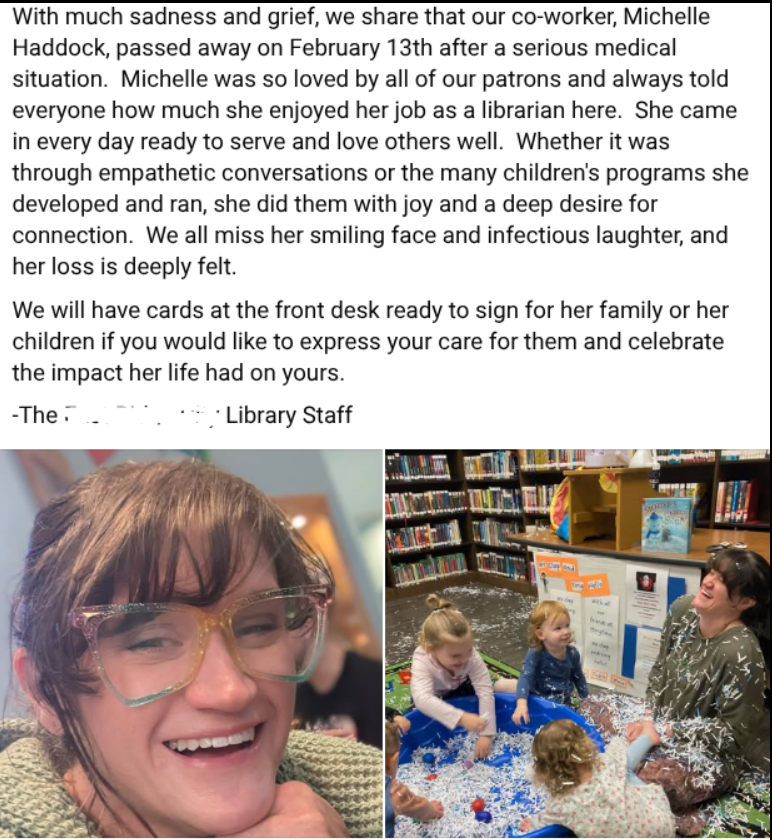
The one I wanted to highlight here at Maple Key is our own tutor, Michelle Haddock who passed away after a severe asthma attack. She was able to be with us for the first week on the farm this year and wrote responses to all the students’ journals. She faithfully tutored one of our students in poetry, creative writing, and literature at the downtown library every week and loved her special connection with her.

Before she came to work for Maple Key, we got to know each other through our work at a local small library. I knew Michelle and I were going to be good friends after she was hired when she began talking about all the children’s literature she enjoyed reading. We would chat all the time about the programming we were working on along with all of our visions for the future of the library. She co-wrote the grant we were awarded in order to bring gardening to the library. Every day she had so much joy, knowledge, and humbleness in her spirit that she freely gave to others in her life. The other tutors at Maple Key and the library are still in deep mourning over her encouraging heart no longer being with us.

Here is what the library posted on its Facebook page:

It has been a difficult few weeks figuring out moment by moment how to manage deep feelings of loss while comforting others in the same loss. You just hug, cry, make a meal, write a condolence card, send a text to your other hurting friends and do it all over again the next day. That’s all you can do when you still can’t get your mind around the absence, the loss of what could have been.

Michelle loved to write and read and reflect. Our co-worker remembered she had started a blog to capture some of her greatest joys — her own children. Her post for her oldest son on his birthday beautifully explained her whole heart:

I have continued to fail you, over and over and over again…. and you forgive me, over and over and over again. You have the most resilient and forgiving spirit of any person I have ever met. Perhaps, it is simply because you have no choice. Walking two newbie parents through life requires one to have thick-skin, to survive all their missteps. But what is so precious about your forgiveness, as I watch you extend it to others and feel it given to myself….is that it is done so completely.  Once you decide to forgive, the slate is washed clean. My hope for you as you enter this new part of your life- the part where many of the hurts that you will carry through the rest of your life will occur- is that you keep that superpower of yours, to forgive with your whole heart. 

My other hope for you is that you will know, that you know, that you know….that you are worthy. I hope that you retain your tender heart. I hope that you keep your fiery spirit. I hope you never, ever forget that you are desperately loved. 

Michelle also loved poetry, so I am concluding this post with one of the best of them — Mary Oliver

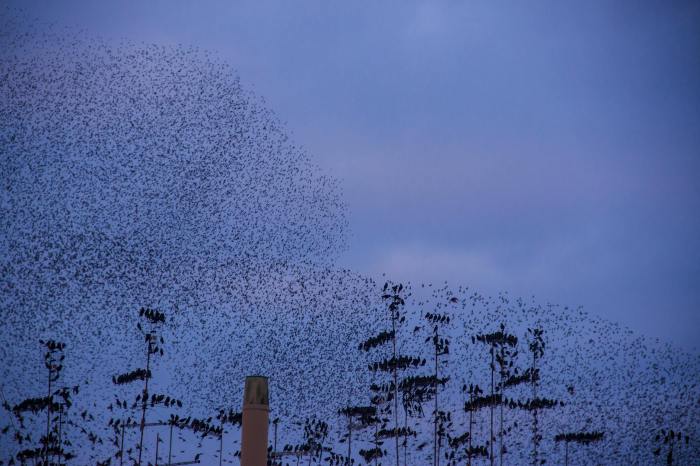
“Starlings in Winter”

by Mary Oliver

Chunky and noisy,
but with stars in their black feathers,
they spring from the telephone wire
and instantly

they are acrobats
in the freezing wind.
And now, in the theater of air,
they swing over buildings,

dipping and rising;
they float like one stippled star
that opens,
becomes for a moment fragmented,

then closes again;
and you watch
and you try
but you simply can’t imagine

how they do it
with no articulated instruction, no pause,
only the silent confirmation
that they are this notable thing,

this wheel of many parts, that can rise and spin
over and over again,
full of gorgeous life.

Ah, world, what lessons you prepare for us,
even in the leafless winter,
even in the ashy city.
I am thinking now
of grief, and of getting past it;

I feel my boots
trying to leave the ground,
I feel my heart
pumping hard. I want

to think again of dangerous and noble things.
I want to be light and frolicsome.
I want to be improbable beautiful and afraid of nothing,
as though I had wings.


We miss you so much, Michelle.

Administration as Necessity

img202505281945322102650624666168480

Tonight I sat down with my daughters at the dining room table preparing my heart to paint with my new watercolor set. I finally made the upgrade to watercolors in tube form instead of pre-made palette cubes. I got out two used palettes from the art table and realized that they had old paint in it from my daughter’s school and one new, completely blank palette that my husband planned to use. This posed an obstacle to my painting desires.

With the old palettes, they needed to be cleaned out to put new colors down. With my husband’s I had to choose which 20 colors I wanted to fill in the slots when I had 36 colors to choose from (including metallics!). In other words, I had to do the leg work of making decisions and preparing the palettes before I ever set down to do anything on the page.

Long story short, I never got around to doing anything other than adding some bronze highlights to something I had already painted because I was so tired from all the prep.

I saw this painting situation as a metaphor for administrative work. I had already spent hours earlier this morning working on contracts for tutors and getting dates lined up for events that aren’t even happening until close to the school year starting, but it involved salaries and per hour math, stipends, and the like so I had to make sure all the right names and amounts were listed on the documents. After the hours I spent glued to my computer, it felt like my summer with my girls was already dwindling away and it just started, though I knew logically there was still much free time to be had.

When you own your own business, administration is a part of the job even when you’d rather play or rest more. Intentionality is so much of what Maple Key does in every corner of the program and it shows through. A business doesn’t work if you show up and enable great things, but manage it poorly (Trust me, I have several doctor office stories to share on that front). So every year we try in small ways to work smarter, not harder. This year I am incorporating a task management component to doing work to keep me doing bite size chunks instead of being overwhelmed and communicate even better to others about what is expected in terms of deadlines.

Administration is hard to monetize. Most people don’t factor that in when considering the value of something. When my husband got his first job in the home office of an international missions organization, he said they never had enough donors willing to give to administration. Many sent gifts for a specific program they heard about overseas and demanded that 100% of it go to that country — the humdrum, behind-the-scenes work in an office building wasn’t compelling; however, the organization tried year after year to make people understand that the home office was vital to the organization’s health and existence.

This is the pep talk I must give myself –administration has a high, often unseen value — when I want to “have administered” instead of actually doing the “administrating”.

Composting as a Spiritual Habit

In certain educational circles you might hear about the classroom environment being the “3rd teacher” (the other two being adults and other children). It’s a concept that is only more recently being recovered in the classrooms accustomed to tidy front-facing desks and bright motivational posters instead of a more curious place for discovery of both self and others.

Obviously for Maple Key, the farm is doing a lot of work as the third teacher — the year round blooms (yes, we even see camellias in January!), the various animals, the winding creek, the structures like the various barns and MiMi’s house. Those things influence our art, our sense of belonging and stewardship, regional connections. But as we all know, life has many classrooms beyond just the ones we are required or choose to attend. That got me thinking about our first classrooms — our homes. What things do we absorb from those places? I zeroed in my thoughts and remembered a part of my home environment was compost.

Meet Benjamin, one of the baby goats on the farm!

My mom didn’t always have a compost tumbler (they weren’t as prolific as they are now), but certainly for the last 20 years. We were a thoroughly suburban family, but my guess is that she got that habit from her mom and dad whose families grew up on or around a lot of farm land in Dickson, TN. In the early 90’s my grandparents had a farmhouse built for them with a beautiful wrap around porch. They would have acres to grow things, my grandfather could ride his tractor around and they were set to enjoy their retirement years among friends and family. Unfortunately, Alzheimer’s had other plans for them as my grandfather was diagnosed with the debilitating disease only a few years into their wonderful rest. They had to make the difficult decision to sell their home and move to Soddy-Daisy to be closer to us, my aunt, and the nursing home facilities he would eventually need.

They moved to a ranch style home in a brand new subdivision and my grandmother wasted no time in carving out some little beds in their tiny yard for her zinnias, beans, cucumbers, and squash. It was such a small plot compared to what they had envisioned flourishing in Dickson, but my grandmother did it faithfully and we snapped beans on her screened in porch each year for her to can and put away.

As for our family, we had been settled in Chattanooga after bouncing around in Texas for a few years for my dad’s job, and my mom got into gardening, mainly daffodills and irises. Somewhere along the line she started saving her kitchen scraps which turned into compost tumblers which turned into feeding her beds rich, black compost for vegetable growing every year.

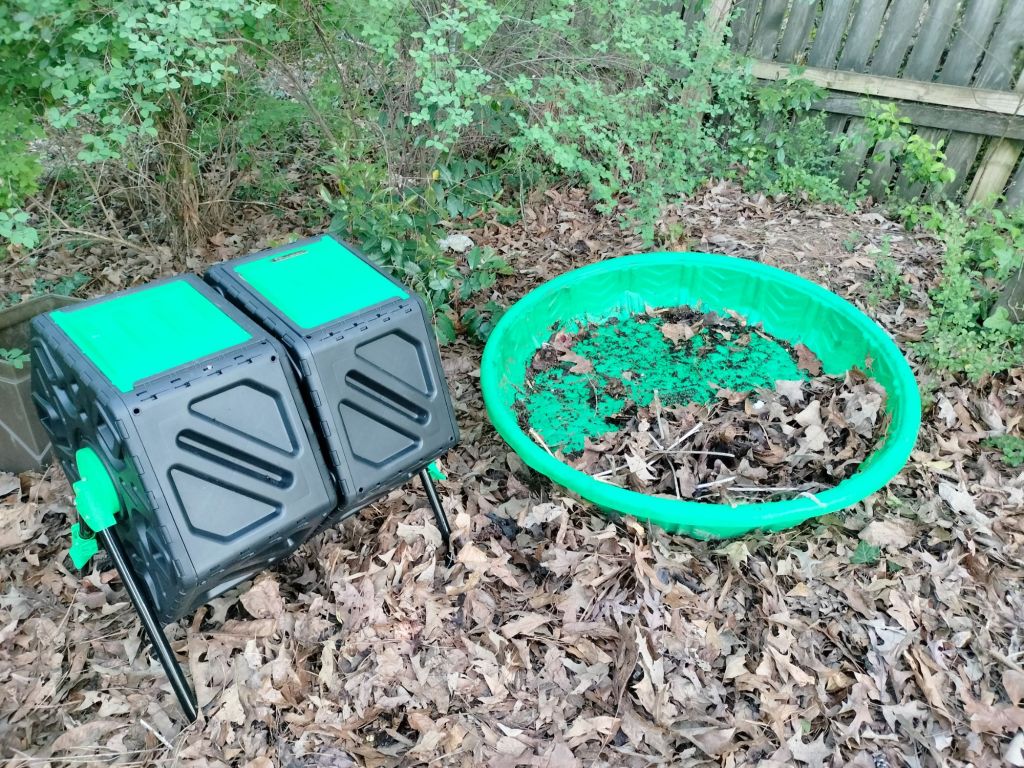
Both my new and old compost methods. Still using both.

As my mom would tell you, I would always put my scraps in the red Folgers jug she kept under the sink, but never really took any interest in gardening until after I got married and had a house of my own. Thanks to a steel compost pail and compost hut gifted from my in-laws, somehow I started the habit just like my mom if for nothing else than to keep food waste out of the trash can. Now it’s just like second nature for everyone in our house to recycle and compost. It’s just a way of life on our shady quarter acre lot. This year I am hoping to increase our compost yield by having bought a tumbler of my own and being more diligent to spin it (which takes the place of turning it in the swimming pool we had used exclusively) and process more so I can experiment with what can grow decently in the shade after some failed attempts in years’ past.

I tell this story just to say that it’s amazing how much we absorb from our “3rd teachers”. Those places we call home truly do shape us even if we can’t see it until decades later. My mom and grandmother never pressured me to continue on in their gardening footsteps, but whether I realized it or not there was always something noticeably peaceful and rewarding for them in the act of gardening and composting. To them, why would you not invest in these simple acts of beauty and stewardship in your daily life? The environment they prepared for me, even in very suburban settings, helped prepare me to desire a space like the farm that I could learn from as I teach alongside it. It helped me catch a vision for how the library and community center I work for can practice interdependence through our community gardening.

img202403261252013155714463786068158

Many of the girls in Maple Key are light years from where I was at at their age. Several compost and play in their own gardens or help their family plant things each year. They take me around their property before tutoring time and tell me stories about what grows where or what new plant they are trying out. They harvest basil for pesto and grow okra in the summer. They give me free plants. Of course some of them don’t garden but enjoy getting to indulge in it and work hard during our time on Tuesdays. They, like me, may never own a farm, but their many classrooms are teaching them valuable lessons on what it means to help something grow and tend it faithfully. This is a spiritual habit if there ever was one.

Have you ever stopped to consider what “environments” were your 3rd teachers? Particularly those things or spaces you perhaps unintentionally neglected but you can see with more clarity as you get older? I’d love to hear about it in the comments.

HopeWords Conference 2024

When you own your own tutoring business, you have to research and pay for professional development for yourself. HopeWords has been a writing conference that is an easy place to say yes to every year. It’s located in the beautiful state of West Virginia which is actually a reasonable driving distance from us in Chattanooga, Tennessee. All the speakers sit out among the audience and eat at the same tiny restaurants as everyone else. Everyone just chats like it’s the most normal thing to do with strangers who write from all over the U.S.

This is my third year and I want to emphasize that one of the blessings of HopeWords is that they are making space for all ages at the conference. My oldest daughter, age 14, came this year and last year and Travis (the host), the other attendees, and the authors have welcomed, embraced, and challenged her. In her everyday life she is used to people mispronouncing and misspelling her biblical name. Many of the conference attendees when they met her said, “What a beautiful name” because they understood its biblical significance. Daniel Nayeri, the keynote speaker, signed her book and when I said offhandedly that she has 3 other sisters with Bible place names he said enthusiastically, “Ooh. Tell me all of them!” as we proceeded to have a short and lively conversation. The next day when he came in the restaurant where we were eating he boisterously (and so jolly-like!), pointed at all of us saying he knew us and we just laughed and waved right back at him going back to our conversation, like it was not odd to give a friendly wave to a Newbery award winner at dinner.

Our college friend, Amanda Opelt, sings and writes and was invited to welcome guests back into the afternoon sessions with her guitar. She asked our daughter a week before the conference if she would be willing to sing the high harmony with her on an Appalachian tune covered by the Wailin’ Jennys. When our daughter joined her on stage she introduced her as her friend, not my “college friends’ daughter” but a young woman worthy of her identity and relationship in her own right. Amanda even paid for appetizers at the local restaurant saying she owed her a portion of her honorarium.

Photographs by Cheryl Eichman

At the “after party” on Saturday we sat at a table with the men responsible for a lot of the revitalization projects going on in Bluefield, West Virginia. We had a riveting discussion on community development practices for 30 minutes. The undertone was about not giving up hope in hard places. My daughter said later it was a fascinating conversation and not at all what she thought we’d end up talking about with so many writers around!

It’s the little things like that that remind me why HopeWords is special. There is a deep respect for children and young adults within this Christian community of writers and community movers and shakers. The attendees treated my daughter like an adult. The speakers did the same in their speeches and in how they are truly the same humble people on and off the stage. Anyone involved with HopeWords welcomes and invites all into a life of writing, creativity, community, and curiosity. As an educator, I cannot think of a better mission for a conference.

This year I noticed there were many more young people than had come in the past and I hope the number of teens keeps rising as this conference continues to flourish. Our youngest daughter is in Kindergarten and she says she has “poem words” in her mind. She illustrates stories about pirates, animals, and princesses constantly. Maybe some day she will want to come, too?


Until next year,

Rachel

Featured Student Work: Book Reviewย by Maryellenย 


Whispering Trees: Book Review of The Singing Tree

The Newbery Medal once, the Newbery Honor Twice, and the Caldecott Honor all went to author and illustrator Kate Seredy. Seredy was born in Budapest, Hungary, in 1899. She grew up with a scattered family heritage, having grandparents from so many different places, and hearing all sorts of opinions and stories. She graduated from college with an art degree and moved to the U.S. soon after in 1922. She illustrated things to provide for herself while learning the English language. Her first book was The Good Master, a book based in Hungary with her as the main character. Four years later, when she wrote the sequel, The Singing Tree, she knew what war was like, having been a nurse in World War I, and was able to write about the hardships that came with it. She continued illustrating and writing books, many of which got notable honors and awards. She always considered herself more of an illustrator than a writer, creating until 1962, thirteen years before her death at age 75 (Young).

A website titled โ€œA Tribute to Kate Seredyโ€ claimed, โ€œ…the best of Seredyโ€™s writing has auditory and visual qualities which draw readers in and carry them alongโ€ (Young). This is the first time I have read one of her books and I agree with this statement. In The Singing Tree, at the beginning of each chapter, there is a little traditional Hungarian picture which gives a sense of anticipation and motivation to help the reader continue. The artistry featured pictures at the end of each chapter that are less traditional but they go with the storyline, typically portraying something that happened in the chapter as a little reminder which for me, helped break up the text well.

The target audience for this book is probably early teens to young adults. The book isn’t too thick and loaded with information, yet it isn’t something that you can fly through and not miss anything. I liked that the chapters were easy to manage, taking about 10 to 15 minutes to read about a chapter and a half. The vocabulary and story line are good for teens about 12 up to maybe age 20.

I was surprised by The Singing Tree because I typically don’t prefer books that are historical facts and information. This one was historical fiction and I really enjoyed both the history as well as the style of writing. I knew that Seredy based some characters and settings on her experiences, but it made me wonder how much of the book was fiction and how much she actually experienced. Given her background, I wish Seredy told a little bit more about the war.ย  I understand why she refrained from talking about it, but I felt like if she was going to put a war in her story, there needed to be more context.ย  Every time Jansciโ€™s father shared about his experiences in the war, it was about something important to the story but didn’t give too much context outside of that.

Seredy introduced many characters in The Singing Tree but one of the more important ones is Jansci, a Hungarian boy in his middle teens who values growing up and being a man. He is very thorough and tries to do the best that he can to be like his father, working on the farm and tending all the animals. Village life is all Jansci has known, caring for everything and others recognizing him for being hardworking and helpful. When his father gets called to the war, Jansci knows what to do on the farm because of community, tradition, and how his father has modeled it. Throughout the book he grows up during the worst parts of the war and continues to learn how to do these things without his father, enjoying more responsibilities and learning what he needs to know to be a Hungarian man.ย 

As Jansci is growing up in the village, with him is his cousin, Kate. She is a young teen girl who is very passionate about things, like her chickens. She will not let anyone harm the things that she loves. She struggles to accept all of the restrictions that come with growing up and the things she has to learn. She is in that transition stage between being childish and being a young woman. She still has to learn what the women in the village are called to do which means she has to put certain things aside. For instance, riding horses with Jansci is not how ladies ride horses and the way she dresses now cannot be like men.

I relate with both Kate and Jansci but in different ways. Kate’s determinedness is a lot like me in that she doesn’t give up and is almost always optimistic. Jansci has a sort of sturdiness and quietness to him that I also see a lot in myself. He is an observer of people and that is something that helps us both know a little about what to expect so as not to be caught off guard.

As well as Jansci and Kate, there are other kids in the village who are learning to see life differently. Lily is first seen as a spoiled young girl, having been badly influenced from a fancy school in Paris. She stays with Kate and Jansci while her father is in the war. She slowly gets to know the village and family better, beginning to love and appreciate the animals and farm life. She learns that tradition is supposed to be a cherished ritual, and should be treated with respect, as well as that each animal on the farm is necessary, just as much as each person hasย value. She has changed from her false โ€œParis identityโ€ to appreciating the farm as where she belongs.

Seredy shows us how wars change the way people live, and how sometimes, well known truths change in ways that are devastating. Near the beginning of the book, during the war, Jansci is returning home and is required to pick up 6 Russian prisoners. They get stopped by a Hungarian soldier who is looking for one of the men from the village who ran from his duties in the war. He had received a letter that his wife, who had just had a baby, was sick. The soldier doesnโ€™t know that within his load of prisoners Jansci is smuggling the man to their house. The soldier pities the manโ€™s wife saying to Jansci, โ€Son, itโ€™s a crazy world when itโ€™s a manโ€™s duty to kill, and a sin to comfort his wifeโ€ (Seredy 156). He knows that traditionally it was a man’s job to comfort his wife and a sin to kill, but at the current time, it was the other way around. This was something completely different from their lives before the war. Just as also at the beginning of the book, they count the time by the things that are happening โ€” when the maple turns red, then it’s time to pull the potatoes, etc., but near the end of the book, everybody is counting the time by different things, letters from fathers, nights until a holiday, days since the war started, and more all because of the warโ€™s disruption. These things strengthen one of Seredyโ€™s main themes, change (because of the war) vs tradition (the way of life before the war).

There were a few characters in The Singing Tree who were in denial aboutย  the war and they had to accept that there would be some troubles ahead of them. The people have to accept that there will be change and that the traditional ways still remain, they are just altered. A large part of the book is about who the main people are, as well as who the village sees them being. Jansci, Kate and Lily find out what makes them unique and how they can use their special talents to help while the men are away at war. They have to find their identities and roles as young men and women. In a time of war, the farm animals gave the family at home a purpose and a reason to get up in the morning. They were a very subtle way to keep up hope while loved ones were away fighting. The animals provided a source of comfort and healing to families in the community.

No matter what nationality people are, they understand without speaking, the chores that need to be done and the way to do household things. The barrier of language doesn’t matter; the plow will look the same. When people from different areas come in, they help around the farm without asking what to do or how to do it. In the war, both sides are fighting, but they know that this is not the way to settle disagreements. Jansciโ€™s mother realized that the Russian prisoners she took in did not want to fight. They wanted to be at home with their families just like she was. She knew that the countryโ€™s leaders were to blame, not the men. She says, โ€Why should I mind? They are men, like ours. Maybeโ€ฆ if we are good to themโ€ฆ theyโ€™ll write home too, like Sandor, and say that we are kind and maybe some Russian woman will say to her husband or son: โ€˜Donโ€™t aim your gun too well; they are just simple people like we areโ€™โ€ (Seredy 142-145). It is such a good quote to describe how life during the war affected people on both sides.

The war from Seredyโ€™s Hungarian childhood had a really hard impact on her life and she based this book on her experiences growing up and what she gathered from that. She saw war and suffering and greatly disliked it. She saw how it tore families apart and disrupted daily life. She put a lot of great lessons into her writing that can still apply today โ€“ the truth of coming of age and the theme of love without barriers helps the book into a deeper meaning that you have to dig for. She reminds us that we don’t have to speak the same language or fully understand, to help and work together to get the work done. Seredy wanted to teach us there are deep lessons in tradition. As Jansciโ€™s father said, โ€œโ€˜Whispering trees,โ€™ he went on gently as if speaking to them,โ€™they have weathered many storms. Some of them are broken and almost dead, but new shoots are springing up from their roots every year. Those roots grow deep in the soil, deeper than the trees are tall. No one could kill them without destroying the very soil they grow in; what they stand for lives in the hearts of all Hungarians. Nothing could kill that without destroying the country.โ€™โ€ (Seredy 39).


Works Cited

Seredy, Kate.The Singing Tree. New York, Penguin Group,1990.

Young, Linda M. โ€œA Tribute to Kate Seredy, Author and Illustrator.โ€ Flying Dreams, http://home.flyingdreams.org/seredy.htm. Accessed 18 November 2023.


From time to time I will feature student work here on the blog (always with their permission). Maryellen wrote this over a few months in 2023/2024 during our one hour tutoring time each week after reading The Singing Tree. Maryellen is a big reader who is very methodical and observant. I love her keen sense of literary analysis and ability to make textual connections with the world around her as well as other texts. She worked diligently and patiently on this project from drafting to revising to editing!
The Local Library

Last month I got a new job. I didn’t quit my old one, but added to my repertoire as they say.

I was a library assistant my senior year of high school and considered for a while becoming a librarian, but it didn’t really fit with my college choice and I wasn’t sure if I was up for grad work right away in order to get the job I wanted. So I let that dream go and life has swept me along thinking about it every now and again…

I guess the Lord didn’t want me to forget about that pursuit when we realized our house was within walking distance of the local library (also a 3 minute drive). It’s located in the city hall complex on the backside with no flashy sign, so many people don’t know it’s there. Near the building is a newly redone playground and splash pad and dog park that helps draw people in. My family has been going there for over 12 years and having 4 kids meant racking up a lot of stroller miles over that time.

Fast forward to now… a longtime library employee, who we loved dearly, recently moved. All the employees shifted up in positions which left the 8 hour a week spot open. They asked me if I wanted to join on and doing some creative support, event help, and behinds the scenes grunt work. They said this position has no set hours and my kids are always welcome to come with me. How could I say no?

My co-worker (who is an incredible artist!) made a stencil and I chalked this outside the library for Dino-vember

So I have run Bingo for the older crowd, wrapped boxes for movie time photo ops, shelved books, taped and stamped books, chalked dinosaur feet, helped people locate graphic novels, cut out crafts for storytime, organized craft items. Ironically, through doing this varied work it confirmed my choice to not become a full-fledged librarian who acquires books and labels things, etc. I have to have a lot of variety in my jobs, so being behind a desk all the time isn’t what I am built for. I have to move which is probably why I became a teacher instead.

I am excited about giving back in a small way to a place that has given so much to my children and so many others over the years — a community area that really is like a second home and a safe space to them. When I work (now as an official employee of my city) I see all the many faces of my community and even my own literal neighbors. That was the part I didn’t consider when I was dreaming about books as an 18 year old, but I see it so clearly now. These “3rd spaces” (places that are not home or work) are vital for populations to flourish.

For the Love of Handwriting

Can you picture in your mind the handwriting of someone close to you?

I can see my dad’s tiny angular script for lists and labeling. I can see my mom’s crisp, legible rounded letters almost connected like cursive (very much like her organized self). I can see my husband’s almost-shorthand with quick letters that make sense to him because he has to take so many notes for work and classes. I can see my own teacher-informed style written on whiteboards and handmade cards with equal parts legibility and could-be-a-font.

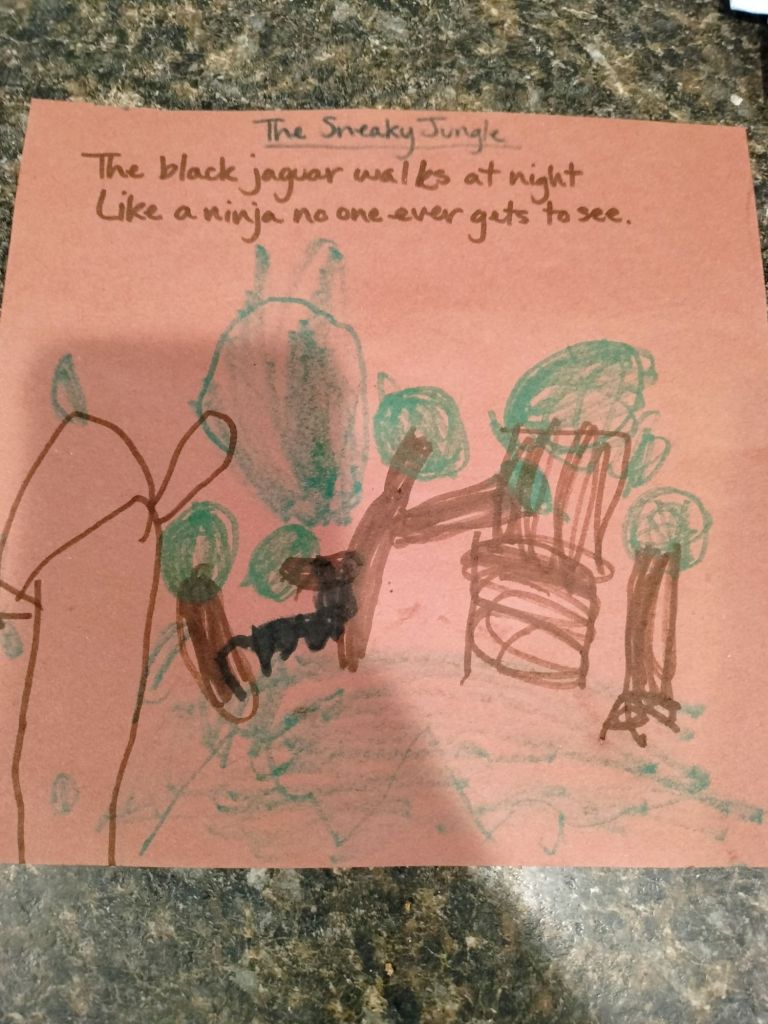
I started down this line of thinking because of a piece of paper my youngest daughter brought home form her Kindergarten co-op. I saw her name written at the top by her teacher, who by God’s eternal goodness, happens to be one of my college roommates. Seeing her script at the top of the paper was sort of like the cherry on top as I was already excited about her knowing my daughter as a learner in the classroom.

My roommate was an incredible elementary education major and hearing about all the passion, fun, and child-centered respect she brings to the kids in her class each week reminded me of all the notes we passed back in forth in education classes before the days of cheap personal laptops and WiFi being strong enough to carry the load. I still have shoeboxes of notes and memorabilia in my closet from each year of college, filled with the handwriting of all my friends from those 4 years.

Perhaps what I am encouraging all of us to do is to welcome being surprised by the little joys in life, like handwriting. When the people we love are no more we will hang on to many memories of how their life intersected with ours and one of the most unsuspecting things is through something that is uniquely them — their words scrawled on a piece of paper.

Coach 4 Life

Because I believe in asset based approaches, I recently took a strength finders test.

My top 5 were:

– Coach (supports others’ growth; dislikes wasted potential)
– Philomath (loves learning; dislikes know-it-alls)
– Strategist (sees big picture; dislikes slow decision makers)
– Catalyst (generates momentum from stagnation; dislikes wasted time)
– Brainstormer (idea generator; dislikes closed-minded people and practices)

In other words, I can get a lot done in short amount of time, but I really like to see the long term growth.


I was discussing this with my oldest daughter on the way home from a rainy cross country meet in Nashville. Her sisters were almost finished with their fall sports season with incredibly gifted and kind coaches. I told her my personality was definitely built like a coach and she was confused.

“I thought a coach was someone who screams at their team when they don’t do well after a game.”

I told her, who hasn’t had much sports experience, that unfortunately, some coaches do that but that her ideas were largely formed by TV sports tropes; coaches come in many shapes, sizes, and volume levels. I explained that life coaches don’t yell, but help adults stay on track to meet their goals. I said that asset-focused teachers are coaches because they know that they are only partly responsible for the results; the students is the one who must exercise their agency and make choices to propel their own growth.

She responded, “So you mean like an encourager?”

Exactly.

I have had those coaches that demeaned the players and being a sensitive child who had little tolerance for injustice, I was always demotivated and angry at them. I am thankful that organizations have moved toward placing the child’s needs above the competition through modeling community spirit. Seeing this posted on my old sports league’s website gives me hope that the community will hold itself (and all its coaches) to a higher standard and that’s just good for everyone.

I will never embarrass my child or [this organization] by verbally abusing/insulting participants, coaches, board members, other parents or officials.

Also, I understand that the stands are NOT the place to shout personal instruction.

If something occurs with which I disagree, I will calmly seek an appropriate solution, at the appropriate time.

I understand that instigating or participating in a confrontation in front of any child is NEVER appropriate and will not be tolerated.

I will never lose sight of the fact that I am a role model. I understand that children imitate their role models and by acting appropriately.

I will be modeling what I expect of my child as well as influencing others in the program.

When I look for people to help with Maple Key, I look for coaches though I don’t want their leadership profile to look just like mine. With the unique skills God has given them, these tutors see what can be when the girls in Maple Key learn over time the habits that are worthy of pursuit while knowing that making mistakes is a part of the cycle of growth.

“Some People Cry, Some People Do Other Things”

I have a thin scar between my chin and mouth. It’s offset to the right of my face. When I was in 3rd grade, I was hitting a beach ball over the swingset with my sister in our backyard. Our next door neighbor was playing on the tandem swing seat at the same time. I dove for the ball while he was gliding forward with all his momentum and suddenly an ER visit was born. Thankfully, my dad was home when my face started gushing blood. What do you put on a face wound like that? My memory recalls an ice pack or cold water in the mix of temporary relief in order to get me to the ER (ultimately a drenched washcloth compressed to my face did the trick).

I have a strong memory of my dad driving like a banshee in his red S-10. It was the first and only truck he ever owned because a few years later a drunk driver hit his truck bed and the sports trading cards he was transporting for his business flew all over the road. It’s a strange irony knowing that my dad’s body experienced reckless driving for different kinds of numbing — himself full of adrenaline driving a hysterical child whose face needed an anesthetic and colliding with a driver whose ability to cope with his trauma that day was maxed out.

Eventually my mom showed up and waited with me in the emergency room, too. Before they stitched me up, there was a part of me that wanted to see what the pain I was experiencing actually looked like on my face. I was too afraid to actually push hard for a mirror, but I remember my mom telling me that I really didn’t want to or need to see the hole. I somehow soldiered through the suturing that eventually left a bright red scar which showed up prominently in my class picture along with my brushed out curls (not sure which was worse my or hair or the scar). However, at age 38 even my own four children haven’t noticed the scar that I used to get a lot of questions about, so the doctor apparently did his job well.

My husband recently got to experience a similar fate as my dad, our first ER visit with a child after 13 years of believing we could avoid it. We were camping with church friends watching a movie at someone else’s site while he was about to put our four year old to bed. She had been monologuing and wildly gesticulating as children her age often do for 30 minutes. His wise strategy was to let her keep talking until she wore herself out. Unfortunately, as he was about to get up to escort her to her sleeping bag she made a miscalculated movement, tripped, and fell back into the smoldering fire. He quickly yanked her out as her favorite nylon princess nightgown instantly melted in the back. He rushed her to water and mercifully none of her outfit stuck to her. Her right hand did get licked by the flames though and it required some quick decision making. Both flooded by adrenaline, we ultimately decided for him to take her to the ER back home an hour away and I stayed at the campsite with the other girls until morning. Her initial care went smoothly and she got the ointment she needed to start the healing process.

When we all got home, my husband asked me if I wanted to look at her melted gown and I immediately said, “No!” My body’s reaction took me right back to the ER of my childhood, being so thankful I chose the parental wisdom in not being permitted to see the hole in my face. Instead of carrying that image in my mind for the rest of my life, I can now only see through my scar the healing that took place. I hope my daughter doesn’t ask to see her gown again, having to see the image of the gaping hole and the knowledge that she can no longer wear it and the memory that it burned right off her. But if she does, I will lovingly explain why I threw it away. I might wonder if that was the right decision for her as it was for me? Taking away the images of what could have been and focusing on the healing that lies ahead.

The papers from the hospital said there’s a possibility that even with the ointment her hand might be slightly discolored from the healing process. Our hope is that it will heal up entirely with no trace. But if not, she’ll end up like me, with her own story to tell about how her daddy showed up tender in his own way with a wound care variety pack and a box of fruity tic-tacs.


Before taking me to the ER, my dad was no stranger to hospitals because of the many surgeries my sister had to have due to her hydrocephalus and seizures. He showed up time and time again for her, my mom, and me. He still shows up in how he treats his granddaughters with the same level of sacrifice, spoiling, joke telling, and concern when someone is upset. Seriously, if there was an award for the grandfather who has played the most games of Candyland to calm someone down, he would win it no question.

I knew I wanted to marry my husband when I saw how deeply he thought about the implications of life. He read tons of books, was an incredible writer, and always kept his dorm room exceptionally neat. I don’t know that I believe the adage you try to marry someone like your father. There are many ways my husband is not like my dad at all, but I find that to be a healthy thing. In the ways that truly matter, I have two men in my life who are just alike — they.show.up.


Given the nature of this post, I am crying while writing it. I choke up a lot more these days than I used to: tears mean that my mind and body are processing well together. Writing out my memories means a similar healthy expression as well. Our oldest daughter, when chided by her younger sister about not crying at the news of her younger sister being burned, had her notebook out and was trying to write the events of the day by headlamp in the tent. She said as stoically, confidently, and slowly as a firstborn can, “Some people cry, some people do other things”. Her attempt at writing the facts helped her nervous system process in a way that kept her from completely losing it over her littlest sister’s injury. She might have taken my somber marching orders for everyone to get good sleep and not freak out a little too seriously, but I hope she heard my tears on the air mattress, too.

Lessons from a Robot Vacuum

Photo by Ron Lach on Pexels.com

One of the best pandemic purchases we ever made was our Shark robot vacuum (affectionately known as Umizoomi, Umi for short). Having never experienced a machine like this, we particularly enjoy watching how his sensors work. The manual said we could program him to map the rooms for efficient cleaning, but our house is small enough that we never chose to invest the time. We just hit the clean button and watch him randomly bounce around until the room is free of grit. Sometimes I will be typing on my laptop while in the living room recliner and hear him struggle to get over the floor transition from the kitchen to the dining room. He often gets stuck there and will run his toothed wheels in futility. The obnoxious sound he makes is like a refrigerator that is trying to pulverize crushed ice for a cocktail, a repetitive chipping and grinding noise that is incredibly grating on the ear. At that point you have two options, rescue and redirect him or wait for him to figure it out on his own. At first, we did not realize he actually had the capacity to liberate himself from obstacles and tight places; we would just yank him up. We had to learn a tolerance for his robot nature by observing him over time and watching him get himself unstuck after literally banging his head against the wall. There are occasions where he truly is run aground by cruising over a stack of papers and then, and only then, will he emit a unique distress call and light up red.

When he needs to recharge I hit the โ€˜dockโ€™ button and he senses the stationโ€™s signal no matter where heโ€™s at. Unfortunately, he often discovers that there are couches or chairs in the way of his destination and he gets very confused. Despite being 15 feet from where he wants to land, he starts to take these bizarre, circuitous routes. From my perspective, they make absolutely no sense. Why would you go backwards when your goal is forward? Why would you end up in an entirely different room moving toward the things in your way over and over? And yet when I actually leave him alone, he does eventually find his home.

Paradoxically, our non-human resident, Umizoomi, teaches us quite a human lesson on how to take the long view when people (including ourselves) appear โ€˜stuckโ€™. We so often want to swoop in and rescue using our solution when we see the same mistakes being made time and again. What opportunities do we snatch from them and us when we constantly insert ourselves into an uninvited conversation? There are certainly times when stepping in does allow for a constructive conversation, but we often we misread when there are signs of a challenge or problem to be solved and not actually of distress.

Through listening to the pain of my friends and attending to my own unaddressed hurts, I have been reflecting on and looping back to this theme of walking alongside people when you are tempted to cut to the chase with advice or dismissal. I am convinced that the way we can tell a hurdle from an S.O.S. (especially with our children) is by observing enough to discern the difference and checking in if we’re unsure. We give appropriate room for them to grow (which may involve our help if we demonstrate trust), but not without a safe place to land if needed that will still affirm their worth.