
Subscribe to continue reading
Subscribe to get access to the rest of this post and other subscriber-only content.
where the humanities and sciences converse

Subscribe to get access to the rest of this post and other subscriber-only content.

Here is a guest blog post on the writing and editing process from my husband. Reprinted from his Substack with obvious permission. This is why we like working together on projects 🙂
I’ve often said that I’m a better editor than I am a writer.
Whether that’s the whole truth or not is for others to judge, but what I know is this: both crafts bring me joy, but one comes much easier than the other. Writing for me is slow, tedious work.
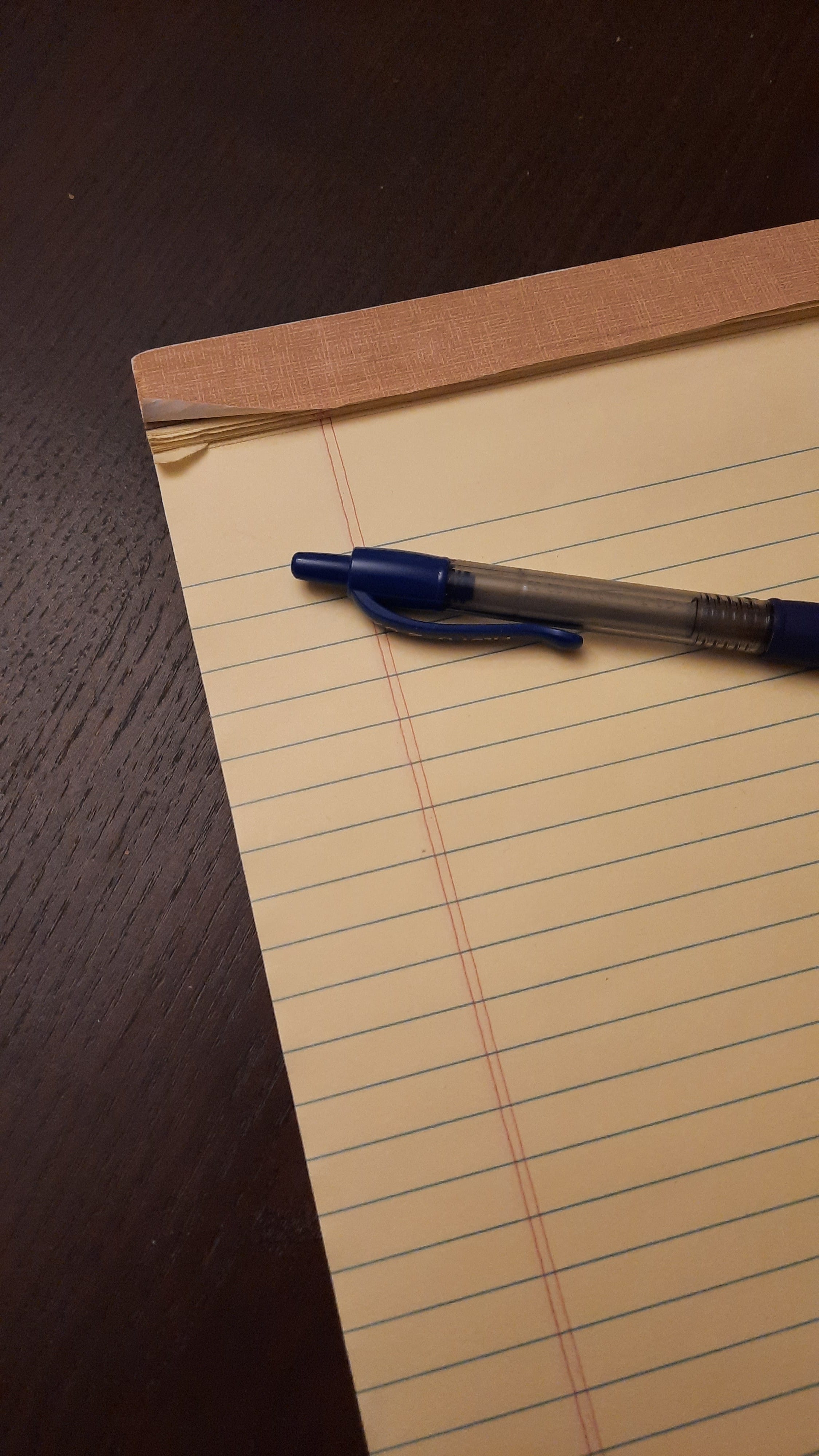
This is likely because I’m always editing. I’m rejigging every thought before it finishes hitting the page. It’s a combination of tasks that layers poorly—both the writing and the editing going slower and being less effective together than they would be separately. Perfectionism is the enemy of creativity. This nervous habit seems worst in Microsoft Word, where the work “feels” finished from the baseline format, and every minor mistake is flagged with squiggles. Typing on a blog or social platform brings a bit more freedom, given the need for speed and hope for immediate engagement from readers. If I really want to get into a flow, I have to have a pen (Pilot G2 extra fine blue, thank you) and a legal pad.
When I edit others, though, my fingers fly through a document with surgical precision, correcting typos, smoothing syntax, tweaking word choices, shortening sentences, rearranging paragraphs, synthesizing ideas in comments, asking clarifying questions, etc. I’m a veritable machine of reader empathy.
At various points in my life, I’ve done this full-time (editing my student newspaper in college; operating a monthly print magazine; trying to get a digital monthly off the ground), and it’s always been part of my various jobs. For professional copy (marketing materials, blogs, newsletters, magazines, etc.) my skills and fervor for crafting the best possible finished work is usually a welcome—even unnoticed—part of the process.
When editing more personal projects, the process is a bit less welcome. It’s one thing to tell yourself to “kill your darlings” altruistically, and quite another to have someone else do it with dispassionate deftness. Part of this is no doubt due to the fact that most of us don’t ever give our work to a good editor until we submit it for publication, and the process of getting feedback after acceptance can be jarring. Someone who hasn’t been in conversation with you about your idea, someone you don’t know well, is coming for your hard-won creation.
Editing as Collaborative Creation
But this is precisely where editing is most beneficial. It’s difficult to do this part remotely, or in a mere exchange of documents. You have to get your hands dirty, so to speak, till the soil of relational capital to grow something together with a writer that neither of you would have come up with independently.
This is part of what Elliot Ritzema has called “editing as fellow-feeling,” helping someone sound more like themselves and saying what they really mean to say and coming to a place of sympathy with them. But it goes deeper. Good editing isn’t merely an essential part of refining an author’s ideas and voice, but a process of mutual discovery of the “thing” under the words written. It’s a dialogue to add necessary context and trim down any details that will get in the way of communing with readers on that elusive shared wavelength of recognition.
This cultivation of a work is also part of what a good writers’ collective or workshop group should do—carefully inviting others into the process of bringing something closer to completion. A group that’s built trust and collective knowledge of each other doesn’t take submitted material as the end of something, but only the beginning, calling forth more of someone’s essence than they initially put forward.
Sometimes, the one-on-one of editing gets a little more nosy, though, pressing into the unfinished corners of thought with ruthless curiosity. It can get a bit messy before it gets better.
Case in point: as we’ve slowly moved out of the never-ending demands of the little-kid phase of parenting (our youngest is finishing kindergarten), both my wife and I have spent a lot more time writing. We also edit each other’s work, somehow managing to be both each other’s biggest fan and firmest critic in a growing symbiotic “cottage industry” of putting words into the world.
Neither of us really enjoys the first go-round of edits—holding on to concepts and words a bit like a dog guarding a bone. Eventually there’s always a turn, a pivot toward reciprocal creation once we both begin to see what could be, that pushes something through to the finish.
When I say I’m a better editor than writer, this is what I mean. I find it so much easier to create from something that’s there, and with someone who is delighted through the making. It’s true that you can’t edit a blank page, but I sometimes can’t even begin to do my best writing until I’m on someone else’s page. Helping another writer discover their best work within the ideas they’re chipping away at energizes me and usually overflows into remembering how to do my own work better.
At its finest, good editing sparks a virtuous cycle, bringing life to words and to the world. Anything worth making is worth making together.
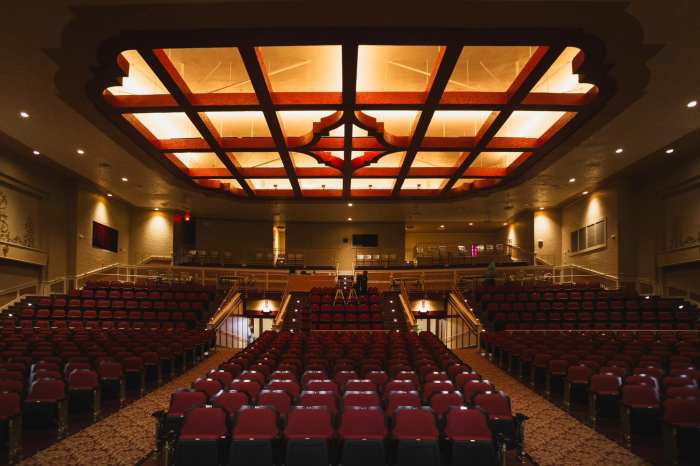
When you own your own tutoring business, you have to research and pay for professional development for yourself. HopeWords has been a writing conference that is an easy place to say yes to every year. It’s located in the beautiful state of West Virginia which is actually a reasonable driving distance from us in Chattanooga, Tennessee. All the speakers sit out among the audience and eat at the same tiny restaurants as everyone else. Everyone just chats like it’s the most normal thing to do with strangers who write from all over the U.S.
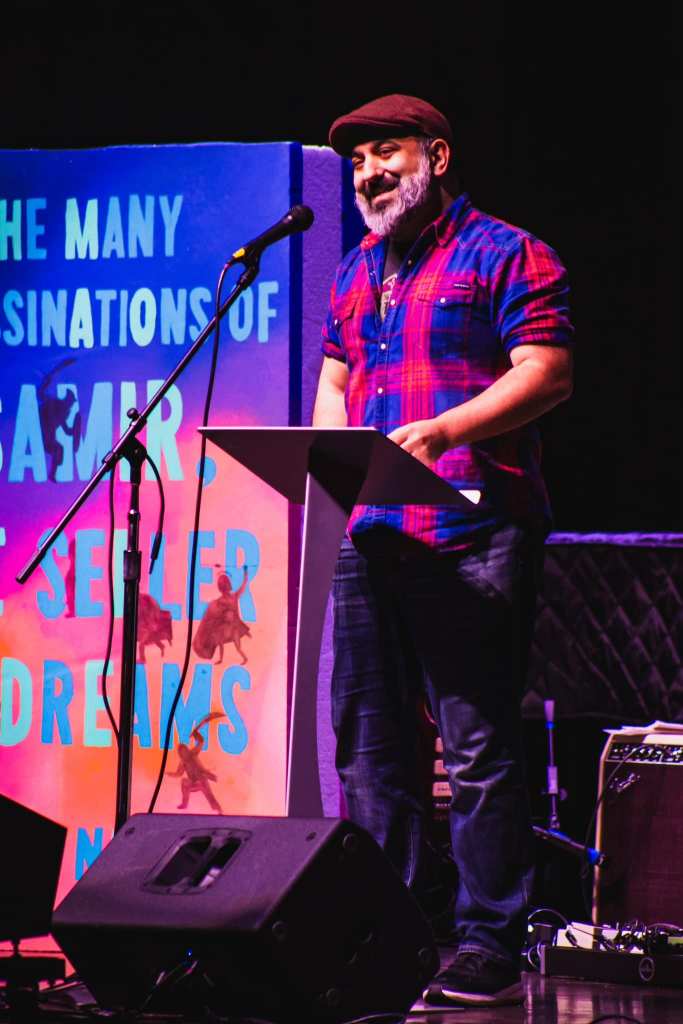
This is my third year and I want to emphasize that one of the blessings of HopeWords is that they are making space for all ages at the conference. My oldest daughter, age 14, came this year and last year and Travis (the host), the other attendees, and the authors have welcomed, embraced, and challenged her. In her everyday life she is used to people mispronouncing and misspelling her biblical name. Many of the conference attendees when they met her said, “What a beautiful name” because they understood its biblical significance. Daniel Nayeri, the keynote speaker, signed her book and when I said offhandedly that she has 3 other sisters with Bible place names he said enthusiastically, “Ooh. Tell me all of them!” as we proceeded to have a short and lively conversation. The next day when he came in the restaurant where we were eating he boisterously (and so jolly-like!), pointed at all of us saying he knew us and we just laughed and waved right back at him going back to our conversation, like it was not odd to give a friendly wave to a Newbery award winner at dinner.
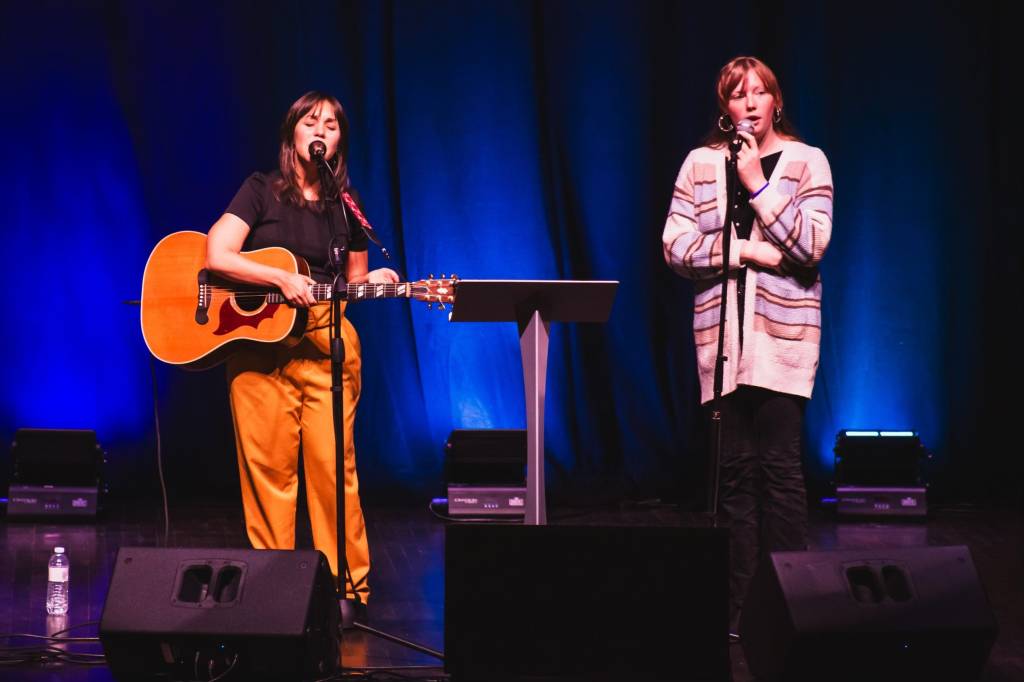
Our college friend, Amanda Opelt, sings and writes and was invited to welcome guests back into the afternoon sessions with her guitar. She asked our daughter a week before the conference if she would be willing to sing the high harmony with her on an Appalachian tune covered by the Wailin’ Jennys. When our daughter joined her on stage she introduced her as her friend, not my “college friends’ daughter” but a young woman worthy of her identity and relationship in her own right. Amanda even paid for appetizers at the local restaurant saying she owed her a portion of her honorarium.
At the “after party” on Saturday we sat at a table with the men responsible for a lot of the revitalization projects going on in Bluefield, West Virginia. We had a riveting discussion on community development practices for 30 minutes. The undertone was about not giving up hope in hard places. My daughter said later it was a fascinating conversation and not at all what she thought we’d end up talking about with so many writers around!
It’s the little things like that that remind me why HopeWords is special. There is a deep respect for children and young adults within this Christian community of writers and community movers and shakers. The attendees treated my daughter like an adult. The speakers did the same in their speeches and in how they are truly the same humble people on and off the stage. Anyone involved with HopeWords welcomes and invites all into a life of writing, creativity, community, and curiosity. As an educator, I cannot think of a better mission for a conference.
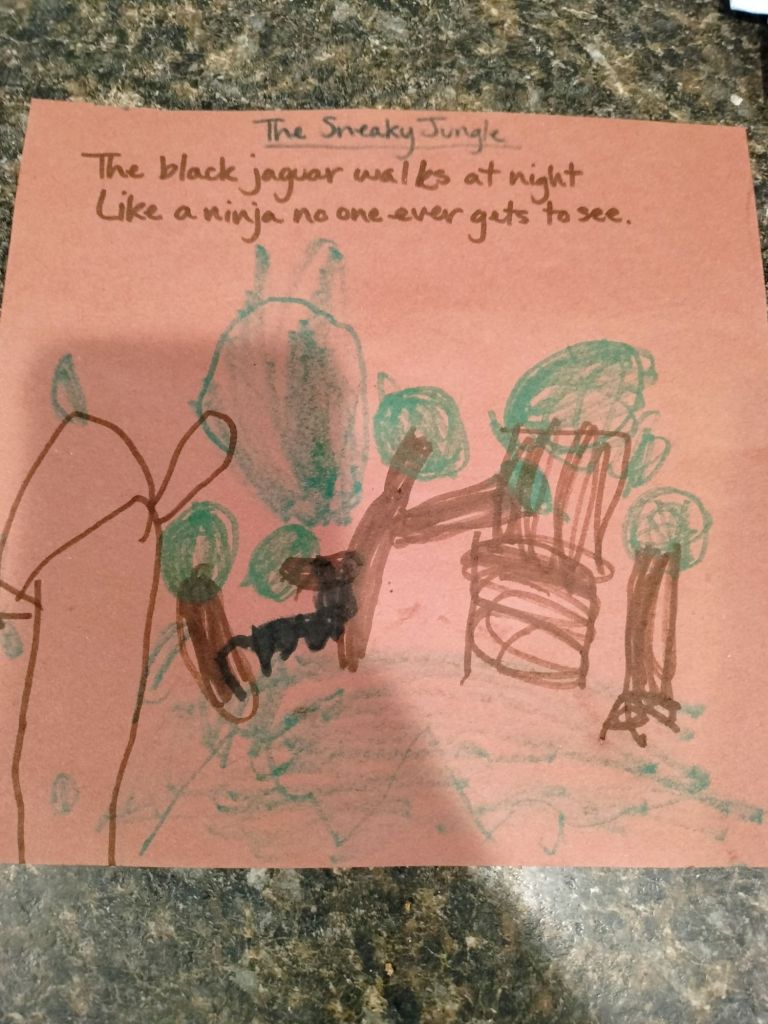
This year I noticed there were many more young people than had come in the past and I hope the number of teens keeps rising as this conference continues to flourish. Our youngest daughter is in Kindergarten and she says she has “poem words” in her mind. She illustrates stories about pirates, animals, and princesses constantly. Maybe some day she will want to come, too?
Until next year,
Rachel

Sometimes I want to pinch myself — I have two dream jobs that involve people and books!
I get to work at the library where I can engage people during events, have co-workers, be creative and visionary, and sometimes listen to audiobooks while I do other non-creative tasks.
I also have this job where I get to walk alongside students who are discovering who’s already inside them. To see what the literature and nature provoke in them during the week.
Despite what some people assume, I was not a bookworm growing up. I loved hanging out with people but mostly enjoyed read alouds from the teacher and the occasional trip to the school library. I went to daycare after school where I mostly played on the huge playgrounds or tried to be friends with the staff instead of the students (on-brand me…). I was off the charts in reading and writing abilities, but my taste in books didn’t start to form until I started hitting high school. Even then, I read few books outside of assigned readings. If it weren’t for some really faithful and gifted English teachers, I honestly don’t know if I would be doing what I am right now. Through literature, they showed me the power of someone’s story and that fire has never left. I can easily say that desire to seek others’ perspectives has been indispensable in every area of my life.

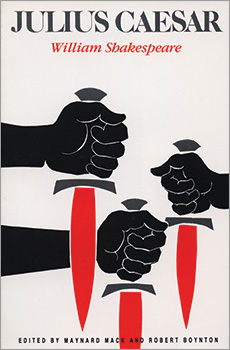
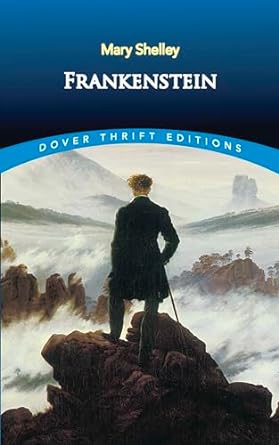
I think my own “reading journey” can help other parents feel at ease if their student doesn’t seek out all the goodness that’s available to them right now. I don’t promise that their child will become a literature major (and that’s not what they want anyway!), but I do believe that reading, discussing, and asking good questions together helps push that needle forward toward seeking out better writing and inspiration for themselves. Students need to discover how to think about what they think! Their personal connections create fond memories of literature and remind them of many others who they can ask for rich books along their own journey.
In addition, I hope reading more widely gives them the freedom to decide for themselves what makes a good book and what doesn’t. I am almost 40 and still can feel bad about having wildly different views than my friends or critics on certain well-acclaimed books. However, I know I might gain some different perspectives hearing from them just as I should be willing to explain my position if asked. Learning to be settled in who you are as a reader is a gift that requires patience and cultivation.
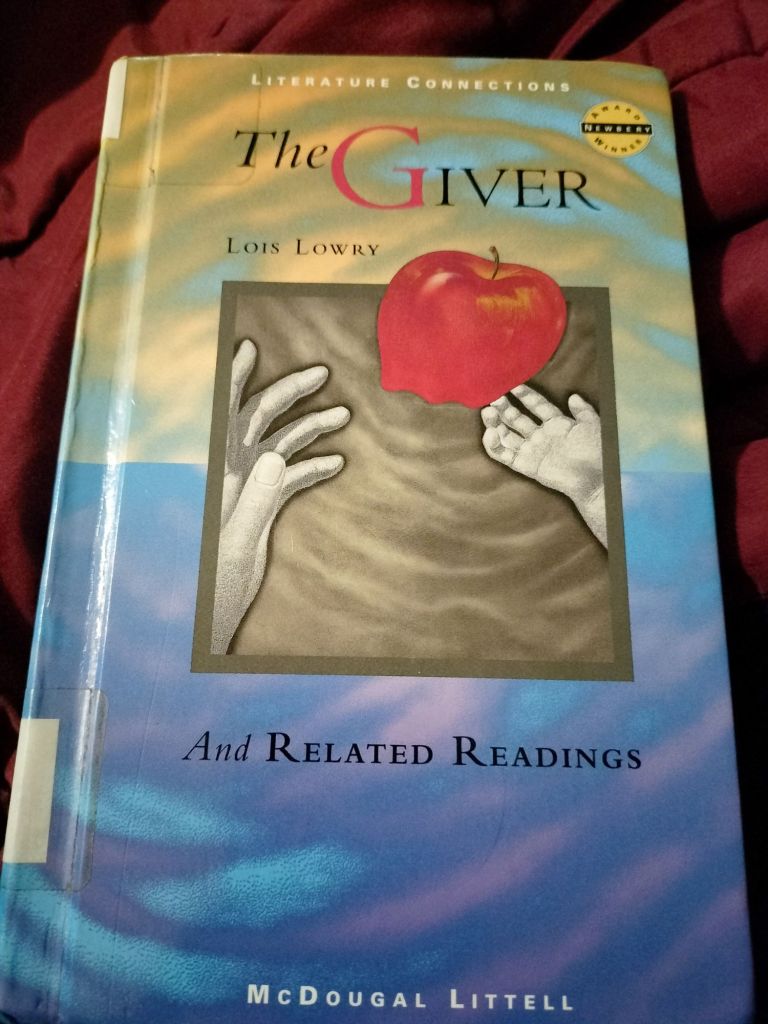
P.S. Look at this copy of The Giver I found at my library. It was published in 1997, only 4 years after the novel came out. The related readings are an incredible resource (see poem below). Part of why I love my tiny library is that a bigger library might have culled this one out decades ago for a newer copy of just the novel. Little libraries can keep gems if you know where to look!


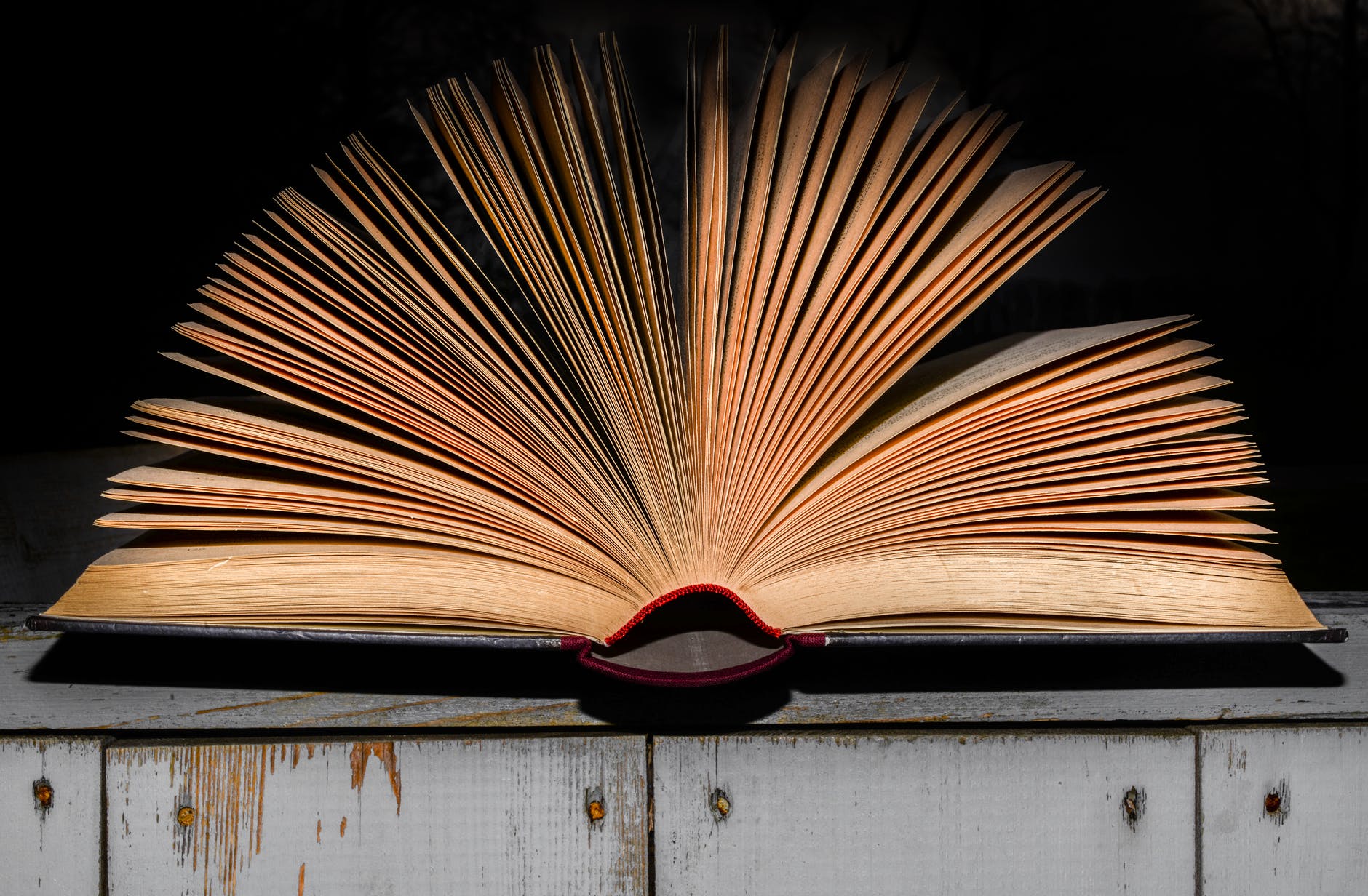
This is by no means an exhaustive list of my 2021 reads, but since it is getting close to the start of a new year (presumably when people make resolutions to read more widely), I will pick a handful that I think are worth your time. They are listed in no particular order.
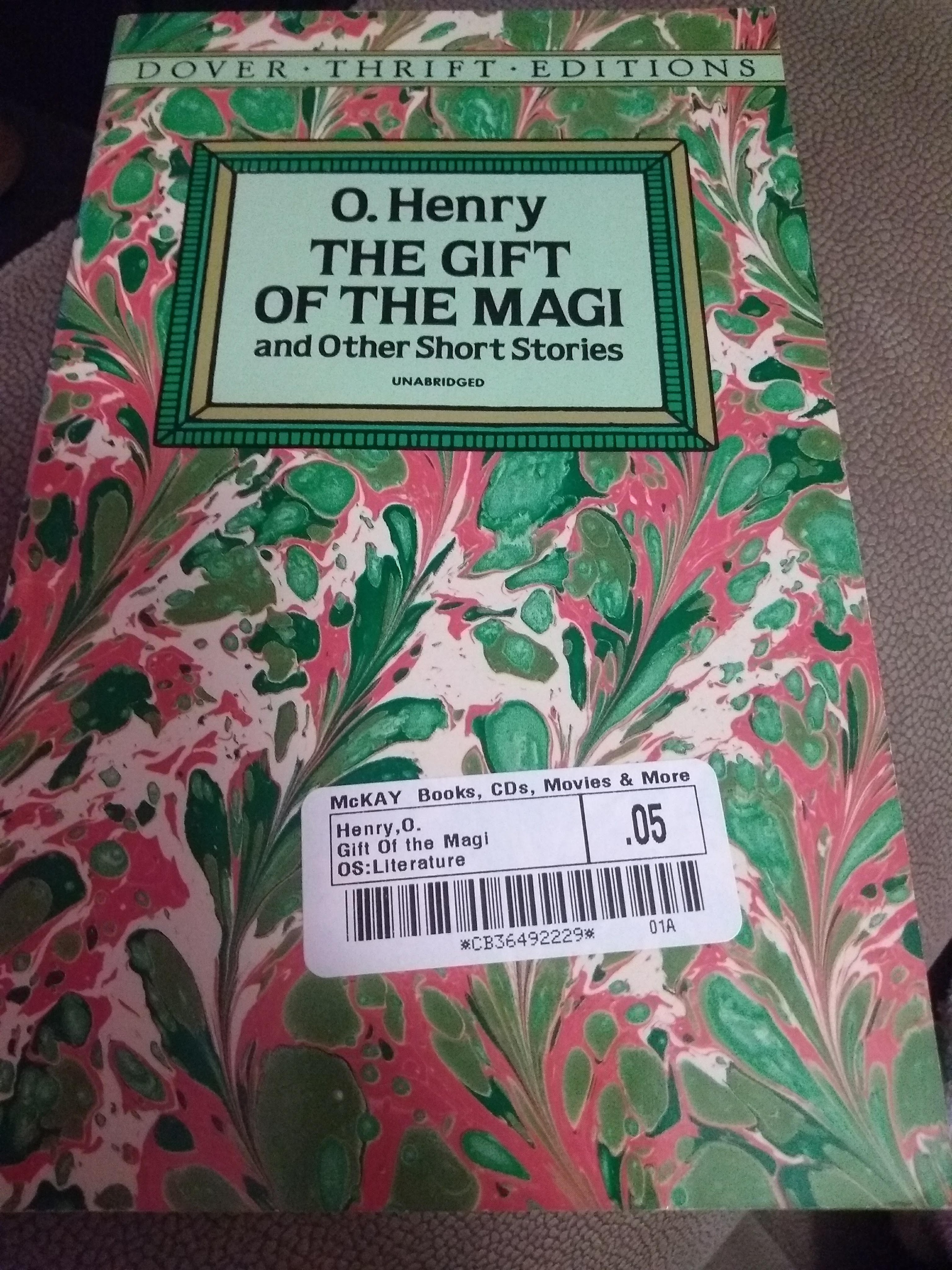
Never judge a book’s value by its 5 cent sticker. These O. Henry short stories have been a perfect way to end out our evenings during Fall Break. The kids keep saying, “Wait. That’s it?” and I keep saying, “It’s a short story. You are left to ponder the future of these characters you’ve been so briefly introduced to.”
In that moment, it struck me that we read a lot of chapter books but not short stories. Chapters are vignettes with the expectation that a) more helpful information is to come and b) loose ends will likely be tied up. Not so with the short story. They really are their own literary form — a whirlwind romance of words. In terms of accessibility, the genre feels like a binary — Aesop’s fables are short short stories and then you graduate to collections like this with elevated language (written from 1906 – 1911 and the language reflects it) or more modern short stories with very adult themes.
Short stories are tough to write because you have to create believable characters the reader wants to invest in, yet be willing to let them go in a very small amount of time. For instance, in “The Last Leaf” Henry tells us about two artists, Sue and Johnsy, the indifferent town doctor along with the eccentric neighbor in the apartment downstairs. Just a handful of characters to create this heartwarming tableau about the cost of friendship as Johnsy develops pneumonia and is bedridden, believing her fate will be sealed when the last ivy leaf falls off the vine outside her window.
Some people have criticized O. Henry’s style, his penchant for twist endings, saying he is a predictable, manipulative writer. But to my 7th grader, her breath was authentically taken away when the story ended tonight. Her voice cracked and the words, “Oh. That was so… touching” surprisingly tumbled out of her mouth. She was fully invested in the characters which is what made the twist a powerful literary device. Here’s hoping I can find (or any of my readers can recommend) more worthy short stories to share with my students and family.
 Maple Key Tutoring