Changing It Up In The Garden

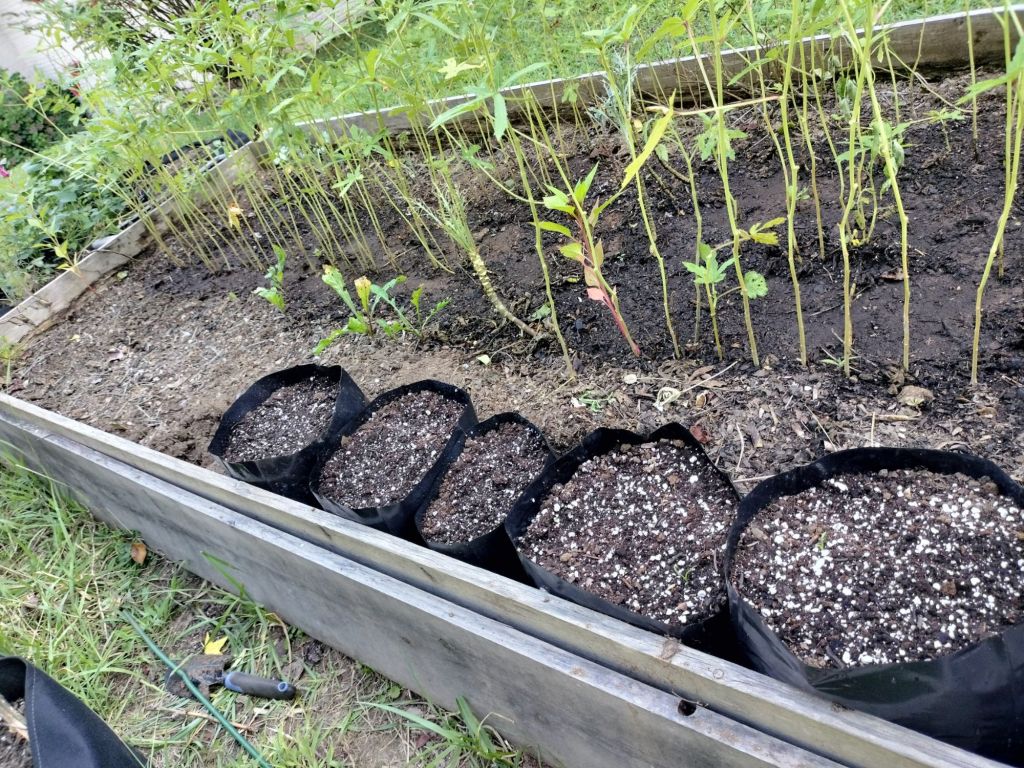
The raised bed at my house has been frustrating me. Each season I keep amending the soil only to find it going back to root balls and compact soil. This fall I have decided I have agency, and am going to completely redo the bed…into containers.

Normally, I wouldn’t go through the hassle since I have so little margin already with my time, but a fortuitous (but also sad) thing happened this month — our local horticulture supply store decided to close its doors forever and mark everything 50 percent off. So I went a little crazy (more on that in a minute) and one of the purchases was something I had never tried before — very inexpensive grow bags that have holes pre-punched in the bottom.
img2025090717460019781904534971270

I bought them in various gallon sizes and while I also obviously plan to use them for Maple Key, I have other places I can share the love of gardening such as the library I work at or the homeschool tutorial my children go to.

As you can see, I am still growing spindly, but producing okra right now, so I am doing the bed bit by bit. I am taking the compact, dusty soil (that’s partly my bad!) and putting it in a paint bucket, adding homemade compost and vermiculite to provide nutrients, good bacteria, and aeration for the soil. Then, I dish it back out in each bag.

I really think this is going to be much easier to manage than what I had been doing and it’s just one more reminder that you can always change what you’re doing in gardening if it’s not working for you! Nothing about gardening is locked in, so do what’s best for your season of life and environment.

Now onto my big purchase…!
img202509041019381411436653280902632

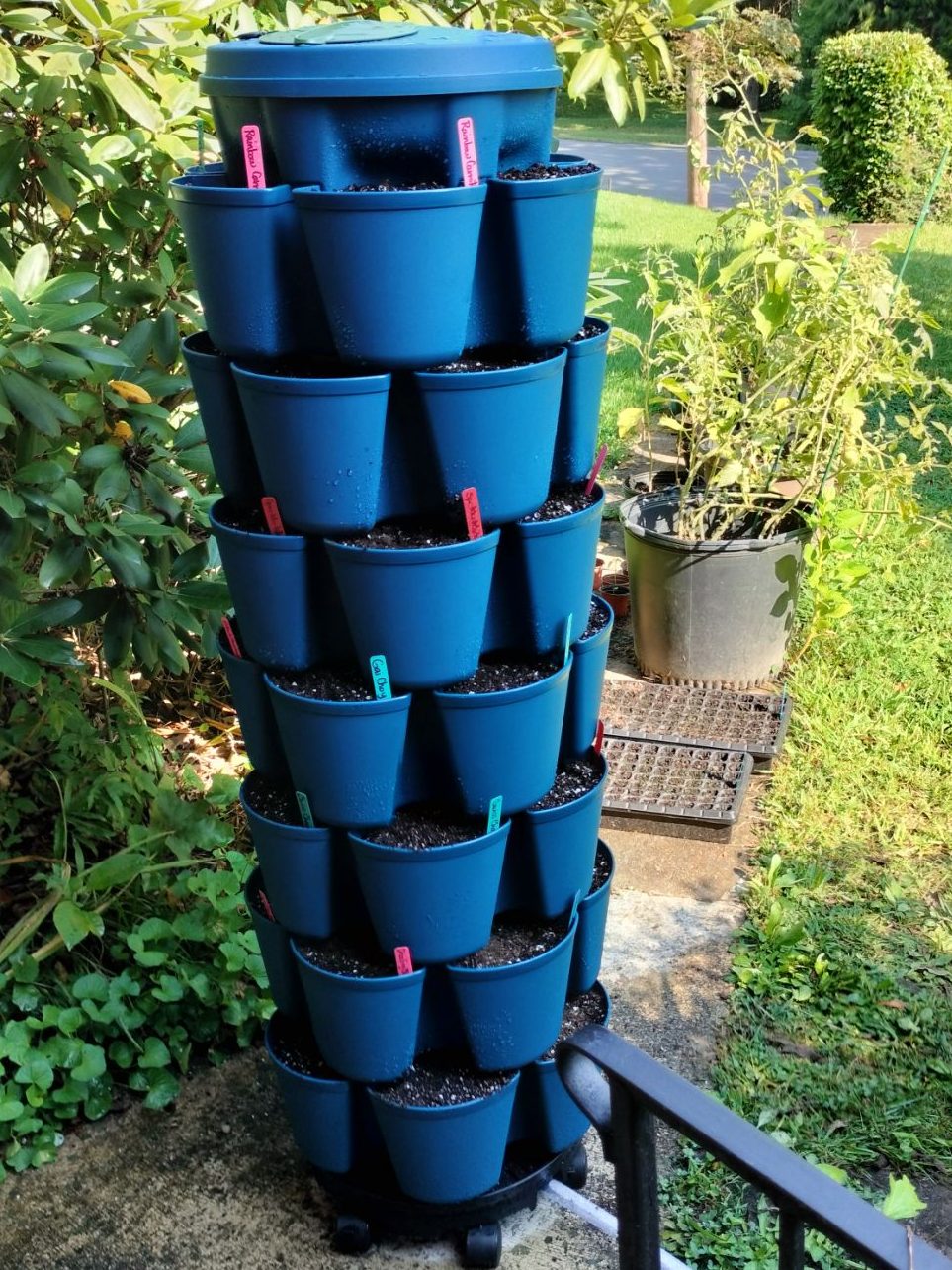
The other big change I am trying this year (again, thanks to the going-out-of-business sale) is vertical gardening. I bought a GreenStalk 7 tier planter with a bottom spinner! I was already excited about it (less pests, less bending down, right outside the door), but then I found out they are a local-to-Tennessee business, just up the road in Knoxville. That made me proud that this innovative, family-owned business is exporting such a great product all over the world! I even convinced my friend to buy a matching one with me and my mom to buy the 5 tier design, so we’re all planning for some great fall harvests.

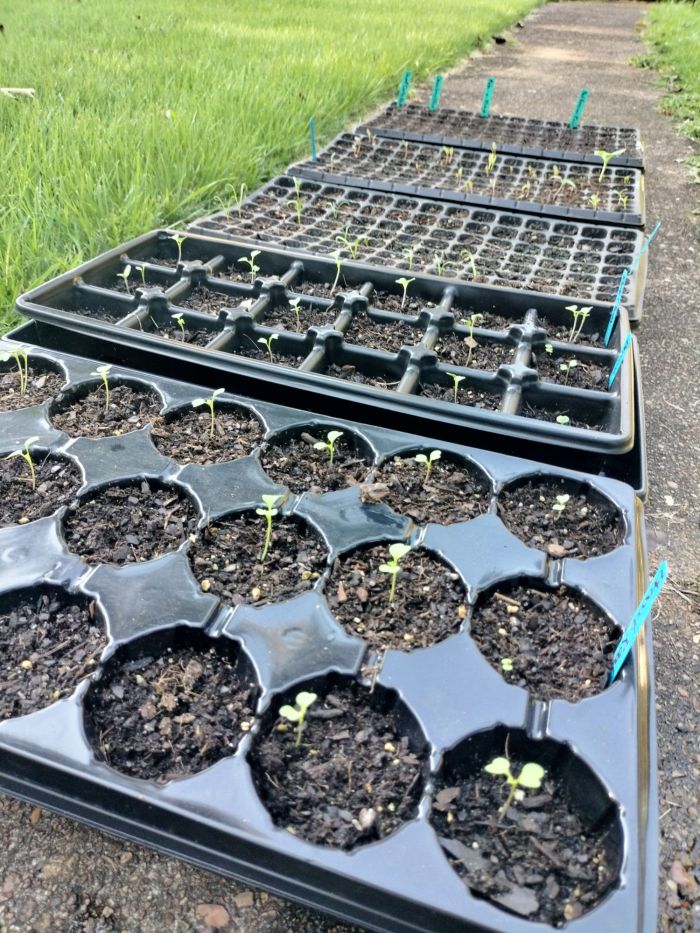
After spending the money on the planter and the ProMix soil, I didn’t want to shell out for plants, so I started everything from seed. So far, the kale, spinach, bush beans, and radishes have all popped up and I am sure the others will, too at some point. This is another great experiment that I am hoping to bring to the library (so we can start our own library gardening programs) and the farm to add to our growing list of trials to see what grows!

Honestly, it’s great to have jobs that all tie into each other in some way, so that when I do good work over in one area, another one benefits from the new knowledge! At the library we are currently applying for a $1000 grant to get GreenStalk vertical gardens for the library so that we can make gardening accessible to all age ranges and demographics — children, elderly, differently abled.

I can’t wait to talk to Maple Key students about my new way of playing and planning in the garden that supplements what we’re doing in the traditional garden beds. My hope is to inspire them with even more things to put in their bag of gardening tricks for when they desire to start their own gardens. I want them to always carry a sense of play, have fun, learn new things 🙂

Growing the Future Generations

Ah… the kale palm trees! (Photo by Kindel Media on Pexels.com)

I went to my primary care physician this morning for my yearly checkup. I must say, I lucked out several years ago when I was able to get into her practice. She is always a delight to talk to — a rare mix of firm (but not pushy) and warm (like she really hears you) that makes you feel really confident in her advice. From the looks of the waiting room though, I am usually the youngest person there (despite being 40 now!) by about 30 years. I often wonder how many “young” patients she actually has.

I told her that before the holidays my husband and I started a program that promoted mindful eating (more fibers, greens, etc. and creating a slight calorie deficit from less snacking and smaller portions). She asked what my primary reason for doing this was and I explained that around age 39 is really where I noticed my metabolism just sort of gave out. I was still exercising and eating reasonably good food (with the carbs and sugar always waiting in the shadows…), but my gut was sort of done with me. My arms and legs were in great shape with walking and gym time, but I had a closet full of dresses that were collecting dust after my I’ve-had-4-kids middle was now preventing me from enjoying.

She said she wished I could stand in the waiting room and give a TED talk to her elderly patients about why it’s important to make these changes by 40 so they can recover well from things in their 70’s. She shook her head and said somberly “sometimes I worry less about foreign interference than I do the American diet. It may kill us before someone else gets to us.” As I said, she sees a lot of older folks so her statement was born less out of hyperbole and more out of a lot of doctor fatigue.

As I left the office, I was thinking that maybe part of why I do the gardening portion of Maple Key is to encourage people like my PCP. To let girls know at a younger age that trying new things, growing your own food, getting curious about how to use the food, serving others, and teaching others how to grow food is a habit you’re never too young or old for. It’s not like the girls who come into the program have a green thumb and a super refined taste for greens already; it’s not like when they leave the program they will have done a 180 and love all things verdant for dinner. It’s exposure and an invitation to the goodness of creation. That’s all I ask of them — just roll with the veggies we’ve got, but no one is forced to eat anything.

I always tell them that I was SUPER picky about food at their age, embarrassed at how much I hated salads (back when iceberg was the lettuce du jour; I still hate it), but over time as an adult I exposed myself to more things and now enjoy and tolerate more than spurn the veggies on my plate. I tell them I did not like or eat kale before I started growing for Maple Key, and now I really really love it for its freshness and versatility. Giving people space to grow and experience vegetables on their own terms is a big part of my philosophy about the environment being our third teacher 🙂

Composting as a Spiritual Habit

In certain educational circles you might hear about the classroom environment being the “3rd teacher” (the other two being adults and other children). It’s a concept that is only more recently being recovered in the classrooms accustomed to tidy front-facing desks and bright motivational posters instead of a more curious place for discovery of both self and others.

Obviously for Maple Key, the farm is doing a lot of work as the third teacher — the year round blooms (yes, we even see camellias in January!), the various animals, the winding creek, the structures like the various barns and MiMi’s house. Those things influence our art, our sense of belonging and stewardship, regional connections. But as we all know, life has many classrooms beyond just the ones we are required or choose to attend. That got me thinking about our first classrooms — our homes. What things do we absorb from those places? I zeroed in my thoughts and remembered a part of my home environment was compost.

Meet Benjamin, one of the baby goats on the farm!

My mom didn’t always have a compost tumbler (they weren’t as prolific as they are now), but certainly for the last 20 years. We were a thoroughly suburban family, but my guess is that she got that habit from her mom and dad whose families grew up on or around a lot of farm land in Dickson, TN. In the early 90’s my grandparents had a farmhouse built for them with a beautiful wrap around porch. They would have acres to grow things, my grandfather could ride his tractor around and they were set to enjoy their retirement years among friends and family. Unfortunately, Alzheimer’s had other plans for them as my grandfather was diagnosed with the debilitating disease only a few years into their wonderful rest. They had to make the difficult decision to sell their home and move to Soddy-Daisy to be closer to us, my aunt, and the nursing home facilities he would eventually need.

They moved to a ranch style home in a brand new subdivision and my grandmother wasted no time in carving out some little beds in their tiny yard for her zinnias, beans, cucumbers, and squash. It was such a small plot compared to what they had envisioned flourishing in Dickson, but my grandmother did it faithfully and we snapped beans on her screened in porch each year for her to can and put away.

As for our family, we had been settled in Chattanooga after bouncing around in Texas for a few years for my dad’s job, and my mom got into gardening, mainly daffodills and irises. Somewhere along the line she started saving her kitchen scraps which turned into compost tumblers which turned into feeding her beds rich, black compost for vegetable growing every year.

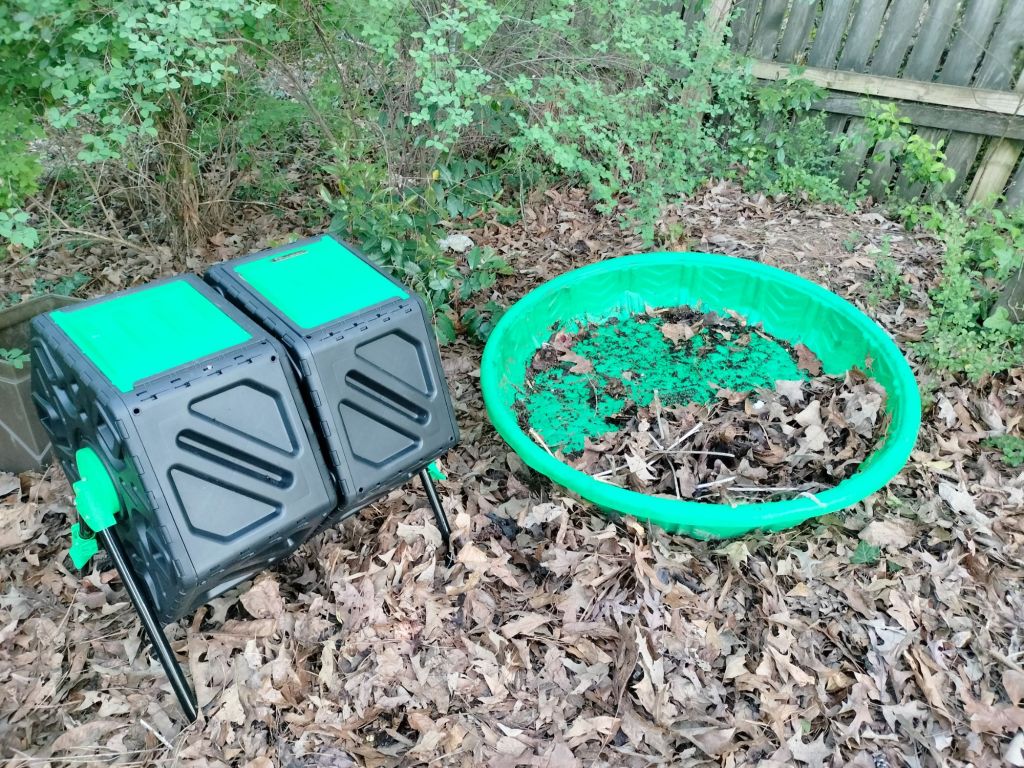
Both my new and old compost methods. Still using both.

As my mom would tell you, I would always put my scraps in the red Folgers jug she kept under the sink, but never really took any interest in gardening until after I got married and had a house of my own. Thanks to a steel compost pail and compost hut gifted from my in-laws, somehow I started the habit just like my mom if for nothing else than to keep food waste out of the trash can. Now it’s just like second nature for everyone in our house to recycle and compost. It’s just a way of life on our shady quarter acre lot. This year I am hoping to increase our compost yield by having bought a tumbler of my own and being more diligent to spin it (which takes the place of turning it in the swimming pool we had used exclusively) and process more so I can experiment with what can grow decently in the shade after some failed attempts in years’ past.

I tell this story just to say that it’s amazing how much we absorb from our “3rd teachers”. Those places we call home truly do shape us even if we can’t see it until decades later. My mom and grandmother never pressured me to continue on in their gardening footsteps, but whether I realized it or not there was always something noticeably peaceful and rewarding for them in the act of gardening and composting. To them, why would you not invest in these simple acts of beauty and stewardship in your daily life? The environment they prepared for me, even in very suburban settings, helped prepare me to desire a space like the farm that I could learn from as I teach alongside it. It helped me catch a vision for how the library and community center I work for can practice interdependence through our community gardening.

img202403261252013155714463786068158

Many of the girls in Maple Key are light years from where I was at at their age. Several compost and play in their own gardens or help their family plant things each year. They take me around their property before tutoring time and tell me stories about what grows where or what new plant they are trying out. They harvest basil for pesto and grow okra in the summer. They give me free plants. Of course some of them don’t garden but enjoy getting to indulge in it and work hard during our time on Tuesdays. They, like me, may never own a farm, but their many classrooms are teaching them valuable lessons on what it means to help something grow and tend it faithfully. This is a spiritual habit if there ever was one.

Have you ever stopped to consider what “environments” were your 3rd teachers? Particularly those things or spaces you perhaps unintentionally neglected but you can see with more clarity as you get older? I’d love to hear about it in the comments.

In Praise of Reciprocal Memberships

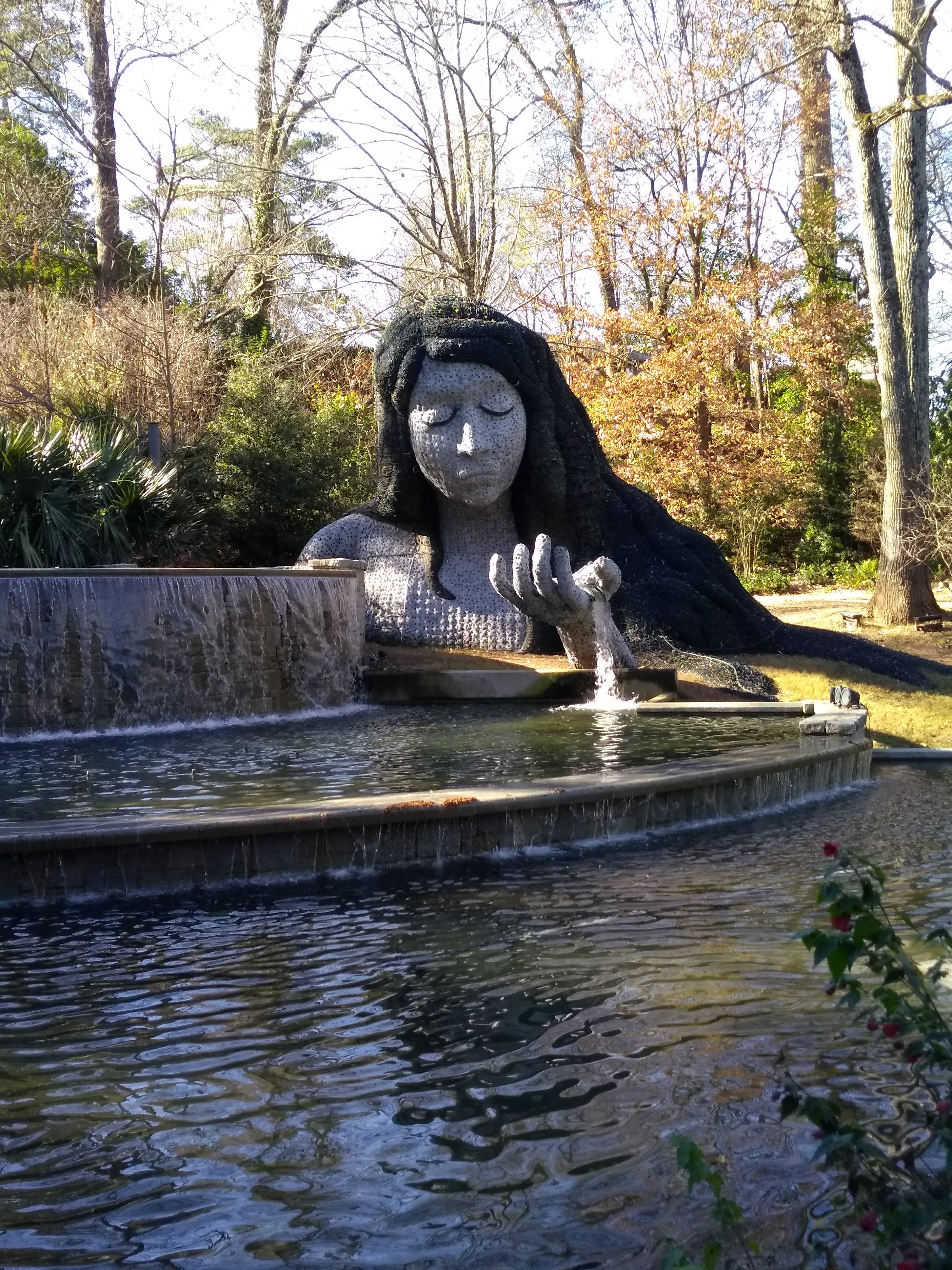
One way I encourage families to keep a family culture of being outdoors is through a “hack” we learned about several years ago — reciprocal memberships. Where we are in Chattanooga, we have access to a place called Reflection Riding which is a member of the American Horticultural Society. This association allows its members access to any other affiliated gardens on their list for a discounted price or usually FREE. Financially speaking, it’s a no brainer to join. Here’s some math:

Visit Atlanta Botanical Gardens once = $126 for our family of 6

Family membership to Reflection Riding = $70 AND we can go to any of the 330+ gardens for discount or free.

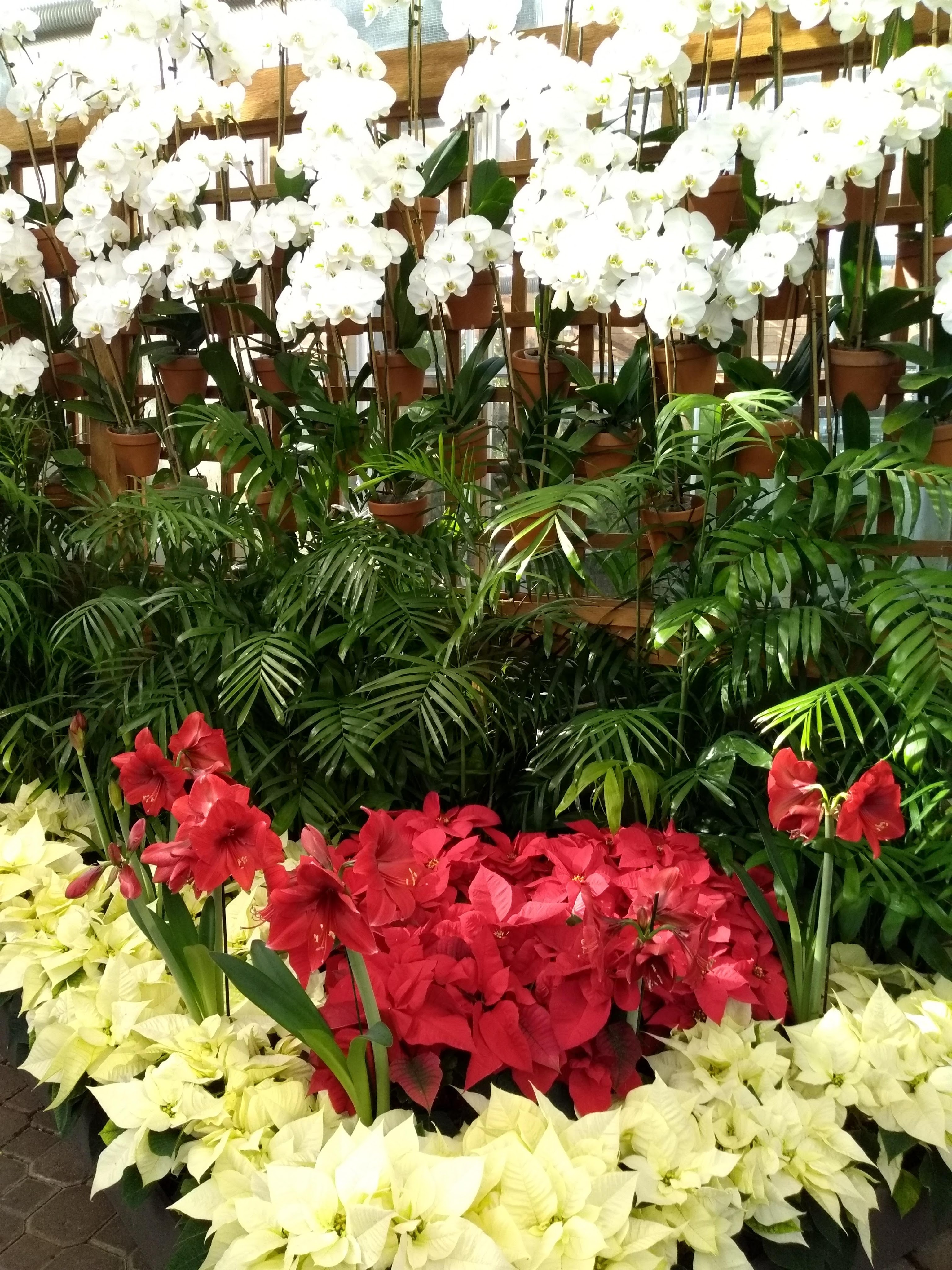
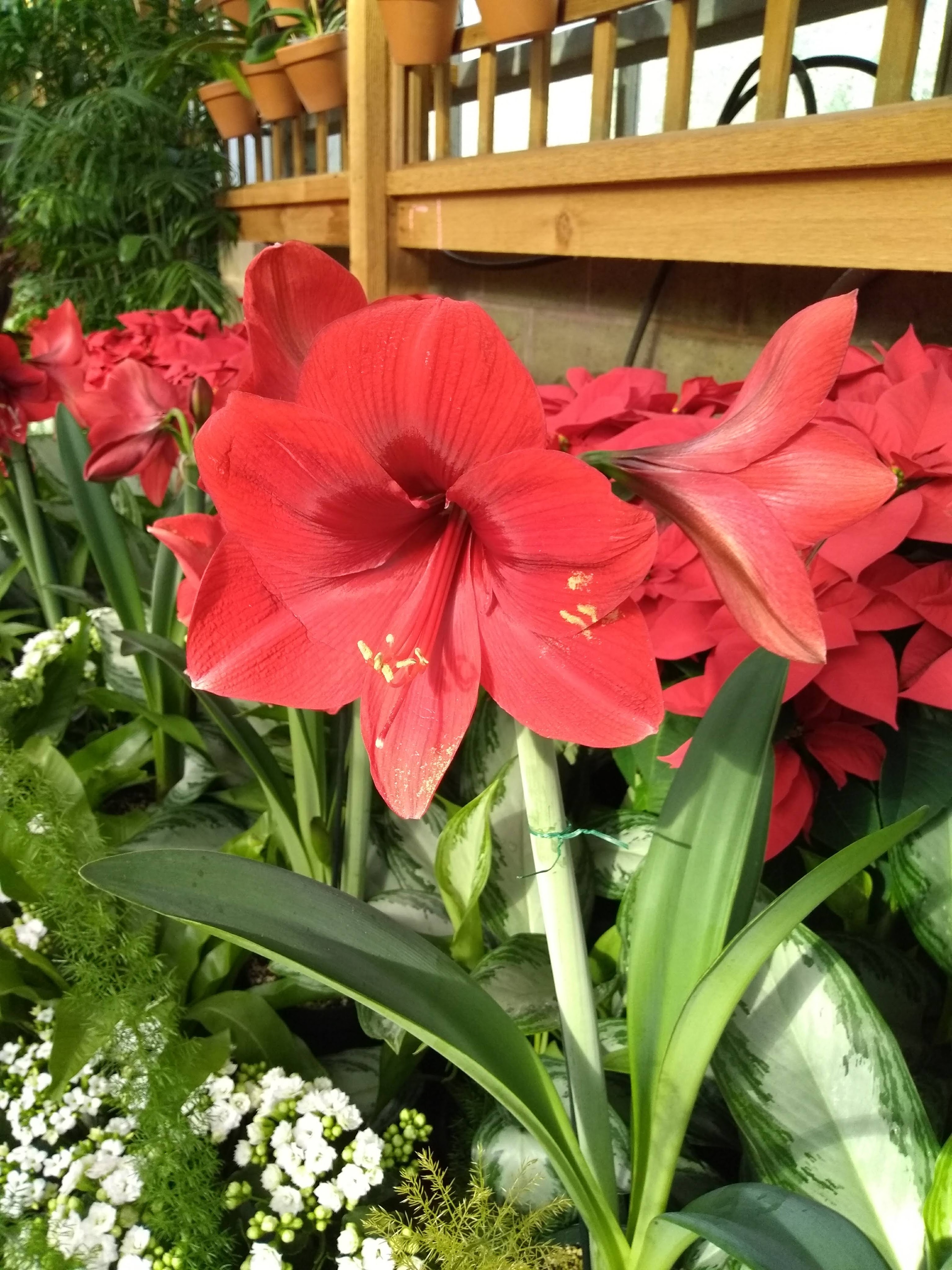
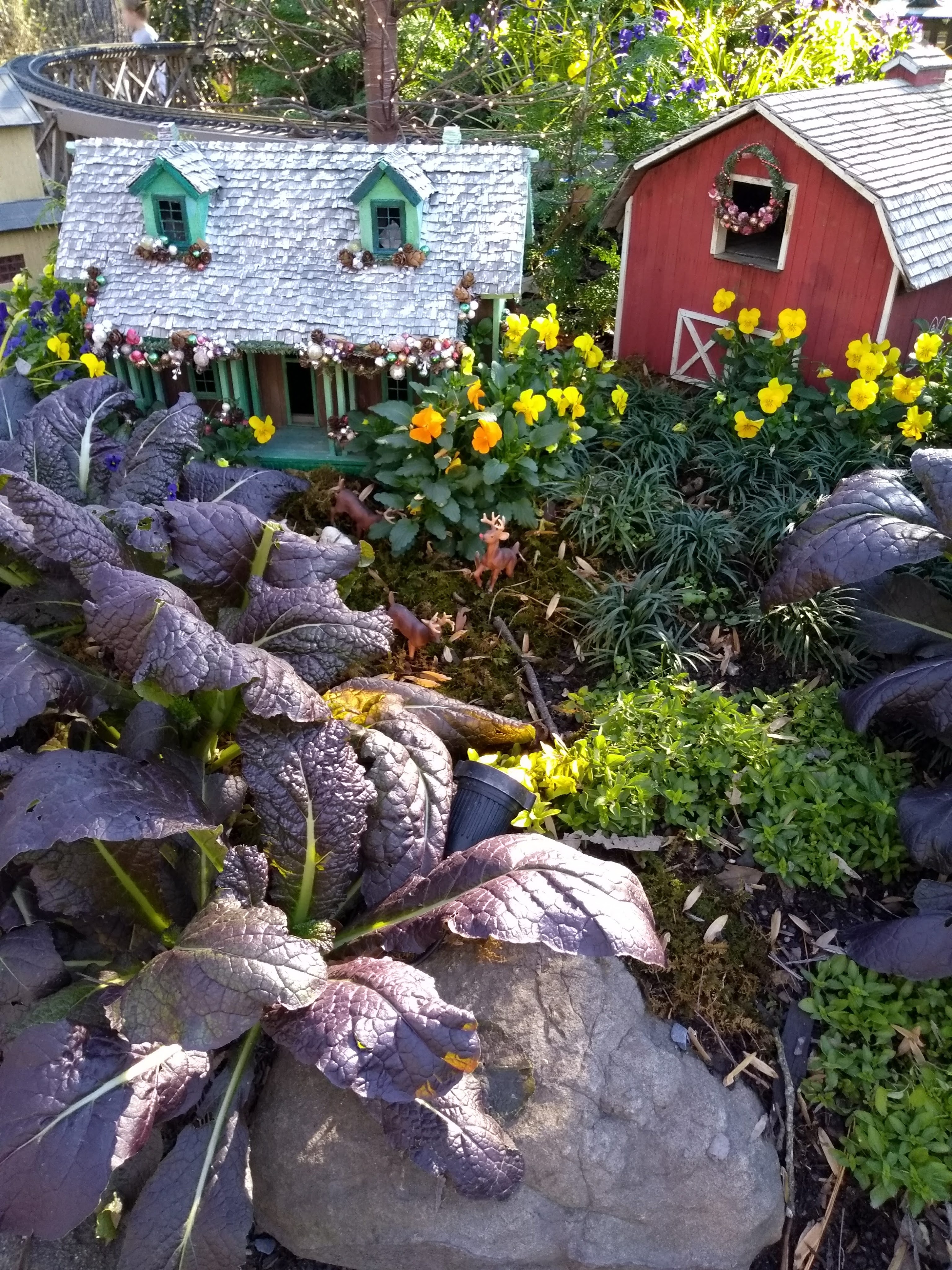
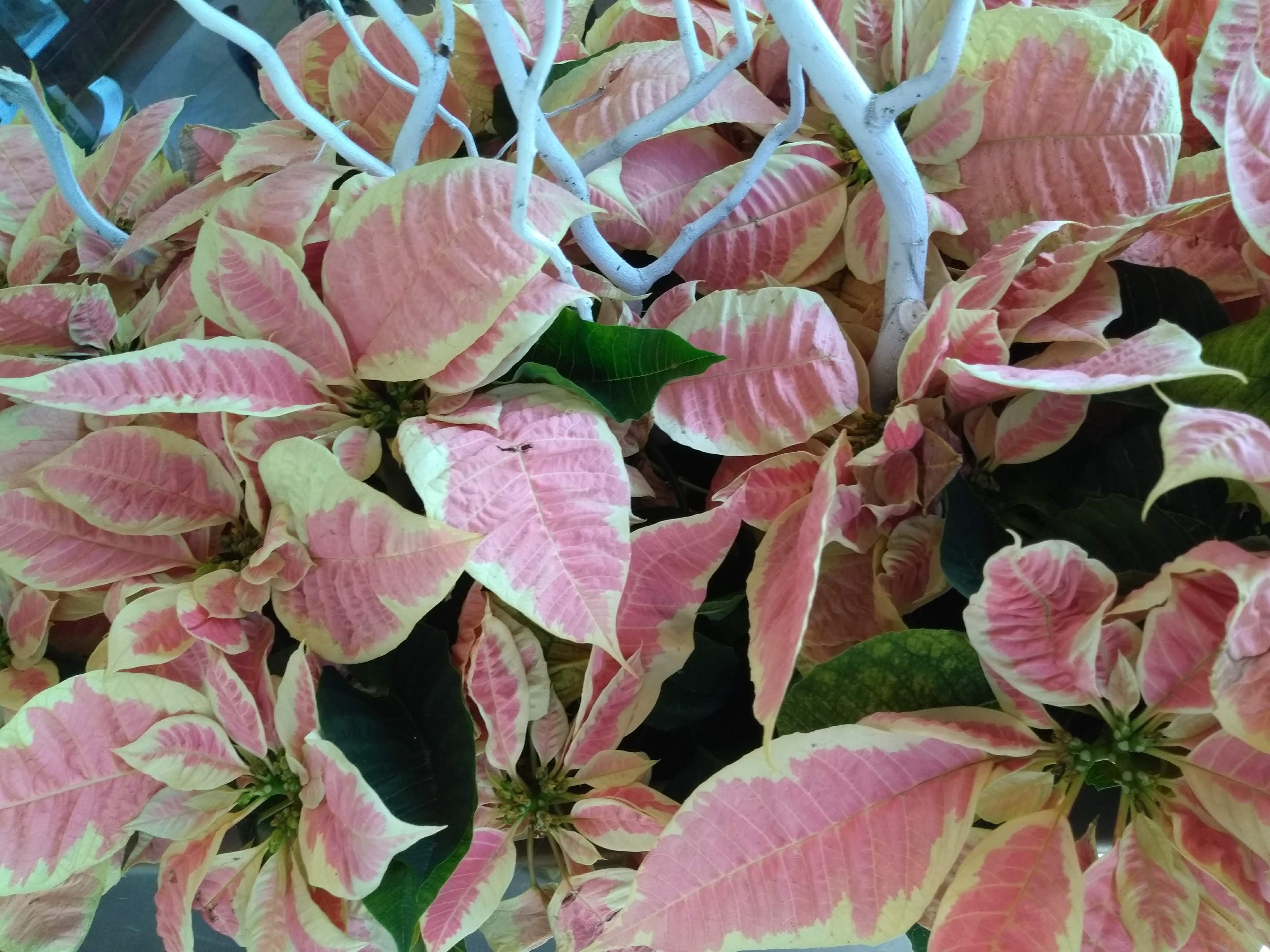
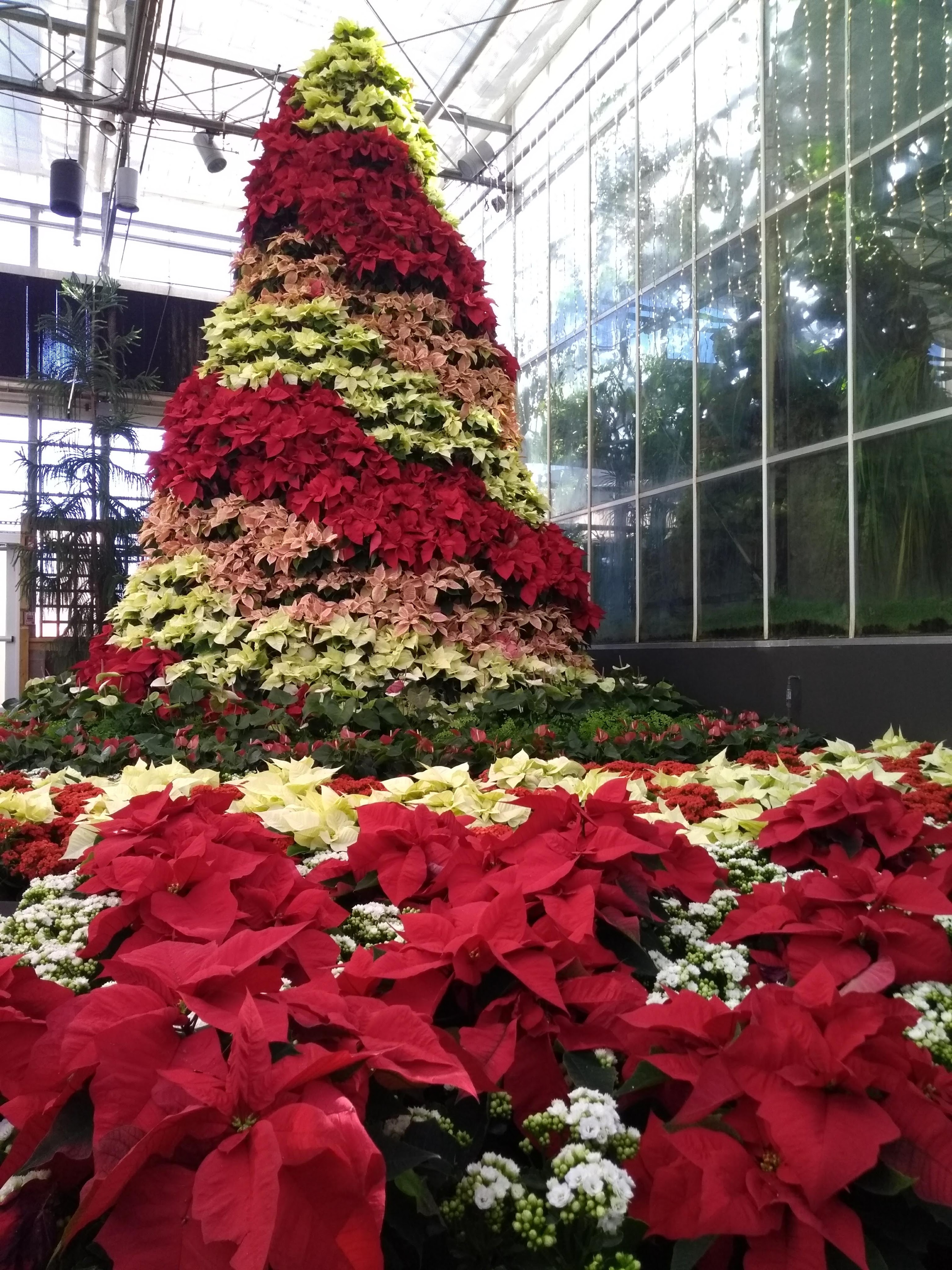
If you have access to gardens that offers these benefits, take advantage of them for you and your family, especially in the winter season when you might be less encouraged to be outdoors. Sometimes you get a surprise like we did yesterday, having a beautiful day in the upper 50’s. In addition, some places have greenhouses year round. Seeing how they will decorate the poinsettia tree (see below) is one of the highlights of the winter break for us. Actually, it might be the largest reason we created the tradition of going every year right before Christmas!

Displays at the Atlanta Botanical greenhouse never get old!