“Searching”
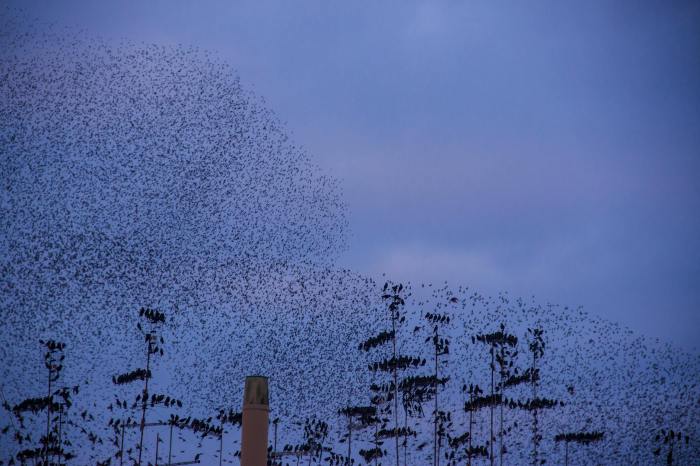
We are all searching in a way
Sometimes you don’t even know it
We are all yearning for something
And we don’t know how to get it
We search and search for
Just.one.thing
Love.
That simple little word
Just one syllable
Yet it is more important
Than any other word
So, my friends
There is one thing in life
That you must do.
Give love
It’s simple really
Just make your corner of the world better
From time to time I will feature student work here on the blog (always with their permission). Belle is working on an original poetry collection this year. She started with some poetry prompts, but she has been writing her own poetry for a while before being given those. Belle is an avid reader and it comes through in her writing projects and poetry. She has an ear for what hits the right note and reads her work aloud with such poetic precision. I love working with students like Belle who are in full control of their writing — opinions, edits, revisions. I take a big back seat and let her tell me where she wants her writing to go. I sincerely hope she works as an author, poet, book editor, or in book acquisitions someday. She has the drive and skill to do it!
Tag: gratitude
Changing It Up In The Garden
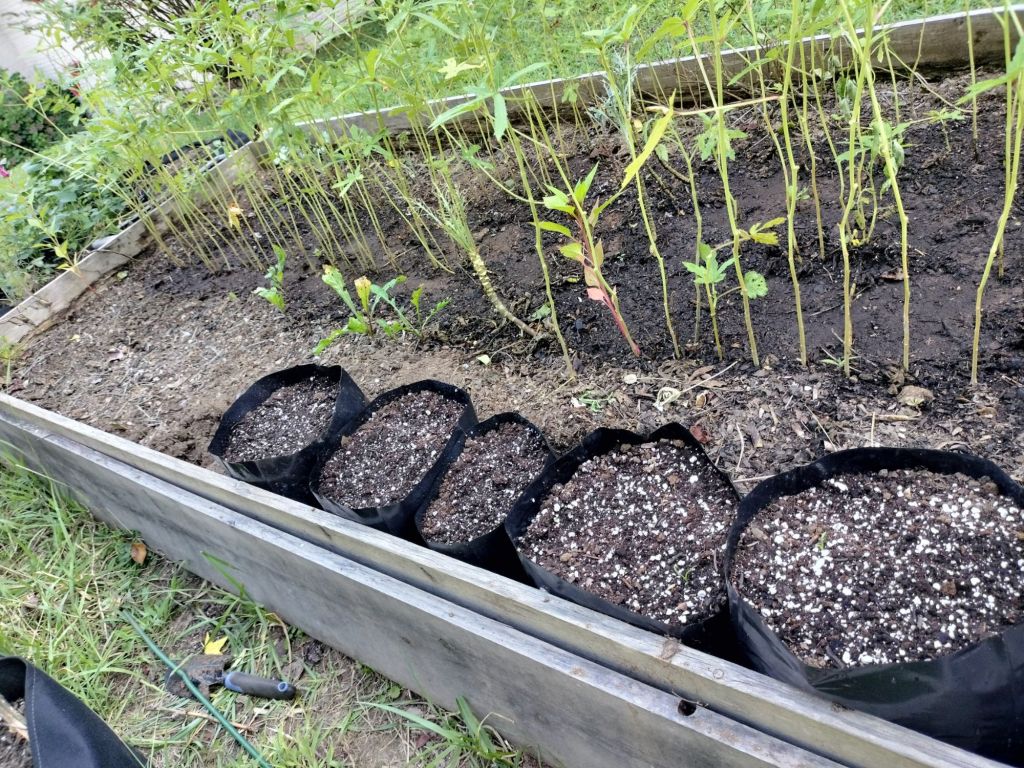
The raised bed at my house has been frustrating me. Each season I keep amending the soil only to find it going back to root balls and compact soil. This fall I have decided I have agency, and am going to completely redo the bed…into containers.
Normally, I wouldn’t go through the hassle since I have so little margin already with my time, but a fortuitous (but also sad) thing happened this month — our local horticulture supply store decided to close its doors forever and mark everything 50 percent off. So I went a little crazy (more on that in a minute) and one of the purchases was something I had never tried before — very inexpensive grow bags that have holes pre-punched in the bottom.

I bought them in various gallon sizes and while I also obviously plan to use them for Maple Key, I have other places I can share the love of gardening such as the library I work at or the homeschool tutorial my children go to.
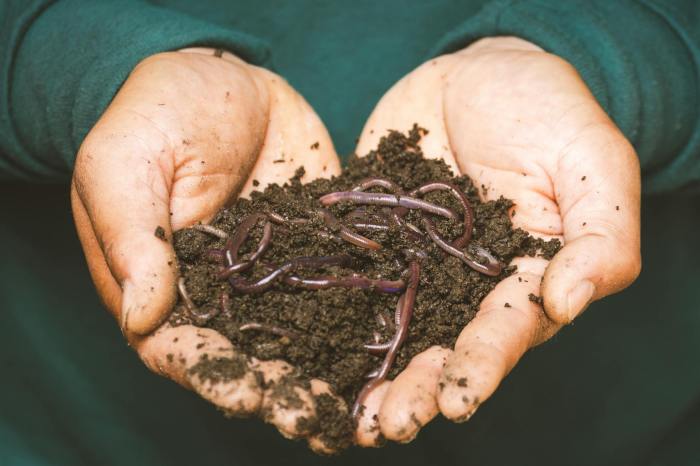
As you can see, I am still growing spindly, but producing okra right now, so I am doing the bed bit by bit. I am taking the compact, dusty soil (that’s partly my bad!) and putting it in a paint bucket, adding homemade compost and vermiculite to provide nutrients, good bacteria, and aeration for the soil. Then, I dish it back out in each bag.
I really think this is going to be much easier to manage than what I had been doing and it’s just one more reminder that you can always change what you’re doing in gardening if it’s not working for you! Nothing about gardening is locked in, so do what’s best for your season of life and environment.
Now onto my big purchase…!

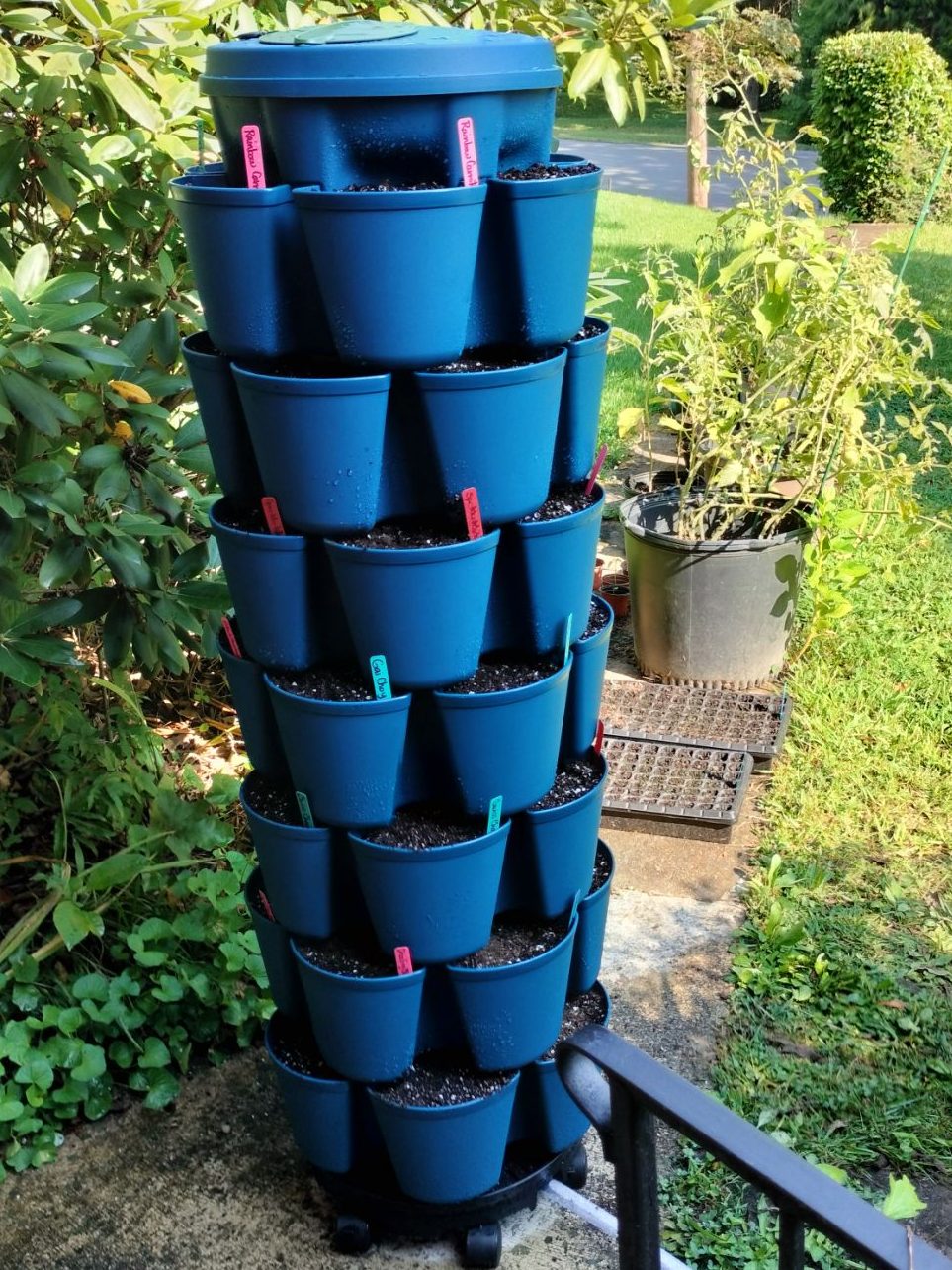
The other big change I am trying this year (again, thanks to the going-out-of-business sale) is vertical gardening. I bought a GreenStalk 7 tier planter with a bottom spinner! I was already excited about it (less pests, less bending down, right outside the door), but then I found out they are a local-to-Tennessee business, just up the road in Knoxville. That made me proud that this innovative, family-owned business is exporting such a great product all over the world! I even convinced my friend to buy a matching one with me and my mom to buy the 5 tier design, so we’re all planning for some great fall harvests.
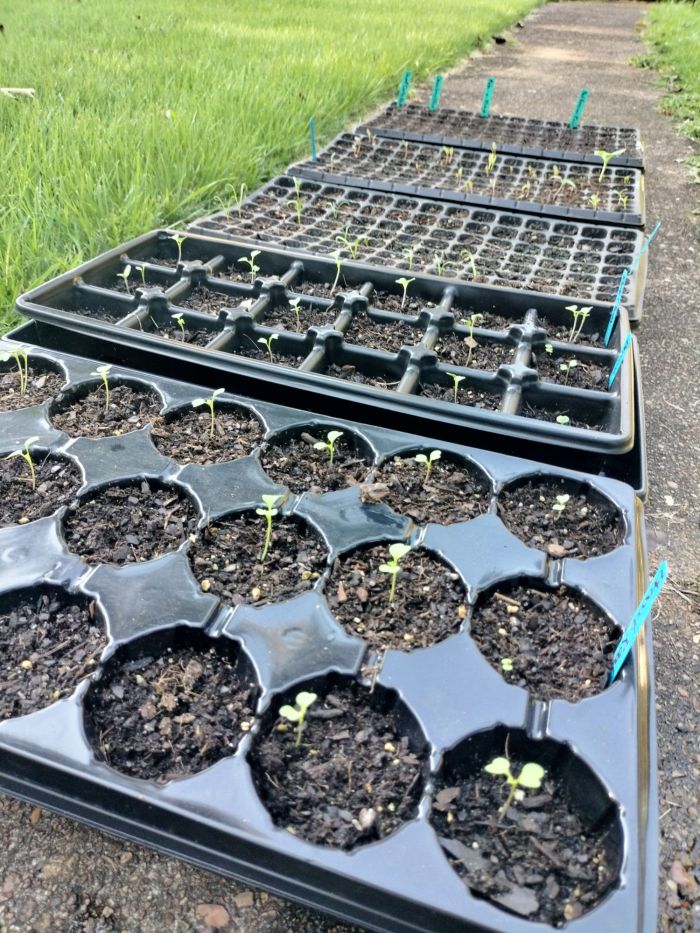
After spending the money on the planter and the ProMix soil, I didn’t want to shell out for plants, so I started everything from seed. So far, the kale, spinach, bush beans, and radishes have all popped up and I am sure the others will, too at some point. This is another great experiment that I am hoping to bring to the library (so we can start our own library gardening programs) and the farm to add to our growing list of trials to see what grows!
Honestly, it’s great to have jobs that all tie into each other in some way, so that when I do good work over in one area, another one benefits from the new knowledge! At the library we are currently applying for a $1000 grant to get GreenStalk vertical gardens for the library so that we can make gardening accessible to all age ranges and demographics — children, elderly, differently abled.
I can’t wait to talk to Maple Key students about my new way of playing and planning in the garden that supplements what we’re doing in the traditional garden beds. My hope is to inspire them with even more things to put in their bag of gardening tricks for when they desire to start their own gardens. I want them to always carry a sense of play, have fun, learn new things 🙂
Administration as Necessity

Tonight I sat down with my daughters at the dining room table preparing my heart to paint with my new watercolor set. I finally made the upgrade to watercolors in tube form instead of pre-made palette cubes. I got out two used palettes from the art table and realized that they had old paint in it from my daughter’s school and one new, completely blank palette that my husband planned to use. This posed an obstacle to my painting desires.
With the old palettes, they needed to be cleaned out to put new colors down. With my husband’s I had to choose which 20 colors I wanted to fill in the slots when I had 36 colors to choose from (including metallics!). In other words, I had to do the leg work of making decisions and preparing the palettes before I ever set down to do anything on the page.
Long story short, I never got around to doing anything other than adding some bronze highlights to something I had already painted because I was so tired from all the prep.
I saw this painting situation as a metaphor for administrative work. I had already spent hours earlier this morning working on contracts for tutors and getting dates lined up for events that aren’t even happening until close to the school year starting, but it involved salaries and per hour math, stipends, and the like so I had to make sure all the right names and amounts were listed on the documents. After the hours I spent glued to my computer, it felt like my summer with my girls was already dwindling away and it just started, though I knew logically there was still much free time to be had.
When you own your own business, administration is a part of the job even when you’d rather play or rest more. Intentionality is so much of what Maple Key does in every corner of the program and it shows through. A business doesn’t work if you show up and enable great things, but manage it poorly (Trust me, I have several doctor office stories to share on that front). So every year we try in small ways to work smarter, not harder. This year I am incorporating a task management component to doing work to keep me doing bite size chunks instead of being overwhelmed and communicate even better to others about what is expected in terms of deadlines.
Administration is hard to monetize. Most people don’t factor that in when considering the value of something. When my husband got his first job in the home office of an international missions organization, he said they never had enough donors willing to give to administration. Many sent gifts for a specific program they heard about overseas and demanded that 100% of it go to that country — the humdrum, behind-the-scenes work in an office building wasn’t compelling; however, the organization tried year after year to make people understand that the home office was vital to the organization’s health and existence.
This is the pep talk I must give myself –administration has a high, often unseen value — when I want to “have administered” instead of actually doing the “administrating”.
Modeling Writing in Real Time
“Hey! I have an idea for our tutoring time I’d really like to do today,” said my student as I sat down at her dining room table.
“Sure! What did you have in mind?” I said, waiting for a fun surprise.
“Next week is our last week together with the group and I wanted to write a poem for each of the girls who are graduating or leaving.”
“That sounds like a great idea,” I responded. “Let’s see how we want to go about doing that.”
So we sat at the table and gave her one example she could draw from if she chose. I showed her what I wrote for one of the graduating students to share in front of the other parents and students .
If I could give out an award for bravery, it would be all yours. You came into Maple Key last school year mere weeks after moving here to TN from your whole world in CA. As we listened to tales of your new life, your new house and new animals, it always made me wonder, “How is she handling all these new changes so well?” You came in each week willing to jump right in for gardening, watercolor, or a good laugh. If someone were looking in from the outside, they would have never known that you hadn’t lived here long or been a part of our group for years because you embraced your new life here. This year you rallied all the girls together not only to go to the middle school dance, but for you all to get ready together. The stories that came from that event – both anxious and hilarious – might not have happened if you hadn’t assured them that there would be something for everyone.
One of the things I admire about you is that you don’t let setbacks get in your way because you believe there is a great big world out there for you to delight in and discover. I have seen time and time again, if you don’t know how to do something you always find a way to learn and adapt. If something annoys you, you have the self awareness to acknowledge it but don’t hold a grudge against the situation. You have a true entrepreneurial spirit, a jack of all trades who will be in high demand for whatever she sets her sights on in the future. But most of all, you are the kind, gentle big sister we needed this year.
I told her that I would take these paragraphs and make it into a poem so she could see how I pulled out adjectives and ideas from what I wrote and included other things I knew about the student she was writing about.
A Long Journey
You did it:
– The plane rides that made you anxious
– Embracing a new set of friends
– Training new animals
– Becoming a DIYer
You are filled with:
– laughter
– leadership
– love
– delight
– dreams
– discovery
You share tales of your old life, as it tries to blend in with the new
– Gnarly
-Smoothies
-Sunshine
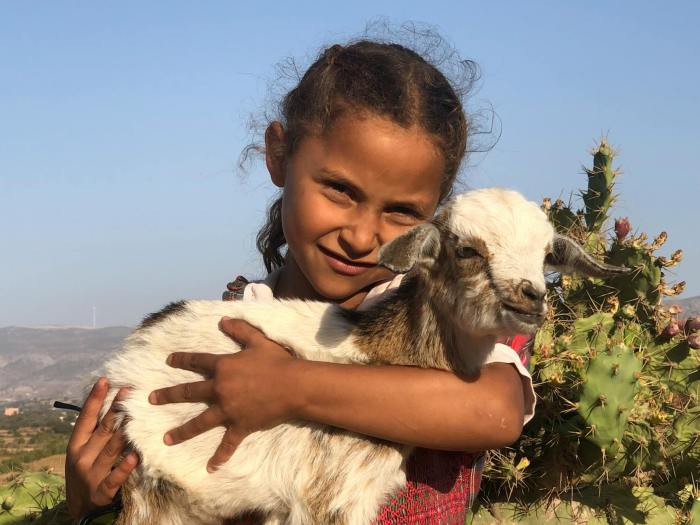
– Goats
– Horses
– Gardening
You always find a way to learn and adapt
You are the kind, gentle big sister we all needed this year
As I said, I just made that poem up on the spot, not trying to overthink any particular line. The point was not for my poem to shine, but for her to see a way forward as she visualized the person she was writing about and play around with form. Just that 5 minute little exercise gave her a boost to finish up her own inspired creative endeavor after I left.
When the time came, I was so anxious to hear what she had come up with! This 7th grader read her poems in front of the other students and parents with confidence. One of the students graduating was her older sister and when she shared the title “Trailblazer”, the waterworks were coming from many eyes in the room.
What a joy it is to be a part of that facilitation process where students’ ideas are incorporated and they can assess their own and others’ growth over time. Goodbyes are always hard at the end of the year, but seeing students leave with hearts and minds full and younger students ready for another year of inspiration in August certainly helps ease the transition of hugs and tears.
What Sarah Said (and Other Recent Inspirations)

Recently, I went to our monthly local writer’s group and brought in some poems that I had written. These poems I had penned as a model for my students, since I had asked them to write from the very same prompts. I tend to be an over-thinker, so the practice of writing under a deadline and letting the results be what they are is good for me.
As usual, the people gave incredible feedback, mainly that poetry needs less words — take out the unessential. We distilled our mantra down to “Chuck all the words!” as we laughed at all the things that could get gone from my poems. With every comment, I felt so lucky to be a co-learner alongside poets, bloggers, novelists, professors, marketing writers, and others who would claim no other label other than they love writing. Peer review can and should exist beyond Composition 101.
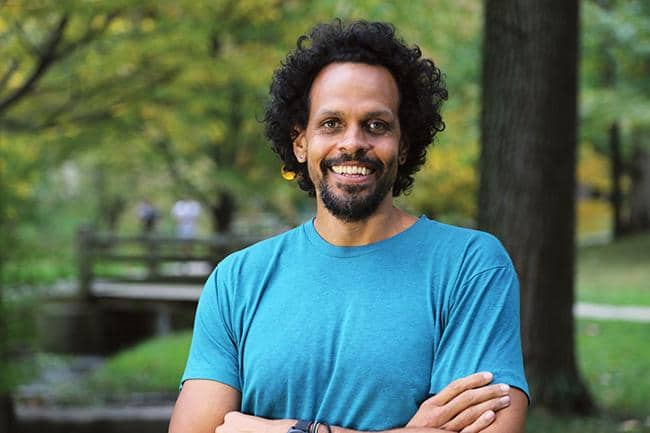
The first poem I shared was based on an essay collection by the poet, Ross Gay, I had been listening to in the car. I imagined I was Gay as he cared for his dad in the ICU and all the tenderness was spilled on the page. The administrator of our group leaned over to me and whispered, “Were you thinking about ‘What Sarah Said’ by Death Cab for Cutie when you wrote this?” My poem had images of a heart monitor, being terrified of your own feelings, hospital hallways and harsh family memories. I told her I was not channeling that song consciously, but I knew it well. After the group left, I went back home and played the song on Spotify; it hit so fresh. Listen to some of the lyrics:
As each descending peak
On the LCD
Took you a little farther away from me
Away from meAmongst the vending machines
And year old magazines
In a place where we only say goodbyeIt stung like a violent wind
That our memories depend
On a faulty camera in our mindsAnd I knew that you were truth
I would rather lose
Than to have never lain beside at allAnd I looked around
At all the eyes on the ground
As the TV entertained itself‘Cause there’s no comfort in the waiting room
Just nervous paces bracing for bad news
After re-reading those words from a song I had heard a million times in the last 20 years, I was humbled to even be considered near the lead singer, Ben Gibbard, in terms of writing. Just look at all the specificity and irony in this hospital scene he paints! I may have been thinking about what Ross Gay described, but this song must have been rattling around in my psyche somewhere. I suppose it’s really no wonder that Plans by Death Cab for Cutie is one of my favorite albums of the 2000’s. Every song is an absolute vibe, a calm emo kid’s delight, full of heartrending tones and quiet desperation. Gibbard wrote lots of songs in response to hard things he had seen or experienced in relationships. I am always telling my students that writing in direct response to something is where some of the most profound art work exists.
So I listened to Plans some more this weekend as I write this blog post and as I look back over my writing for more words to chuck.

Growing the Future Generations

I went to my primary care physician this morning for my yearly checkup. I must say, I lucked out several years ago when I was able to get into her practice. She is always a delight to talk to — a rare mix of firm (but not pushy) and warm (like she really hears you) that makes you feel really confident in her advice. From the looks of the waiting room though, I am usually the youngest person there (despite being 40 now!) by about 30 years. I often wonder how many “young” patients she actually has.
I told her that before the holidays my husband and I started a program that promoted mindful eating (more fibers, greens, etc. and creating a slight calorie deficit from less snacking and smaller portions). She asked what my primary reason for doing this was and I explained that around age 39 is really where I noticed my metabolism just sort of gave out. I was still exercising and eating reasonably good food (with the carbs and sugar always waiting in the shadows…), but my gut was sort of done with me. My arms and legs were in great shape with walking and gym time, but I had a closet full of dresses that were collecting dust after my I’ve-had-4-kids middle was now preventing me from enjoying.
She said she wished I could stand in the waiting room and give a TED talk to her elderly patients about why it’s important to make these changes by 40 so they can recover well from things in their 70’s. She shook her head and said somberly “sometimes I worry less about foreign interference than I do the American diet. It may kill us before someone else gets to us.” As I said, she sees a lot of older folks so her statement was born less out of hyperbole and more out of a lot of doctor fatigue.
As I left the office, I was thinking that maybe part of why I do the gardening portion of Maple Key is to encourage people like my PCP. To let girls know at a younger age that trying new things, growing your own food, getting curious about how to use the food, serving others, and teaching others how to grow food is a habit you’re never too young or old for. It’s not like the girls who come into the program have a green thumb and a super refined taste for greens already; it’s not like when they leave the program they will have done a 180 and love all things verdant for dinner. It’s exposure and an invitation to the goodness of creation. That’s all I ask of them — just roll with the veggies we’ve got, but no one is forced to eat anything.
I always tell them that I was SUPER picky about food at their age, embarrassed at how much I hated salads (back when iceberg was the lettuce du jour; I still hate it), but over time as an adult I exposed myself to more things and now enjoy and tolerate more than spurn the veggies on my plate. I tell them I did not like or eat kale before I started growing for Maple Key, and now I really really love it for its freshness and versatility. Giving people space to grow and experience vegetables on their own terms is a big part of my philosophy about the environment being our third teacher 🙂
Variety is the Spice of…Education!
Subscribe to continue reading
Subscribe to get access to the rest of this post and other subscriber-only content.
Putting Play in Its Place
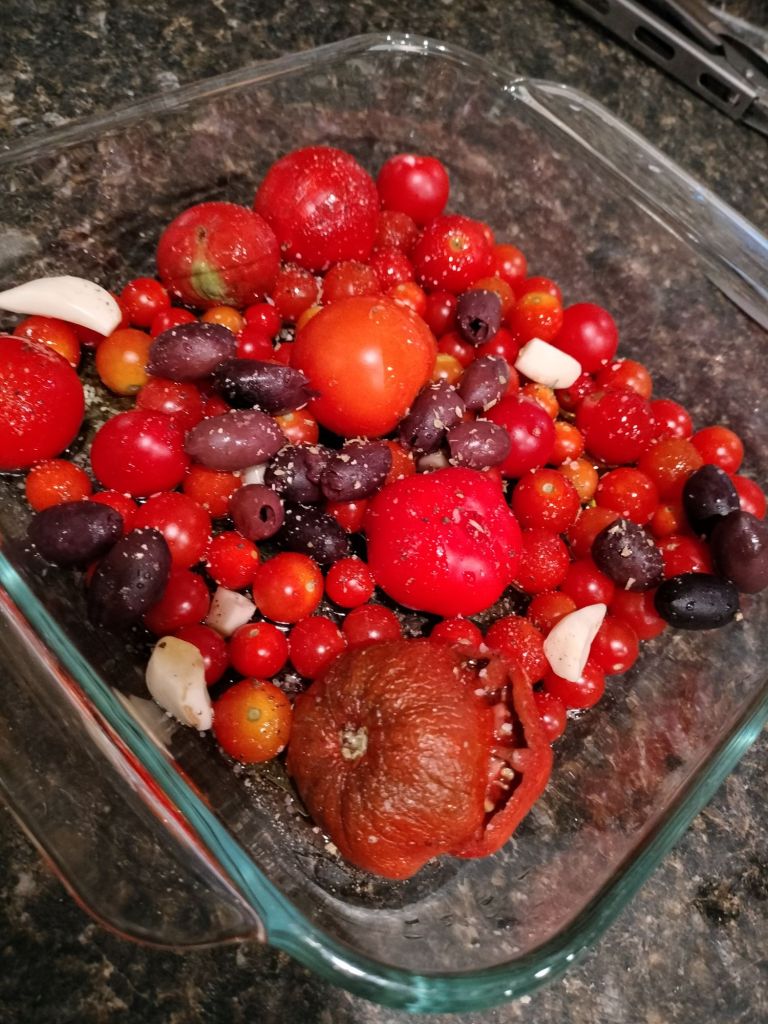
Inspired by our neighbor’s suggestion, last night my husband suggested we make pasta sauce for dinner. Our neighbor had an abundance of cherry tomatoes and sent us a picture of her one pan tomato roasting sauce ingredients — Olive oil, salt, pepper, onions, garlic, feta cheese, and tomatoes. Instructions: roast, pulverize, and voila — you have sauce. We piggybacked on her idea and made more of a puttanesca style.

When my own children ask why I am so obsessed with gardening, I explain that it’s really just an excuse to play and experiment. I get to learn what grows and under what circumstances and environments. I get to eat what I grow which encourages more creativity and playing even if it’s a small dish or snack. So it makes sense that I want to instill (or perhaps invoke) that spirit of curiosity in the girls who come to Maple Key no matter what “skill level” they come in with. That’s the joy of being imaginative — there is an endless supply of creativity available!
Perhaps because right now my children don’t have bills to pay or places to drive or multiple schedules to organize, they don’t see what the big deal is for an adult to make space for play even if it’s for 5 minutes of checking on and watering your okra and bush beans. It often just looks like a chore or a huge investment of time to them. But I assure them that for most adults play is, sadly, the first thing to go when you prioritize all the daily things you must juggle.
My college roommate (who is a new tutor for Maple Key this year!) doesn’t garden, but finds her play in singing and being in actual plays. She has spent her summer in community theater. An incredible ensemble of professional players!

Fiddler on the Roof!
There are so many places we can find our play.

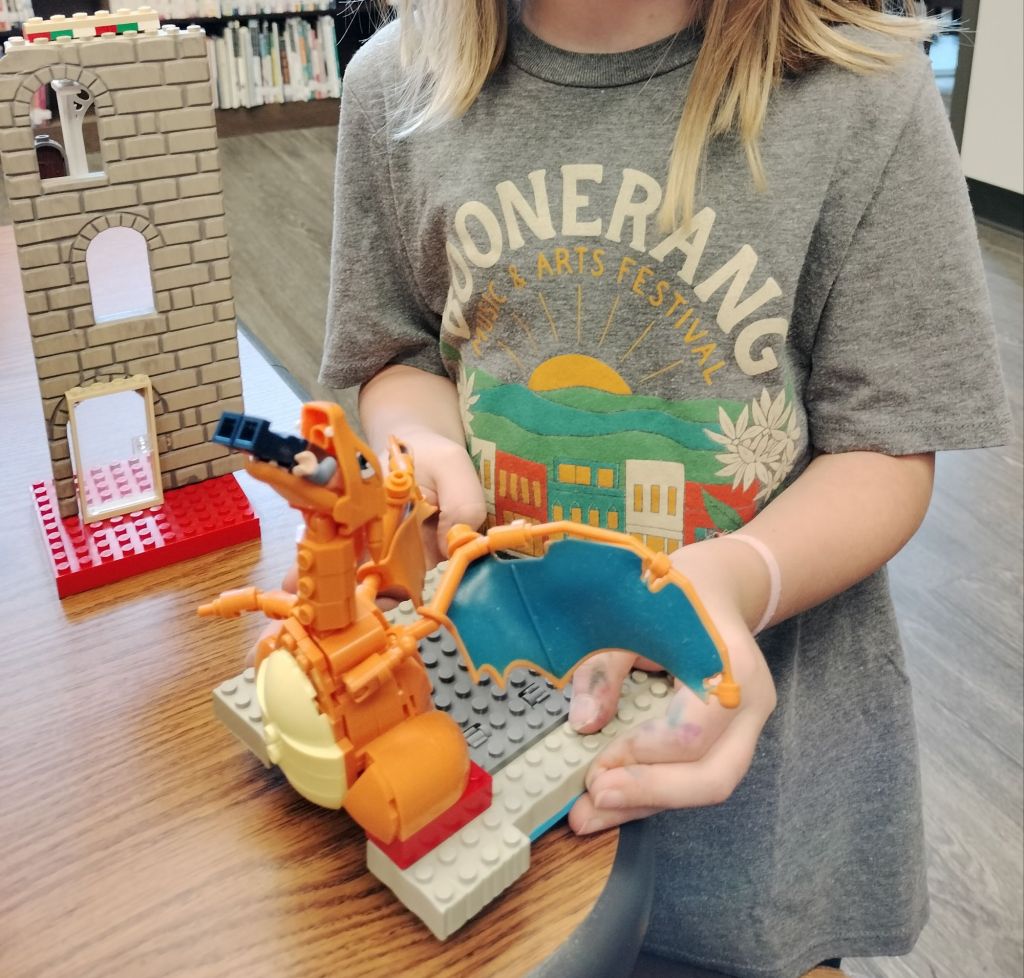
Legos at the local library!
So I say, here’s to bringing back play as a part of a healthy balance in life. Now back to more pickling 🙂

Composting as a Spiritual Habit
In certain educational circles you might hear about the classroom environment being the “3rd teacher” (the other two being adults and other children). It’s a concept that is only more recently being recovered in the classrooms accustomed to tidy front-facing desks and bright motivational posters instead of a more curious place for discovery of both self and others.
Obviously for Maple Key, the farm is doing a lot of work as the third teacher — the year round blooms (yes, we even see camellias in January!), the various animals, the winding creek, the structures like the various barns and MiMi’s house. Those things influence our art, our sense of belonging and stewardship, regional connections. But as we all know, life has many classrooms beyond just the ones we are required or choose to attend. That got me thinking about our first classrooms — our homes. What things do we absorb from those places? I zeroed in my thoughts and remembered a part of my home environment was compost.

My mom didn’t always have a compost tumbler (they weren’t as prolific as they are now), but certainly for the last 20 years. We were a thoroughly suburban family, but my guess is that she got that habit from her mom and dad whose families grew up on or around a lot of farm land in Dickson, TN. In the early 90’s my grandparents had a farmhouse built for them with a beautiful wrap around porch. They would have acres to grow things, my grandfather could ride his tractor around and they were set to enjoy their retirement years among friends and family. Unfortunately, Alzheimer’s had other plans for them as my grandfather was diagnosed with the debilitating disease only a few years into their wonderful rest. They had to make the difficult decision to sell their home and move to Soddy-Daisy to be closer to us, my aunt, and the nursing home facilities he would eventually need.
They moved to a ranch style home in a brand new subdivision and my grandmother wasted no time in carving out some little beds in their tiny yard for her zinnias, beans, cucumbers, and squash. It was such a small plot compared to what they had envisioned flourishing in Dickson, but my grandmother did it faithfully and we snapped beans on her screened in porch each year for her to can and put away.
As for our family, we had been settled in Chattanooga after bouncing around in Texas for a few years for my dad’s job, and my mom got into gardening, mainly daffodills and irises. Somewhere along the line she started saving her kitchen scraps which turned into compost tumblers which turned into feeding her beds rich, black compost for vegetable growing every year.

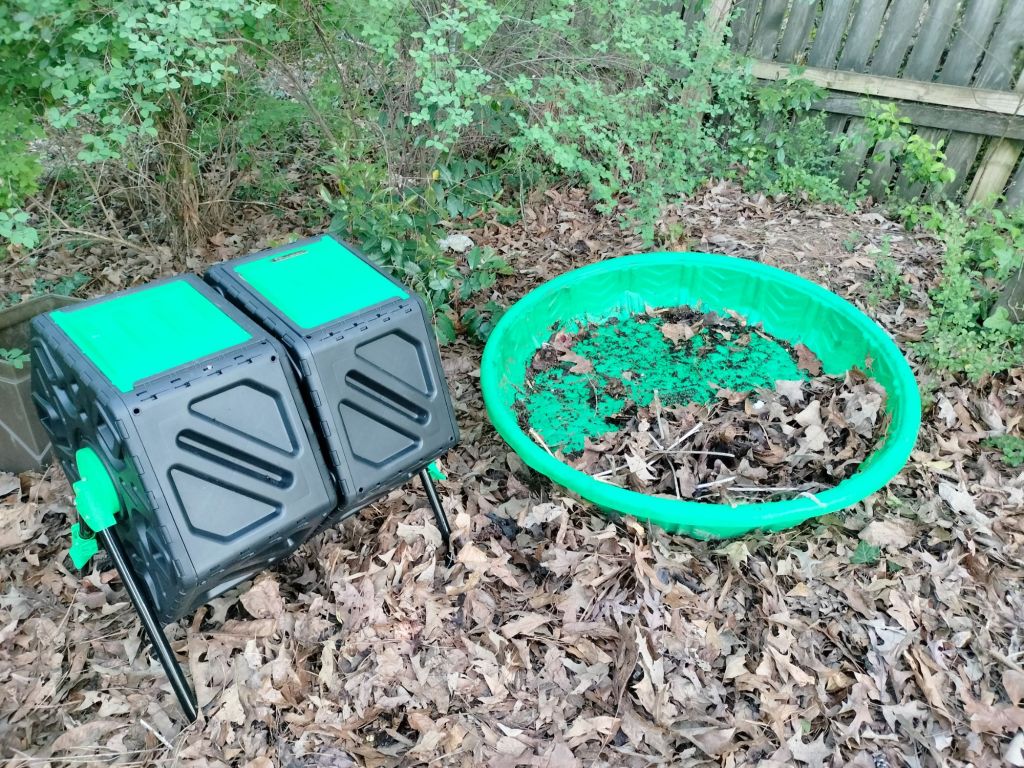
As my mom would tell you, I would always put my scraps in the red Folgers jug she kept under the sink, but never really took any interest in gardening until after I got married and had a house of my own. Thanks to a steel compost pail and compost hut gifted from my in-laws, somehow I started the habit just like my mom if for nothing else than to keep food waste out of the trash can. Now it’s just like second nature for everyone in our house to recycle and compost. It’s just a way of life on our shady quarter acre lot. This year I am hoping to increase our compost yield by having bought a tumbler of my own and being more diligent to spin it (which takes the place of turning it in the swimming pool we had used exclusively) and process more so I can experiment with what can grow decently in the shade after some failed attempts in years’ past.
I tell this story just to say that it’s amazing how much we absorb from our “3rd teachers”. Those places we call home truly do shape us even if we can’t see it until decades later. My mom and grandmother never pressured me to continue on in their gardening footsteps, but whether I realized it or not there was always something noticeably peaceful and rewarding for them in the act of gardening and composting. To them, why would you not invest in these simple acts of beauty and stewardship in your daily life? The environment they prepared for me, even in very suburban settings, helped prepare me to desire a space like the farm that I could learn from as I teach alongside it. It helped me catch a vision for how the library and community center I work for can practice interdependence through our community gardening.

Many of the girls in Maple Key are light years from where I was at at their age. Several compost and play in their own gardens or help their family plant things each year. They take me around their property before tutoring time and tell me stories about what grows where or what new plant they are trying out. They harvest basil for pesto and grow okra in the summer. They give me free plants. Of course some of them don’t garden but enjoy getting to indulge in it and work hard during our time on Tuesdays. They, like me, may never own a farm, but their many classrooms are teaching them valuable lessons on what it means to help something grow and tend it faithfully. This is a spiritual habit if there ever was one.

Have you ever stopped to consider what “environments” were your 3rd teachers? Particularly those things or spaces you perhaps unintentionally neglected but you can see with more clarity as you get older? I’d love to hear about it in the comments.
HopeWords Conference 2024
When you own your own tutoring business, you have to research and pay for professional development for yourself. HopeWords has been a writing conference that is an easy place to say yes to every year. It’s located in the beautiful state of West Virginia which is actually a reasonable driving distance from us in Chattanooga, Tennessee. All the speakers sit out among the audience and eat at the same tiny restaurants as everyone else. Everyone just chats like it’s the most normal thing to do with strangers who write from all over the U.S.
This is my third year and I want to emphasize that one of the blessings of HopeWords is that they are making space for all ages at the conference. My oldest daughter, age 14, came this year and last year and Travis (the host), the other attendees, and the authors have welcomed, embraced, and challenged her. In her everyday life she is used to people mispronouncing and misspelling her biblical name. Many of the conference attendees when they met her said, “What a beautiful name” because they understood its biblical significance. Daniel Nayeri, the keynote speaker, signed her book and when I said offhandedly that she has 3 other sisters with Bible place names he said enthusiastically, “Ooh. Tell me all of them!” as we proceeded to have a short and lively conversation. The next day when he came in the restaurant where we were eating he boisterously (and so jolly-like!), pointed at all of us saying he knew us and we just laughed and waved right back at him going back to our conversation, like it was not odd to give a friendly wave to a Newbery award winner at dinner.

Our college friend, Amanda Opelt, sings and writes and was invited to welcome guests back into the afternoon sessions with her guitar. She asked our daughter a week before the conference if she would be willing to sing the high harmony with her on an Appalachian tune covered by the Wailin’ Jennys. When our daughter joined her on stage she introduced her as her friend, not my “college friends’ daughter” but a young woman worthy of her identity and relationship in her own right. Amanda even paid for appetizers at the local restaurant saying she owed her a portion of her honorarium.

At the “after party” on Saturday we sat at a table with the men responsible for a lot of the revitalization projects going on in Bluefield, West Virginia. We had a riveting discussion on community development practices for 30 minutes. The undertone was about not giving up hope in hard places. My daughter said later it was a fascinating conversation and not at all what she thought we’d end up talking about with so many writers around!
It’s the little things like that that remind me why HopeWords is special. There is a deep respect for children and young adults within this Christian community of writers and community movers and shakers. The attendees treated my daughter like an adult. The speakers did the same in their speeches and in how they are truly the same humble people on and off the stage. Anyone involved with HopeWords welcomes and invites all into a life of writing, creativity, community, and curiosity. As an educator, I cannot think of a better mission for a conference.
This year I noticed there were many more young people than had come in the past and I hope the number of teens keeps rising as this conference continues to flourish. Our youngest daughter is in Kindergarten and she says she has “poem words” in her mind. She illustrates stories about pirates, animals, and princesses constantly. Maybe some day she will want to come, too?

Until next year,
Rachel