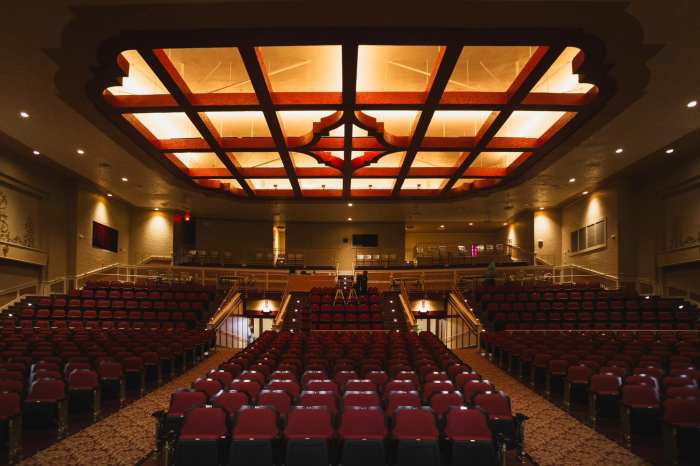
HopeWords Conference 2024

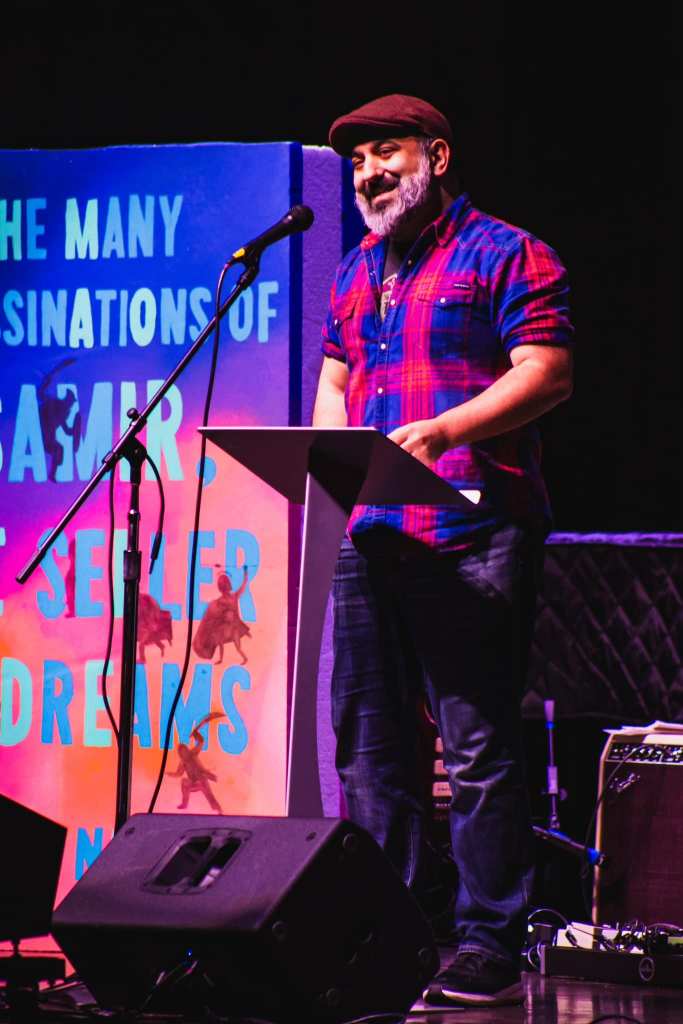
When you own your own tutoring business, you have to research and pay for professional development for yourself. HopeWords has been a writing conference that is an easy place to say yes to every year. It’s located in the beautiful state of West Virginia which is actually a reasonable driving distance from us in Chattanooga, Tennessee. All the speakers sit out among the audience and eat at the same tiny restaurants as everyone else. Everyone just chats like it’s the most normal thing to do with strangers who write from all over the U.S.

This is my third year and I want to emphasize that one of the blessings of HopeWords is that they are making space for all ages at the conference. My oldest daughter, age 14, came this year and last year and Travis (the host), the other attendees, and the authors have welcomed, embraced, and challenged her. In her everyday life she is used to people mispronouncing and misspelling her biblical name. Many of the conference attendees when they met her said, “What a beautiful name” because they understood its biblical significance. Daniel Nayeri, the keynote speaker, signed her book and when I said offhandedly that she has 3 other sisters with Bible place names he said enthusiastically, “Ooh. Tell me all of them!” as we proceeded to have a short and lively conversation. The next day when he came in the restaurant where we were eating he boisterously (and so jolly-like!), pointed at all of us saying he knew us and we just laughed and waved right back at him going back to our conversation, like it was not odd to give a friendly wave to a Newbery award winner at dinner.

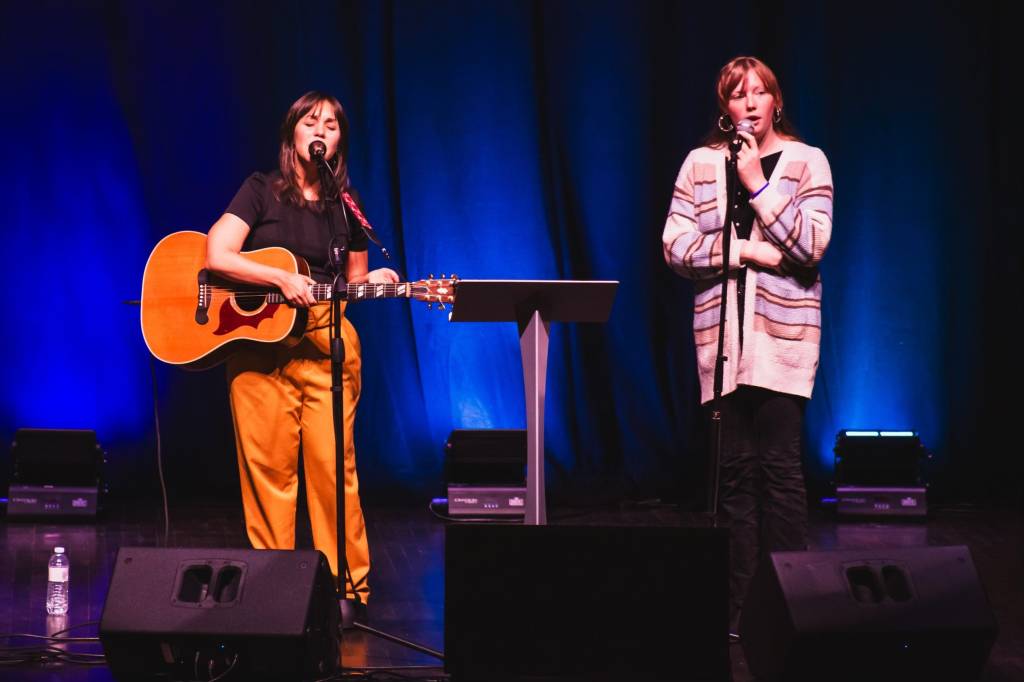
Our college friend, Amanda Opelt, sings and writes and was invited to welcome guests back into the afternoon sessions with her guitar. She asked our daughter a week before the conference if she would be willing to sing the high harmony with her on an Appalachian tune covered by the Wailin’ Jennys. When our daughter joined her on stage she introduced her as her friend, not my “college friends’ daughter” but a young woman worthy of her identity and relationship in her own right. Amanda even paid for appetizers at the local restaurant saying she owed her a portion of her honorarium.

Photographs by Cheryl Eichman

At the “after party” on Saturday we sat at a table with the men responsible for a lot of the revitalization projects going on in Bluefield, West Virginia. We had a riveting discussion on community development practices for 30 minutes. The undertone was about not giving up hope in hard places. My daughter said later it was a fascinating conversation and not at all what she thought we’d end up talking about with so many writers around!

It’s the little things like that that remind me why HopeWords is special. There is a deep respect for children and young adults within this Christian community of writers and community movers and shakers. The attendees treated my daughter like an adult. The speakers did the same in their speeches and in how they are truly the same humble people on and off the stage. Anyone involved with HopeWords welcomes and invites all into a life of writing, creativity, community, and curiosity. As an educator, I cannot think of a better mission for a conference.

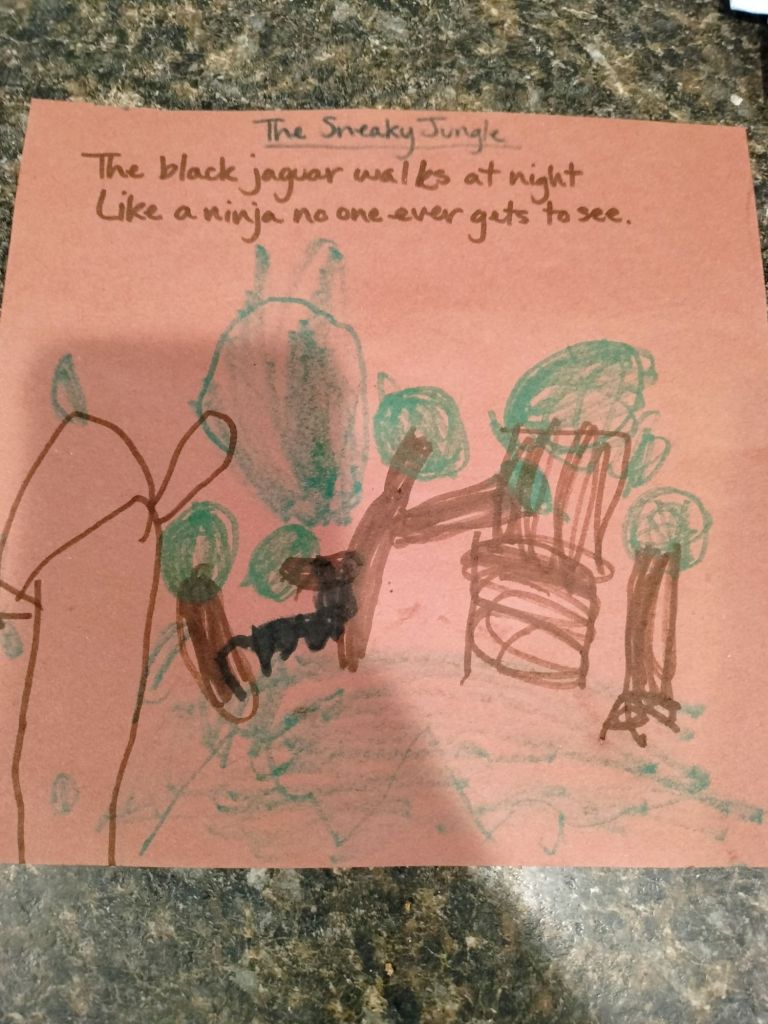
This year I noticed there were many more young people than had come in the past and I hope the number of teens keeps rising as this conference continues to flourish. Our youngest daughter is in Kindergarten and she says she has “poem words” in her mind. She illustrates stories about pirates, animals, and princesses constantly. Maybe some day she will want to come, too?


Until next year,

Rachel

Featured Student Work: Book Review by Maryellen 


Whispering Trees: Book Review of The Singing Tree

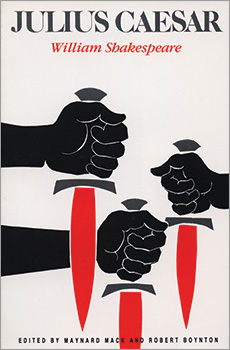
The Newbery Medal once, the Newbery Honor Twice, and the Caldecott Honor all went to author and illustrator Kate Seredy. Seredy was born in Budapest, Hungary, in 1899. She grew up with a scattered family heritage, having grandparents from so many different places, and hearing all sorts of opinions and stories. She graduated from college with an art degree and moved to the U.S. soon after in 1922. She illustrated things to provide for herself while learning the English language. Her first book was The Good Master, a book based in Hungary with her as the main character. Four years later, when she wrote the sequel, The Singing Tree, she knew what war was like, having been a nurse in World War I, and was able to write about the hardships that came with it. She continued illustrating and writing books, many of which got notable honors and awards. She always considered herself more of an illustrator than a writer, creating until 1962, thirteen years before her death at age 75 (Young).

A website titled “A Tribute to Kate Seredy” claimed, “…the best of Seredy’s writing has auditory and visual qualities which draw readers in and carry them along” (Young). This is the first time I have read one of her books and I agree with this statement. In The Singing Tree, at the beginning of each chapter, there is a little traditional Hungarian picture which gives a sense of anticipation and motivation to help the reader continue. The artistry featured pictures at the end of each chapter that are less traditional but they go with the storyline, typically portraying something that happened in the chapter as a little reminder which for me, helped break up the text well.

The target audience for this book is probably early teens to young adults. The book isn’t too thick and loaded with information, yet it isn’t something that you can fly through and not miss anything. I liked that the chapters were easy to manage, taking about 10 to 15 minutes to read about a chapter and a half. The vocabulary and story line are good for teens about 12 up to maybe age 20.

I was surprised by The Singing Tree because I typically don’t prefer books that are historical facts and information. This one was historical fiction and I really enjoyed both the history as well as the style of writing. I knew that Seredy based some characters and settings on her experiences, but it made me wonder how much of the book was fiction and how much she actually experienced. Given her background, I wish Seredy told a little bit more about the war.  I understand why she refrained from talking about it, but I felt like if she was going to put a war in her story, there needed to be more context.  Every time Jansci’s father shared about his experiences in the war, it was about something important to the story but didn’t give too much context outside of that.

Seredy introduced many characters in The Singing Tree but one of the more important ones is Jansci, a Hungarian boy in his middle teens who values growing up and being a man. He is very thorough and tries to do the best that he can to be like his father, working on the farm and tending all the animals. Village life is all Jansci has known, caring for everything and others recognizing him for being hardworking and helpful. When his father gets called to the war, Jansci knows what to do on the farm because of community, tradition, and how his father has modeled it. Throughout the book he grows up during the worst parts of the war and continues to learn how to do these things without his father, enjoying more responsibilities and learning what he needs to know to be a Hungarian man. 

As Jansci is growing up in the village, with him is his cousin, Kate. She is a young teen girl who is very passionate about things, like her chickens. She will not let anyone harm the things that she loves. She struggles to accept all of the restrictions that come with growing up and the things she has to learn. She is in that transition stage between being childish and being a young woman. She still has to learn what the women in the village are called to do which means she has to put certain things aside. For instance, riding horses with Jansci is not how ladies ride horses and the way she dresses now cannot be like men.

I relate with both Kate and Jansci but in different ways. Kate’s determinedness is a lot like me in that she doesn’t give up and is almost always optimistic. Jansci has a sort of sturdiness and quietness to him that I also see a lot in myself. He is an observer of people and that is something that helps us both know a little about what to expect so as not to be caught off guard.

As well as Jansci and Kate, there are other kids in the village who are learning to see life differently. Lily is first seen as a spoiled young girl, having been badly influenced from a fancy school in Paris. She stays with Kate and Jansci while her father is in the war. She slowly gets to know the village and family better, beginning to love and appreciate the animals and farm life. She learns that tradition is supposed to be a cherished ritual, and should be treated with respect, as well as that each animal on the farm is necessary, just as much as each person has value. She has changed from her false “Paris identity” to appreciating the farm as where she belongs.

Seredy shows us how wars change the way people live, and how sometimes, well known truths change in ways that are devastating. Near the beginning of the book, during the war, Jansci is returning home and is required to pick up 6 Russian prisoners. They get stopped by a Hungarian soldier who is looking for one of the men from the village who ran from his duties in the war. He had received a letter that his wife, who had just had a baby, was sick. The soldier doesn’t know that within his load of prisoners Jansci is smuggling the man to their house. The soldier pities the man’s wife saying to Jansci, ”Son, it’s a crazy world when it’s a man’s duty to kill, and a sin to comfort his wife” (Seredy 156). He knows that traditionally it was a man’s job to comfort his wife and a sin to kill, but at the current time, it was the other way around. This was something completely different from their lives before the war. Just as also at the beginning of the book, they count the time by the things that are happening — when the maple turns red, then it’s time to pull the potatoes, etc., but near the end of the book, everybody is counting the time by different things, letters from fathers, nights until a holiday, days since the war started, and more all because of the war’s disruption. These things strengthen one of Seredy’s main themes, change (because of the war) vs tradition (the way of life before the war).

There were a few characters in The Singing Tree who were in denial about  the war and they had to accept that there would be some troubles ahead of them. The people have to accept that there will be change and that the traditional ways still remain, they are just altered. A large part of the book is about who the main people are, as well as who the village sees them being. Jansci, Kate and Lily find out what makes them unique and how they can use their special talents to help while the men are away at war. They have to find their identities and roles as young men and women. In a time of war, the farm animals gave the family at home a purpose and a reason to get up in the morning. They were a very subtle way to keep up hope while loved ones were away fighting. The animals provided a source of comfort and healing to families in the community.

No matter what nationality people are, they understand without speaking, the chores that need to be done and the way to do household things. The barrier of language doesn’t matter; the plow will look the same. When people from different areas come in, they help around the farm without asking what to do or how to do it. In the war, both sides are fighting, but they know that this is not the way to settle disagreements. Jansci’s mother realized that the Russian prisoners she took in did not want to fight. They wanted to be at home with their families just like she was. She knew that the country’s leaders were to blame, not the men. She says, ”Why should I mind? They are men, like ours. Maybe… if we are good to them… they’ll write home too, like Sandor, and say that we are kind and maybe some Russian woman will say to her husband or son: ‘Don’t aim your gun too well; they are just simple people like we are’” (Seredy 142-145). It is such a good quote to describe how life during the war affected people on both sides.

The war from Seredy’s Hungarian childhood had a really hard impact on her life and she based this book on her experiences growing up and what she gathered from that. She saw war and suffering and greatly disliked it. She saw how it tore families apart and disrupted daily life. She put a lot of great lessons into her writing that can still apply today – the truth of coming of age and the theme of love without barriers helps the book into a deeper meaning that you have to dig for. She reminds us that we don’t have to speak the same language or fully understand, to help and work together to get the work done. Seredy wanted to teach us there are deep lessons in tradition. As Jansci’s father said, “‘Whispering trees,’ he went on gently as if speaking to them,’they have weathered many storms. Some of them are broken and almost dead, but new shoots are springing up from their roots every year. Those roots grow deep in the soil, deeper than the trees are tall. No one could kill them without destroying the very soil they grow in; what they stand for lives in the hearts of all Hungarians. Nothing could kill that without destroying the country.’” (Seredy 39).


Works Cited

Seredy, Kate.The Singing Tree. New York, Penguin Group,1990.

Young, Linda M. “A Tribute to Kate Seredy, Author and Illustrator.” Flying Dreams, http://home.flyingdreams.org/seredy.htm. Accessed 18 November 2023.


From time to time I will feature student work here on the blog (always with their permission). Maryellen wrote this over a few months in 2023/2024 during our one hour tutoring time each week after reading The Singing Tree. Maryellen is a big reader who is very methodical and observant. I love her keen sense of literary analysis and ability to make textual connections with the world around her as well as other texts. She worked diligently and patiently on this project from drafting to revising to editing!
The Journey of Reading

Sometimes I want to pinch myself — I have two dream jobs that involve people and books!

I get to work at the library where I can engage people during events, have co-workers, be creative and visionary, and sometimes listen to audiobooks while I do other non-creative tasks.

I also have this job where I get to walk alongside students who are discovering who’s already inside them. To see what the literature and nature provoke in them during the week.

Despite what some people assume, I was not a bookworm growing up. I loved hanging out with people but mostly enjoyed read alouds from the teacher and the occasional trip to the school library. I went to daycare after school where I mostly played on the huge playgrounds or tried to be friends with the staff instead of the students (on-brand me…). I was off the charts in reading and writing abilities, but my taste in books didn’t start to form until I started hitting high school. Even then, I read few books outside of assigned readings. If it weren’t for some really faithful and gifted English teachers, I honestly don’t know if I would be doing what I am right now. Through literature, they showed me the power of someone’s story and that fire has never left. I can easily say that desire to seek others’ perspectives has been indispensable in every area of my life.


I think my own “reading journey” can help other parents feel at ease if their student doesn’t seek out all the goodness that’s available to them right now. I don’t promise that their child will become a literature major (and that’s not what they want anyway!), but I do believe that reading, discussing, and asking good questions together helps push that needle forward toward seeking out better writing and inspiration for themselves. Students need to discover how to think about what they think! Their personal connections create fond memories of literature and remind them of many others who they can ask for rich books along their own journey.

In addition, I hope reading more widely gives them the freedom to decide for themselves what makes a good book and what doesn’t. I am almost 40 and still can feel bad about having wildly different views than my friends or critics on certain well-acclaimed books. However, I know I might gain some different perspectives hearing from them just as I should be willing to explain my position if asked. Learning to be settled in who you are as a reader is a gift that requires patience and cultivation.

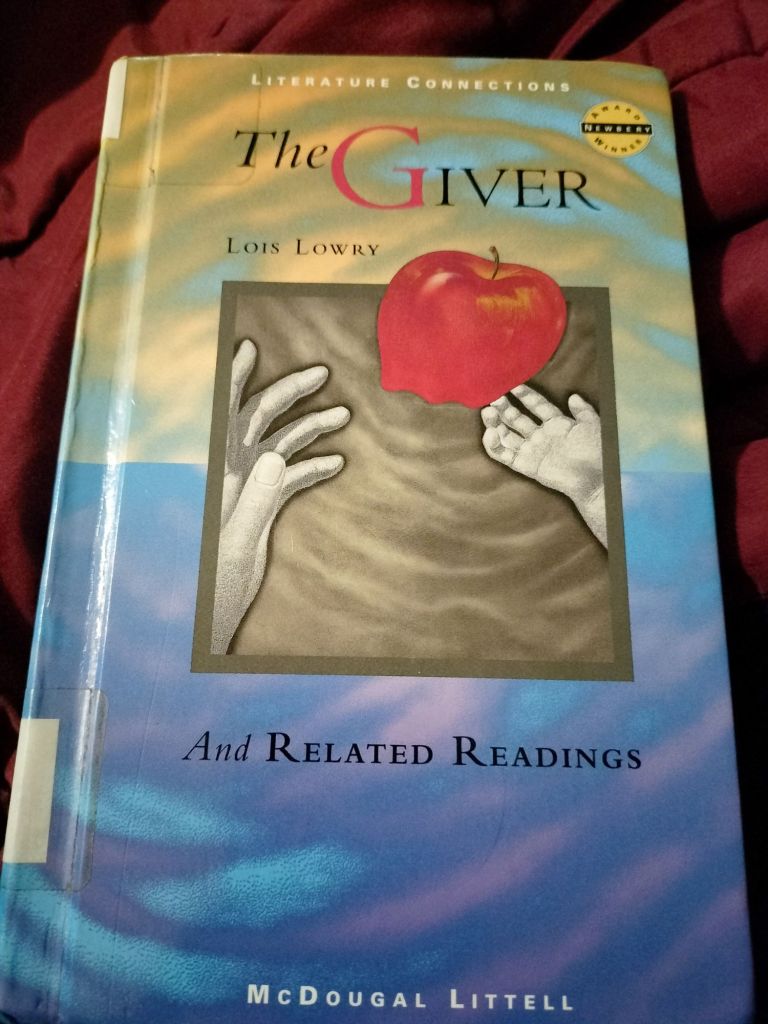
P.S. Look at this copy of The Giver I found at my library. It was published in 1997, only 4 years after the novel came out. The related readings are an incredible resource (see poem below). Part of why I love my tiny library is that a bigger library might have culled this one out decades ago for a newer copy of just the novel. Little libraries can keep gems if you know where to look!

The Local Library

Last month I got a new job. I didn’t quit my old one, but added to my repertoire as they say.

I was a library assistant my senior year of high school and considered for a while becoming a librarian, but it didn’t really fit with my college choice and I wasn’t sure if I was up for grad work right away in order to get the job I wanted. So I let that dream go and life has swept me along thinking about it every now and again…

I guess the Lord didn’t want me to forget about that pursuit when we realized our house was within walking distance of the local library (also a 3 minute drive). It’s located in the city hall complex on the backside with no flashy sign, so many people don’t know it’s there. Near the building is a newly redone playground and splash pad and dog park that helps draw people in. My family has been going there for over 12 years and having 4 kids meant racking up a lot of stroller miles over that time.

Fast forward to now… a longtime library employee, who we loved dearly, recently moved. All the employees shifted up in positions which left the 8 hour a week spot open. They asked me if I wanted to join on and doing some creative support, event help, and behinds the scenes grunt work. They said this position has no set hours and my kids are always welcome to come with me. How could I say no?

My co-worker (who is an incredible artist!) made a stencil and I chalked this outside the library for Dino-vember

So I have run Bingo for the older crowd, wrapped boxes for movie time photo ops, shelved books, taped and stamped books, chalked dinosaur feet, helped people locate graphic novels, cut out crafts for storytime, organized craft items. Ironically, through doing this varied work it confirmed my choice to not become a full-fledged librarian who acquires books and labels things, etc. I have to have a lot of variety in my jobs, so being behind a desk all the time isn’t what I am built for. I have to move which is probably why I became a teacher instead.

I am excited about giving back in a small way to a place that has given so much to my children and so many others over the years — a community area that really is like a second home and a safe space to them. When I work (now as an official employee of my city) I see all the many faces of my community and even my own literal neighbors. That was the part I didn’t consider when I was dreaming about books as an 18 year old, but I see it so clearly now. These “3rd spaces” (places that are not home or work) are vital for populations to flourish.

Featured Student Work: Poetry By Sage

“Noise”

By Sage

Tiiiiz Tiiiiiz Tiiiiiz

The crickets’ restless chirp

sshhhh whoosh

The peaceful breeze on a warm day

fftch fftch fftch

The leaves hitting one another as the tree sways

Baaa

The goats’ laughter


Noise. Never ending. Noise.

A shout of life.

a cooling comfort of… Noise


Now, as I walk, I hear the surface change

from crunchy leaves, 

to rolling gravel

to a stable sidewalk.


Let there always be Noise!


From time to time I will feature student work here on the blog (always with their permission). Sage wrote this poem in 2023 during her “siesta time” where the girls are free to roam on the farm and just be. I love how she captures the farm life sounds in letters, almost as if she is composing the sound map her ears are experiencing in real time. Sage always uses her keen senses and imagination to spill thoughtful descriptions onto the page!

For the Love of Handwriting

Can you picture in your mind the handwriting of someone close to you?

I can see my dad’s tiny angular script for lists and labeling. I can see my mom’s crisp, legible rounded letters almost connected like cursive (very much like her organized self). I can see my husband’s almost-shorthand with quick letters that make sense to him because he has to take so many notes for work and classes. I can see my own teacher-informed style written on whiteboards and handmade cards with equal parts legibility and could-be-a-font.

I started down this line of thinking because of a piece of paper my youngest daughter brought home form her Kindergarten co-op. I saw her name written at the top by her teacher, who by God’s eternal goodness, happens to be one of my college roommates. Seeing her script at the top of the paper was sort of like the cherry on top as I was already excited about her knowing my daughter as a learner in the classroom.

My roommate was an incredible elementary education major and hearing about all the passion, fun, and child-centered respect she brings to the kids in her class each week reminded me of all the notes we passed back in forth in education classes before the days of cheap personal laptops and WiFi being strong enough to carry the load. I still have shoeboxes of notes and memorabilia in my closet from each year of college, filled with the handwriting of all my friends from those 4 years.

Perhaps what I am encouraging all of us to do is to welcome being surprised by the little joys in life, like handwriting. When the people we love are no more we will hang on to many memories of how their life intersected with ours and one of the most unsuspecting things is through something that is uniquely them — their words scrawled on a piece of paper.

Featured Student Work: Poetry by Charis

“Mosaic” 
by Charis

Red, blue, gold, silver.

Shiny, matte, transparent, cloudy.

Rough, smooth, worn, jagged.

Look at all these broken pieces.

They have shattered.

They are useless. 

They are broken.

Abandoned. 

Lost.

Weary.

Afraid.

Alone.

There is no hope,

Not for mere shards,

Not for these.

What now can they produce?

What more can they give?

They lie defective on the ground,

Overlooked by the productive ones.

But defeated pieces have a purpose,

If only they will come together,

Unified

Under something larger than themselves

–Than their brokenness–

A Mosaic.

Different colors, tones, and textures

Now complement each other

Because shattered fragments are beautiful

When mortar binds, cures them together

These lives are changed forever

And create a lovely community.

Now there is hope. 

Red, blue, gold, silver.

Shiny, matte, transparent, cloudy.

Rough, smooth, worn, jagged.

Look at all these broken pieces!

Would you have thought that they could fit together

In such unimaginable, beautiful ways?


From time to time I will feature student work here on the blog (always with their permission). Charis wrote this poem in 2023 after one of our tutoring sessions that involved trying to use vivid imagery. I particularly love her use of punctuation in this poem — the variety brings the words and word-pictures to life! She is a talented writer who has a lifetime of word composing ahead of her.

Faithful with Little

Towards the end of June we came home from our family vacation to see our blueberry bushes bursting with gorgeous blue fruit. While we were gone it rained considerably (we definitely needed it) so the berries were plump. We harvested them by the cup full.

The basil still looked happy and I took some leaves for dinner’s pizza sauce and got a few orange Roma tomatoes to put in the windowsill to finish ripening before the bugs eat them. The potatoes we planted seemed to be holding steady.

As I walked around the yard, I was thankful for the small amount of produce we are able to grow in so much shade. The weeds barely grow, but most of the plants do only slightly better. This is unlike what I have been describing all year at the farm where the weeds outpace the plants but both grow abundantly with such rich soil and direct sunlight.

But I know my house is not a farm and so we do what we can with what we’ve got. Our blueberry bushes were given to us by some church friends as a housewarming present almost 16 years ago. Unless a late frost or drought nips them, they produce wonderfully all summer long. The other items (minus the potatoes) I buy as tiny seedlings every year from a local produce stand and plant in a raised bed.

Honestly, it’s nice to take a break from a lot of heavy, hot work that the farm requires. Long experience with my dreadful yard soil tells me that it is impossible to recreate the farm magic at my house anyway, so I have learned to be faithful with what does work and enjoy it. Having a small amount of things you can tend faithfully is a blessing in its own right — it helps remind you of your finitude.

And yet I acknowledge I struggle with that concept. I want to taste it all which means I can take on too much too quickly. It means my husband and kids have to put up with my always having a full plate to care for our family and community. But I truly believe that learning to live with limitations is the first step toward true contentment. I am not meant to do and be it all, but my community can also help encourage me to be faithful with little.

Bushhogging Your Writing

If you’ve never been exposed to the verb bushhoggin’ (which spellcheck says is not actually a verb), it’s a great one, useful as a metaphor for so many scenarios in life.

The word actually came from two words “brush” and “hog” because of the nature of the machine — a tractor attachment that whacks big or stubborn plants like small trees and bushes down by sheer force of a dull rotary blade. To be clear, it’s not a tiller which has sharp blades to disrupt the soil and dig it all up. It is said that a farmer noted the machine worked like a “hog eating brush” and the rest is history.

Jill, the farm manager, has had her neighbor come bushhog our garden area twice before and we got to see it in full action for the spring. She said it’s about time for a summer cleanse against all the pigweed that is growing way too fast. I tell her it’s hard to see the crops get demolished.

The backstory… When I got to the farm this week, I was so overwhelmed by how bad the weeds had gotten in just 3 weeks since we left school. With no one to really help me, I just did what I could, but it still seemed like it was just a jungle of mess — a cluttered room of grass, pigweed, clover, random flowers, fire ant hills. This was the exact opposite of what I experienced in the fall with virtually no weeds to contend with. Ultimately, it seemed that the only logical option was to knock it all down so the plants could decompose (i.e. self-compost) on the land to be ready to plant in August.

But truthfully, I didn’t want it to be bushhogged. I just wanted the monstrous weeds to go away so I could hold on to all the hours of work we put into the kale crops. There are still so many greens that are viable in including some basil near the potatoes and various lettuces scattered about. The okra also has sort of popped up in between the strawberries. I just want to keep bits and pieces of the garden going, but that’s not how a bushhogger works. It’s a HUGE attachment, so it’s more like an all or nothing proposition. If I want a better crop in fall, I have to let go of the work that has been done that is not as fresh or organized as it once was.

Part of this “letting go” work meant relocating the fruiting strawberry plants we cared for so meticulously during the year. I salvaged what ripe berries I could to eat and had to say goodbye to the rest of the small white ones. My daughter and I dug them up after we located each plant in the middle of all the weeds. We then snipped all the runners and replanted them safely in a raised bed Jill donated to us. It took about 2 exhausting hours from wedging the plants out of the garden to watering them generously in their bed at the end. Now, even if they can’t produce anymore fruit this season, they can safely grow next year for my students to eat and tend and perhaps for nature journaling for the students at Ingleside (who use the farm before we get there in the afternoon).

I was telling a close college friend about having to say goodbye to the garden and we started discussing how bushhogging can be like the writing process. You have to be willing to knock down the labor you have already put in if it no longer serves your purpose or it’s got too many weeds. You may have to move your words to a new bed. It’s painful to see the words and imagery get deleted, moved, rearranged, saved for another piece in the future. Bushhogging your words means you will have to do some hard aspects of writing and revising all again.

However, there is a silver lining for both the garden and writing: having the plants decompose doesn’t meant they just die. Rather, through the plants you’re actually enriching the soil for the next go round. As I mentioned in a previous post, the garden already has magic dirt so the plants, through decomposition, are giving back the nitrogen and all the other goodness the soil already provided the plant. When you understand that bushhogging is not a zero sum game, but rather part of the process of enrichment and discipline it’s less heartbreaking and more like a tool to help increase your ability to write better.

But…next year, I also plan to be more proactive in staying on top of the weeds with some new strategies and more help. Learn as you are going, I say!

Seasonal Learning

One of the books we read each year is called Turning of Days by Hannah Anderson. She has 7 short essays for each season. Her stories are very accessible because they are taken from everyday happenings on her property or in her community. In the very back of her book she has a “Field Guide” section where she discusses some skills to sharpen the reader’s connection to the outdoors. One thing she mentions is seasonal observation. When are things blooming? What’s going on when they bloom early or late or don’t bloom at all?

Our family regularly checks our front and backyard. We have a quarter acre lot, so while a limited area keeps the management of plants easy, it also means perennials can eat up that space. However, I love having plants that I can count on year after year*. My family and I can stroll by the beds and because we know where to look, we can know the plant names and watch the seasons unfold together year after year.

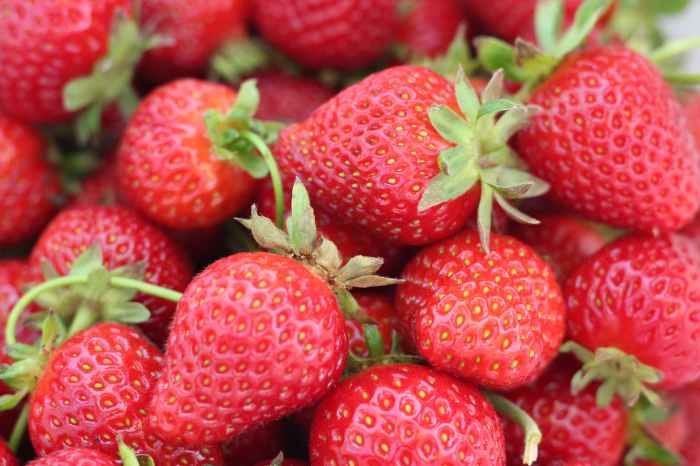
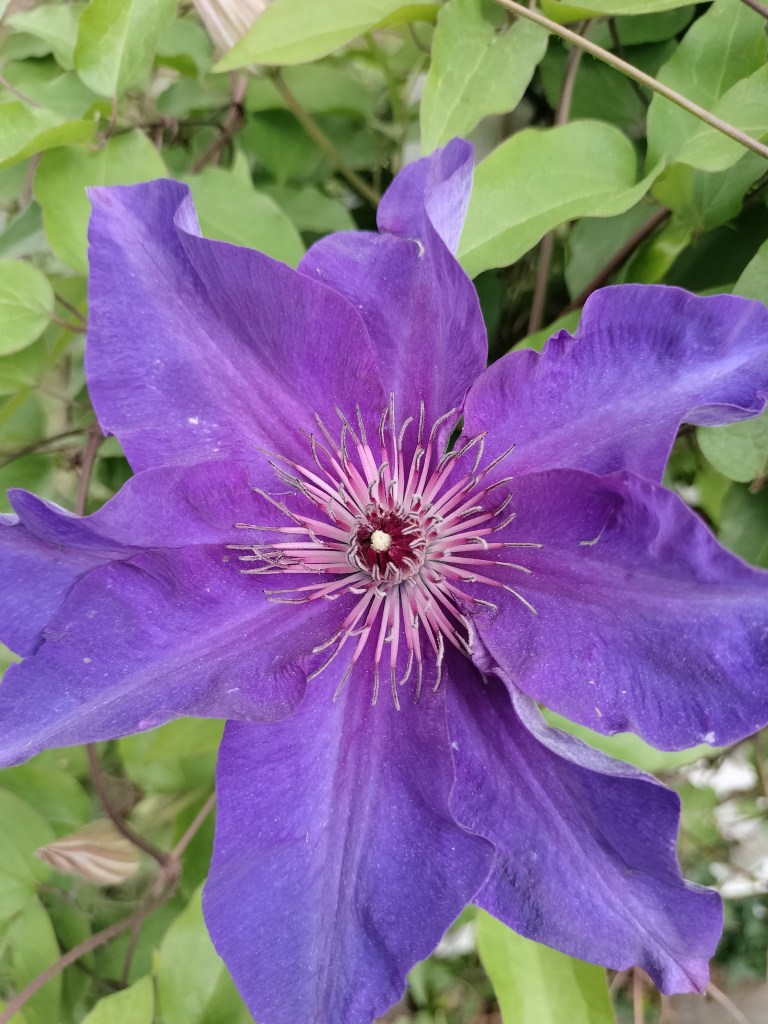
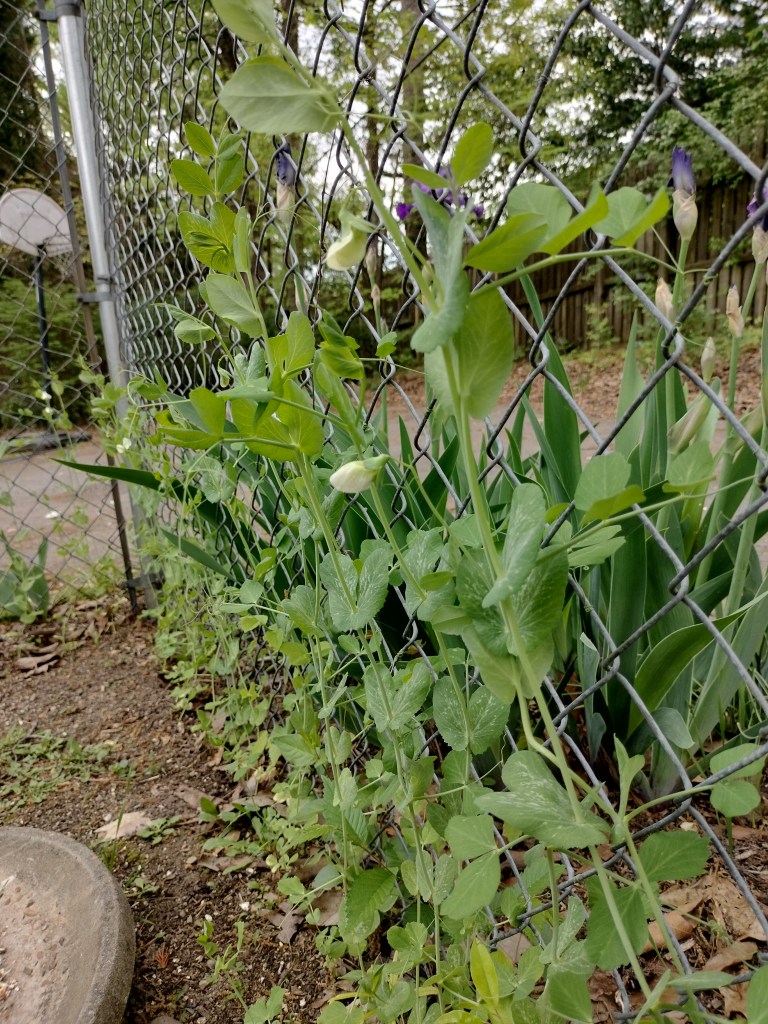
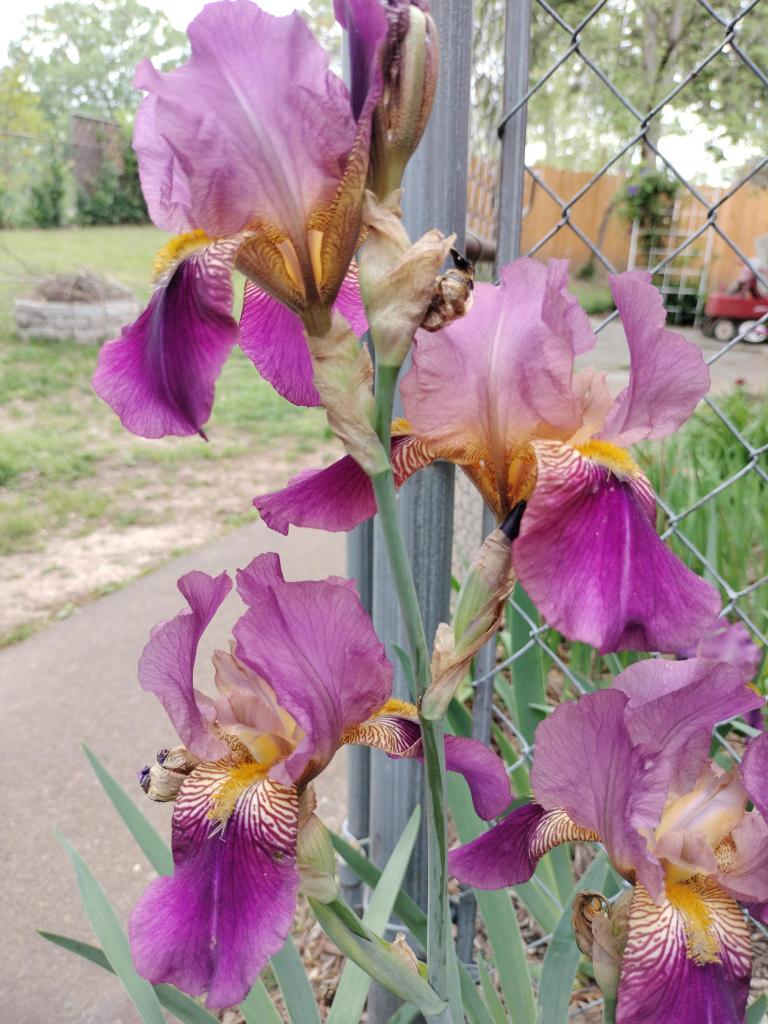
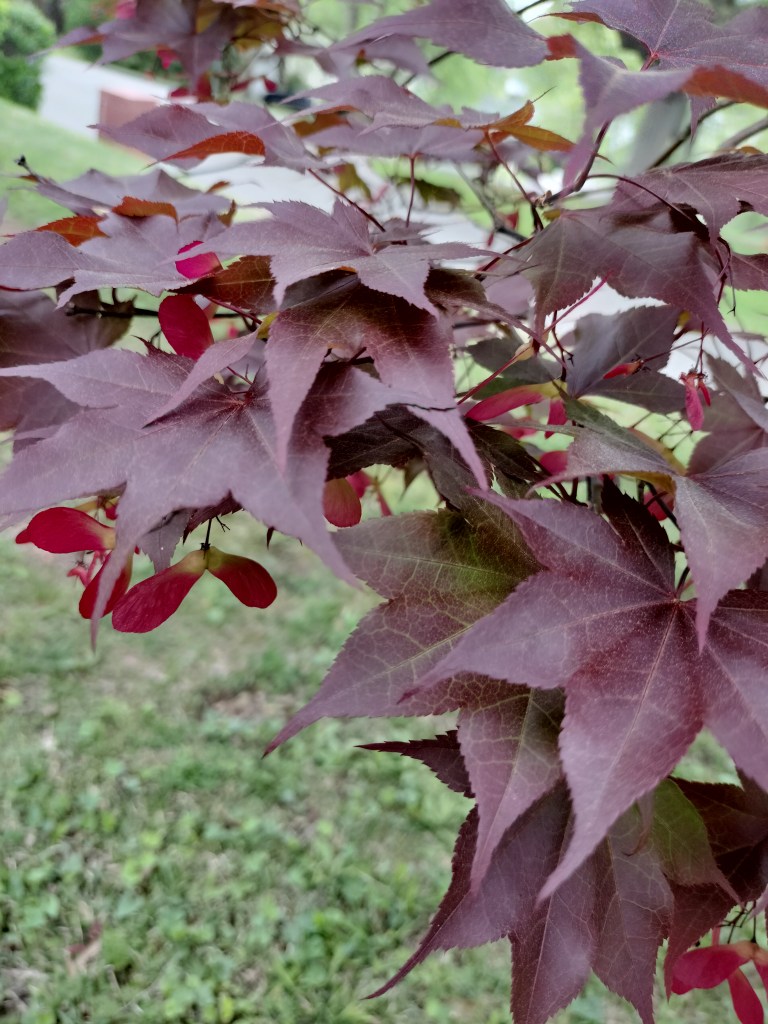
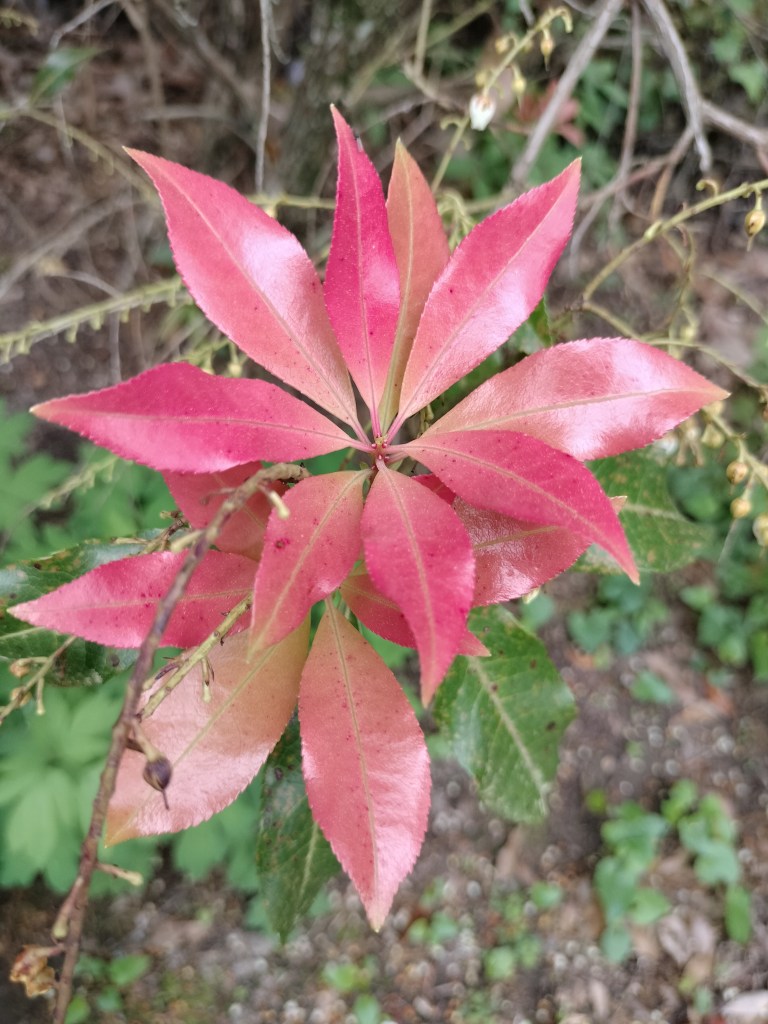
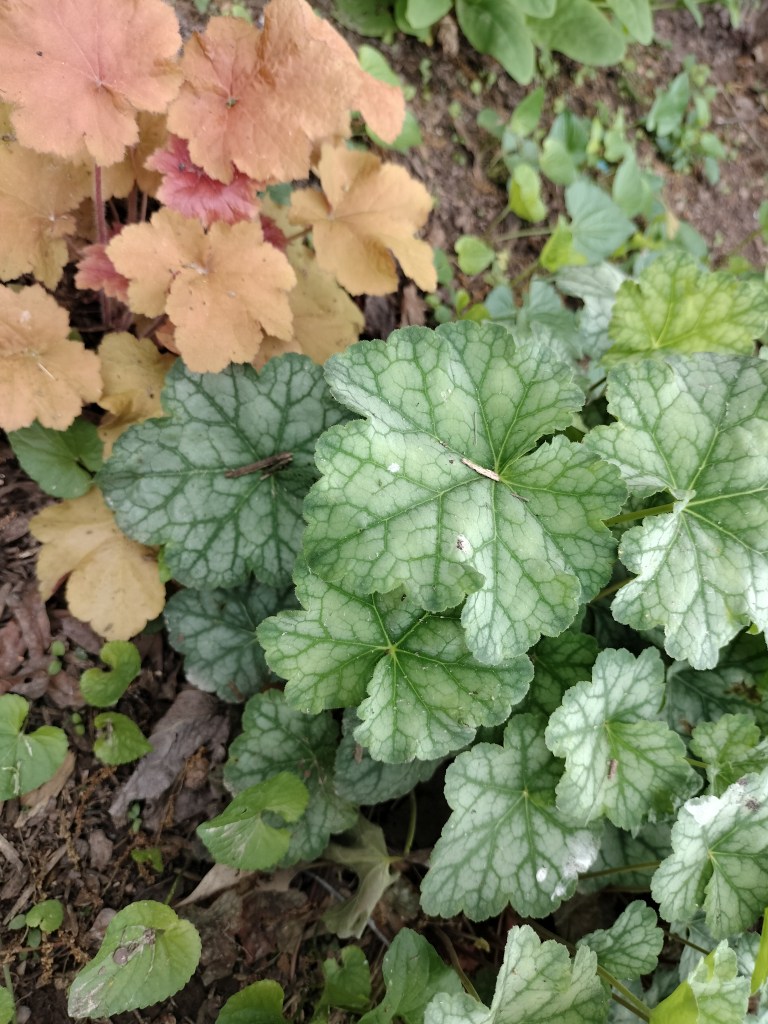
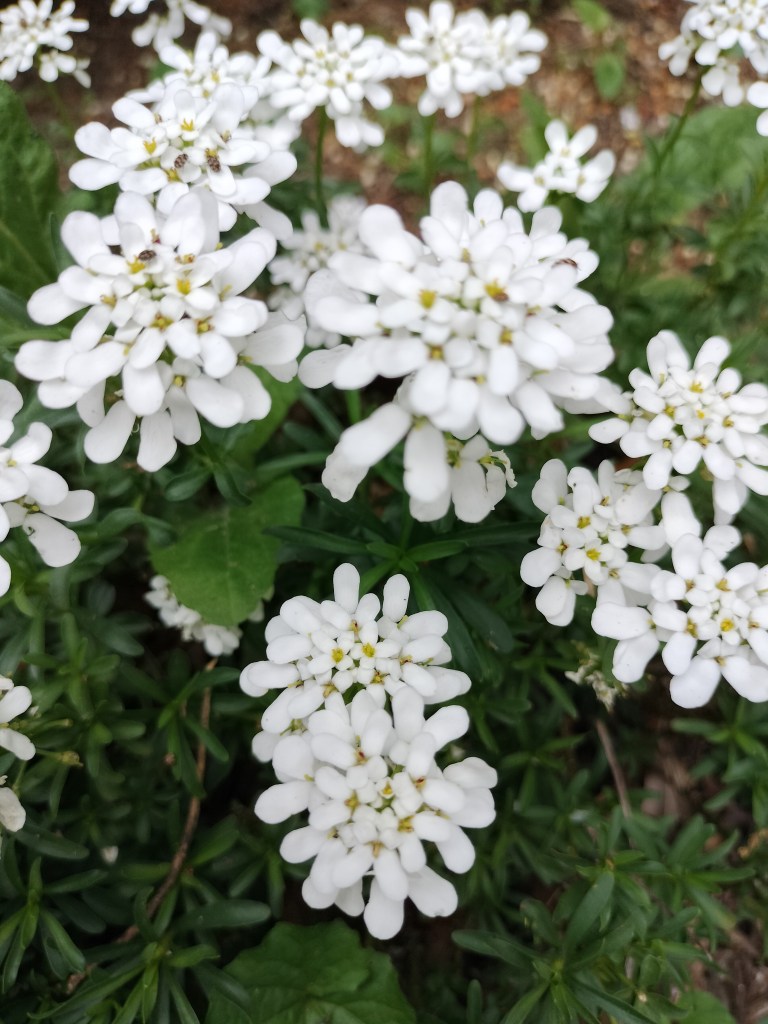
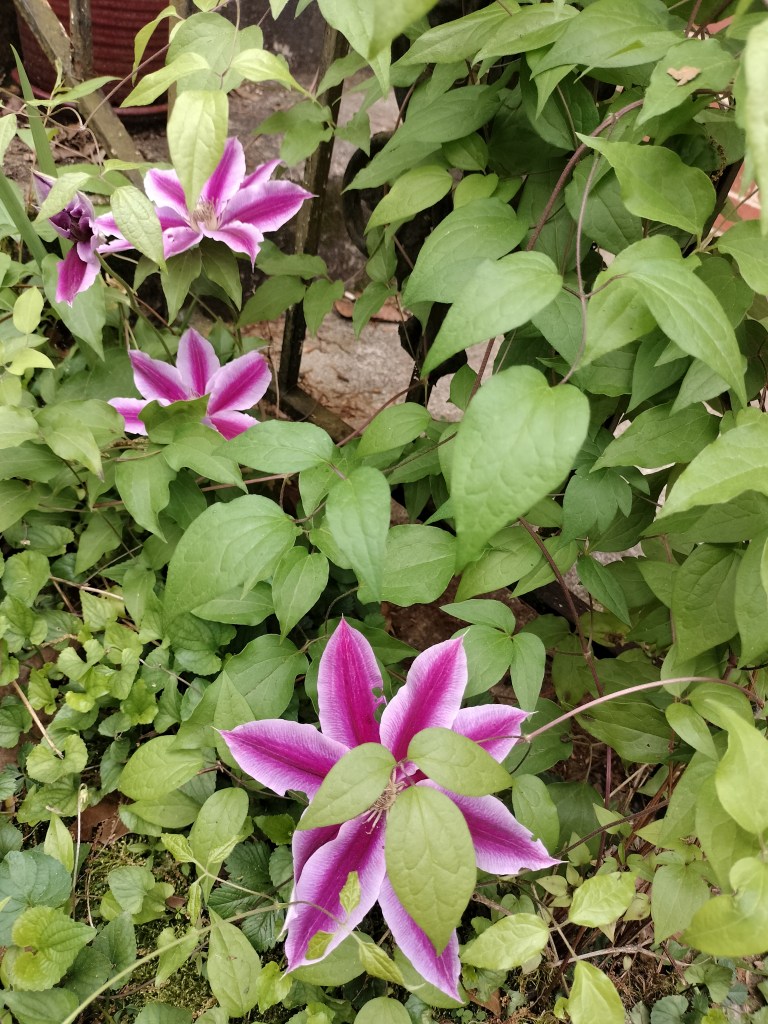
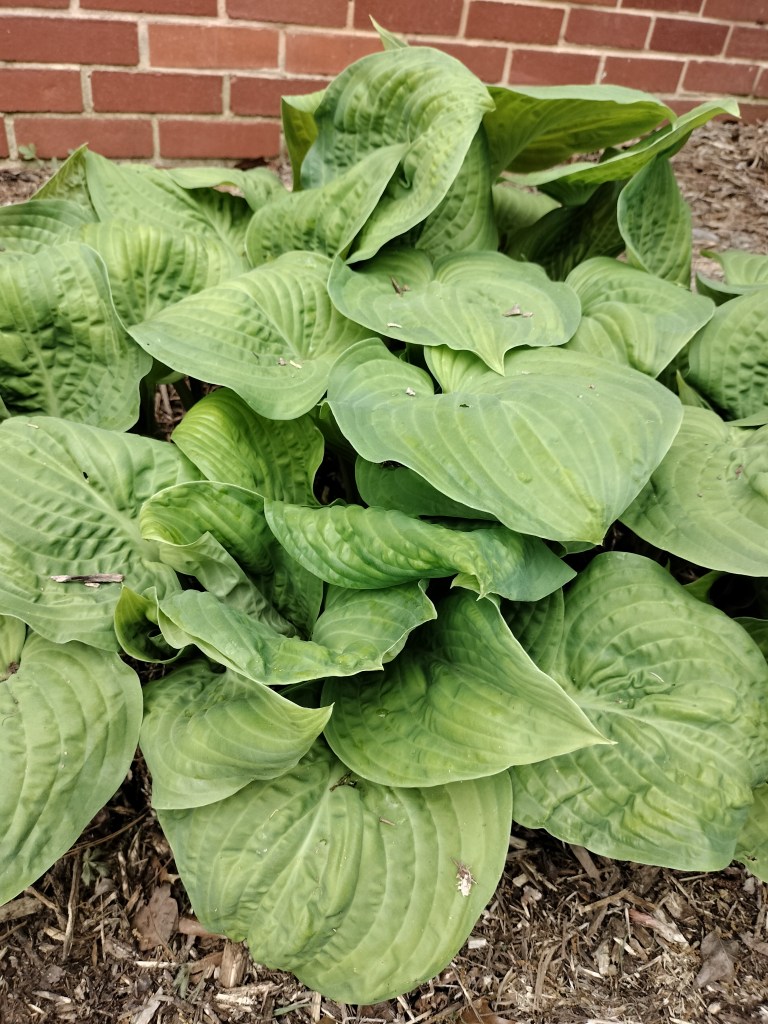
Here are some of the lovely things in bloom for April in my Tennessee neck of the woods.

*I know the sugar snap peas among these pictures aren’t perennials, but I will definitely keep planting them in this spot each year, so close enough!