
GardenMaxxing in the Age of AI Slop

As many of you know, I am a mostly self-taught gardener. I have experimented with all kinds of things at my home and with my students at the farm. Some of the lessons I have learned over the years from failure and success:

– Kale germinates quickly and can grow just about anywhere. It’s my GOAT green.
– My front yard doesn’t get as much direct sunlight as I would like, so sometimes my growing options are limited
– My very shady backyard is good for herbs only
– Bush beans are my go-to summer plant. They always do well and produce more when you pick them.
– Onions and garlic are an easy choice to plant at the farm because they are so low-maintenance and get the sun they need.
– Carrots still frustrate me. Such a little success rate for all the videos I have watched!

That last one, makes me feel a bit like Captain Ahab, a little obsessed with how I can find that white whale of a resource that will help me grow carrots. By looking on the internet though, I have been increasingly disturbed by the number of videos and images that are clearly AI generated targeted at beginner gardeners. Some of the videos/images are about shortcuts to planting onions, or tulips, or garlic. For instance, one of the most popular ones is about how you can plant a bunch of bulbs by digging a trench, putting the bulbs in egg cartons, and then covering them with dirt. Look at the one below:
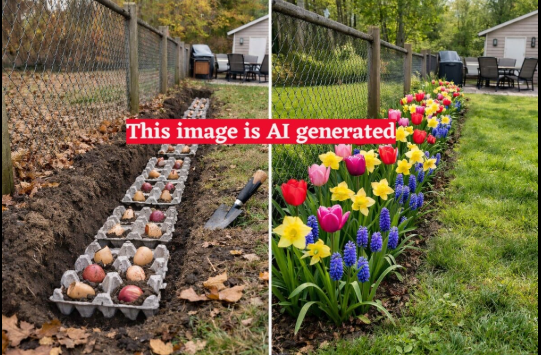
This is wrong on a number of levels (same bulb but 3 different varieties of plants?!).

Using the internet is now like having to use daily all the skills I learned from playing spot the difference with side by side images. Did you notice any differences in the one above? (Hint: Look at the patio and the house/shed and you’ll find some).

What about this one on planting onions:
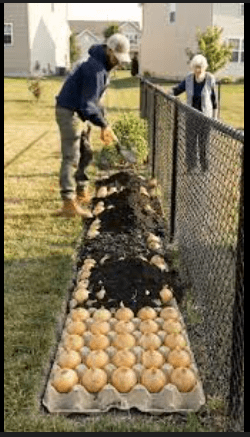
THE ONIONS ARE ALREADY FULL GROWN SIZE! Are those egg cartons for ostrich eggs?

So what purpose do these videos serve? My guess is revenue generators on YouTube. The more views, the more $. Unfortunately, these people are only sowing figurative seeds of disinformation, not literal seeds that benefit others. I would hate to see someone get soured on gardening because they spent a lot of money after falling for a short video with no sources instead of, say, asking a tulip grower to explain why they do what they do with their bulbs.

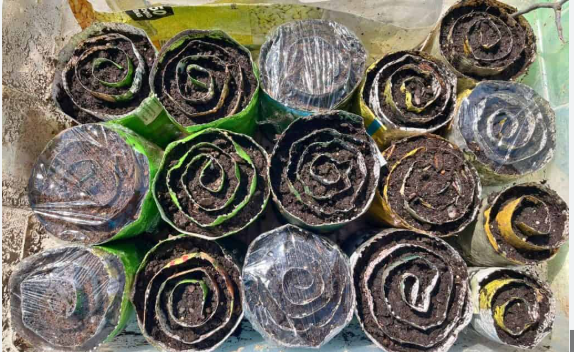
Shortcuts in the garden are great if they actually work and save us labor. A great modern example is seed snails; they are the new trend and some gardeners are seeing really great results. Others find it too messy and fiddly and just keep using trays. There is so much about gardening that just depends on preference and weather conditions.
My hope for you and for my students is that we can all take a crash course in media literacy by discerning what is “Gardenmaxxing” internet garbage and what is actually helpful by getting outside and playing in the dirt ourselves. It’s good to take some low stakes risks based on solid research in order to learn.
Bushhogging Your Writing

If you’ve never been exposed to the verb bushhoggin’ (which spellcheck says is not actually a verb), it’s a great one, useful as a metaphor for so many scenarios in life.

The word actually came from two words “brush” and “hog” because of the nature of the machine — a tractor attachment that whacks big or stubborn plants like small trees and bushes down by sheer force of a dull rotary blade. To be clear, it’s not a tiller which has sharp blades to disrupt the soil and dig it all up. It is said that a farmer noted the machine worked like a “hog eating brush” and the rest is history.

Jill, the farm manager, has had her neighbor come bushhog our garden area twice before and we got to see it in full action for the spring. She said it’s about time for a summer cleanse against all the pigweed that is growing way too fast. I tell her it’s hard to see the crops get demolished.

The backstory… When I got to the farm this week, I was so overwhelmed by how bad the weeds had gotten in just 3 weeks since we left school. With no one to really help me, I just did what I could, but it still seemed like it was just a jungle of mess — a cluttered room of grass, pigweed, clover, random flowers, fire ant hills. This was the exact opposite of what I experienced in the fall with virtually no weeds to contend with. Ultimately, it seemed that the only logical option was to knock it all down so the plants could decompose (i.e. self-compost) on the land to be ready to plant in August.

But truthfully, I didn’t want it to be bushhogged. I just wanted the monstrous weeds to go away so I could hold on to all the hours of work we put into the kale crops. There are still so many greens that are viable in including some basil near the potatoes and various lettuces scattered about. The okra also has sort of popped up in between the strawberries. I just want to keep bits and pieces of the garden going, but that’s not how a bushhogger works. It’s a HUGE attachment, so it’s more like an all or nothing proposition. If I want a better crop in fall, I have to let go of the work that has been done that is not as fresh or organized as it once was.

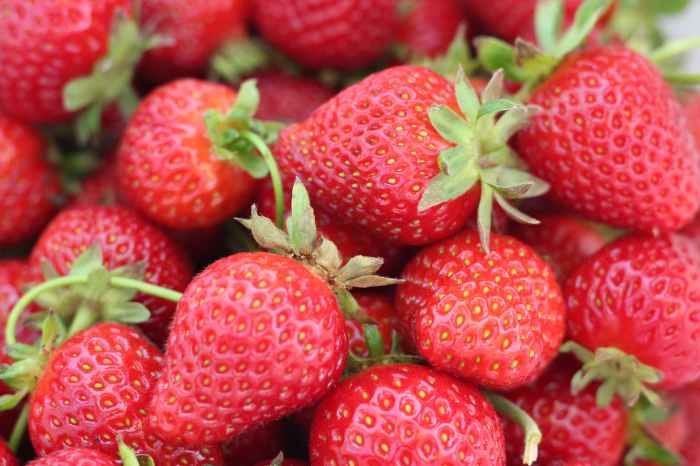
Part of this “letting go” work meant relocating the fruiting strawberry plants we cared for so meticulously during the year. I salvaged what ripe berries I could to eat and had to say goodbye to the rest of the small white ones. My daughter and I dug them up after we located each plant in the middle of all the weeds. We then snipped all the runners and replanted them safely in a raised bed Jill donated to us. It took about 2 exhausting hours from wedging the plants out of the garden to watering them generously in their bed at the end. Now, even if they can’t produce anymore fruit this season, they can safely grow next year for my students to eat and tend and perhaps for nature journaling for the students at Ingleside (who use the farm before we get there in the afternoon).

I was telling a close college friend about having to say goodbye to the garden and we started discussing how bushhogging can be like the writing process. You have to be willing to knock down the labor you have already put in if it no longer serves your purpose or it’s got too many weeds. You may have to move your words to a new bed. It’s painful to see the words and imagery get deleted, moved, rearranged, saved for another piece in the future. Bushhogging your words means you will have to do some hard aspects of writing and revising all again.

However, there is a silver lining for both the garden and writing: having the plants decompose doesn’t meant they just die. Rather, through the plants you’re actually enriching the soil for the next go round. As I mentioned in a previous post, the garden already has magic dirt so the plants, through decomposition, are giving back the nitrogen and all the other goodness the soil already provided the plant. When you understand that bushhogging is not a zero sum game, but rather part of the process of enrichment and discipline it’s less heartbreaking and more like a tool to help increase your ability to write better.

But…next year, I also plan to be more proactive in staying on top of the weeds with some new strategies and more help. Learn as you are going, I say!