Flower in the Crannied Wall

Flower in the crannied wall,

I pluck you out of the crannies,

I hold you here, root and all, in my hand,

Little flower—but if I could understand

What you are, root and all, all in all,

I should know what God and man is.

Alfred Lord Tennyson
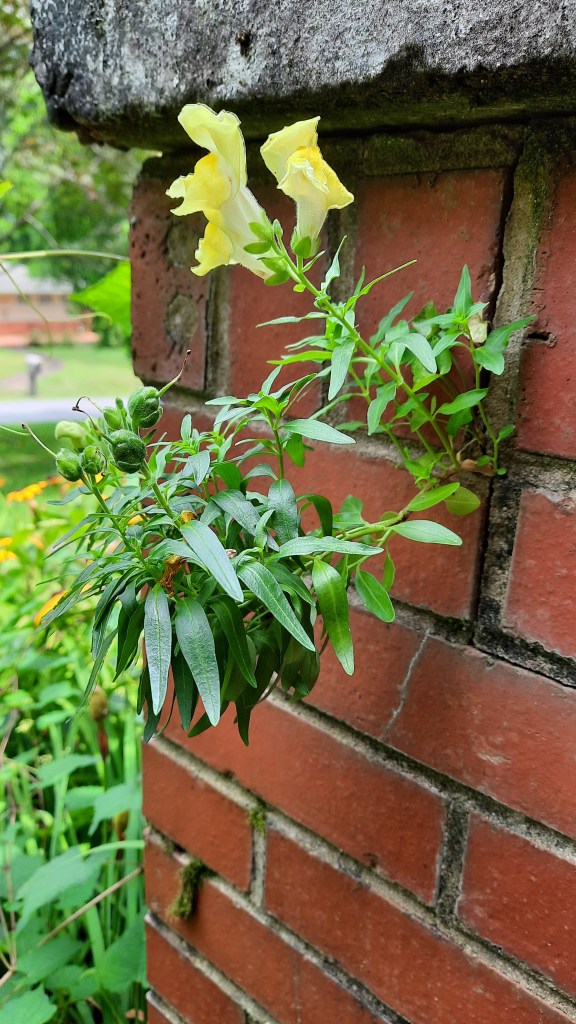
This poem by Alfred Lord Tennyson is what my 6 year old is working on for recitation this term in her tutorial. I had her read me the title and was about to proceed when I thought to ask, “Do you know what the word cranny means?” She didn’t “dictionary define” it but instead said something I didn’t expect, “Mom, is it like the snapdragons we found growing out of the wall in the front yard?”

YES.

I smiled and said, “That is the perfect picture for this poem!”

She read it through twice and asked what it meant, so we talked for another minute about the poem. However, the joy for both of us was not “the point of the poem is…” (like so many of us were taught to treat poetry) but the shared connection to it from our own front yard. As she gets older and revisits the poem for insight, that picture will be etched on her heart.

Being in nature, noticing the most seemingly insignificant things can lead to much inquiry. I asked my husband (who knows all the plant things) how that large cluster of plants could grow out of a crack. He said a seed must have somehow gotten in there and with all the rain we have had, decided to live.

Truly an everyday miracle from God.


Lament and Gratitude

The end of the school year is has come. Last night the girls performed their Shakespeare with friends or showed their various coordinated dances. They all said they are sad to not see their buddies so often, but are excited to be home and have lots of unstructured time this summer.

In reflecting on life after another school year, I opened my commonplace book where I write down quotes from books I’m reading. One passage I wrote was talking about why teachers teach specifically (but I think the sentiment applies to engaging with humanity in general), saying, “You must do without the traditional pedagogic luxury of believing that the people you teach are lazy, rude, or entitled. You do it instead, knowing that they are all straining under the load of their own grief.”

It reminded me of a conversation with a friend about how a gratitude journal and a lament journal go hand in hand. We agreed you can’t see either thing rightly unless you can acknowledge both. If everything’s about gratitude then you have to hide the hard things. If everything’s about the hard things, then you find nothing to be grateful for. I know all too well which side I err on. My prayer is that God would continue to show us those who are straining under the load of their own grief so we can be salt and light in a heavy world. And once we see them that we would not turn away from them, but instead first do our own heart work to be able to give in abundance and service.