What Awaits us in the Woods

My older 3 girls started taking swim lessons this fall. They wanted to gain some confidence in the pool and learn new skills, so two days a week we head to a local university where college students run both a swim program and a gymnastics program for children.

During that time I take our 3 year old out on a nature walk on campus next to a creek. I enjoy that special time with her because she goes to a preschool program from 9-2 on those days. She and I have no agenda. Just walking and seeing what awaits us in the woods.


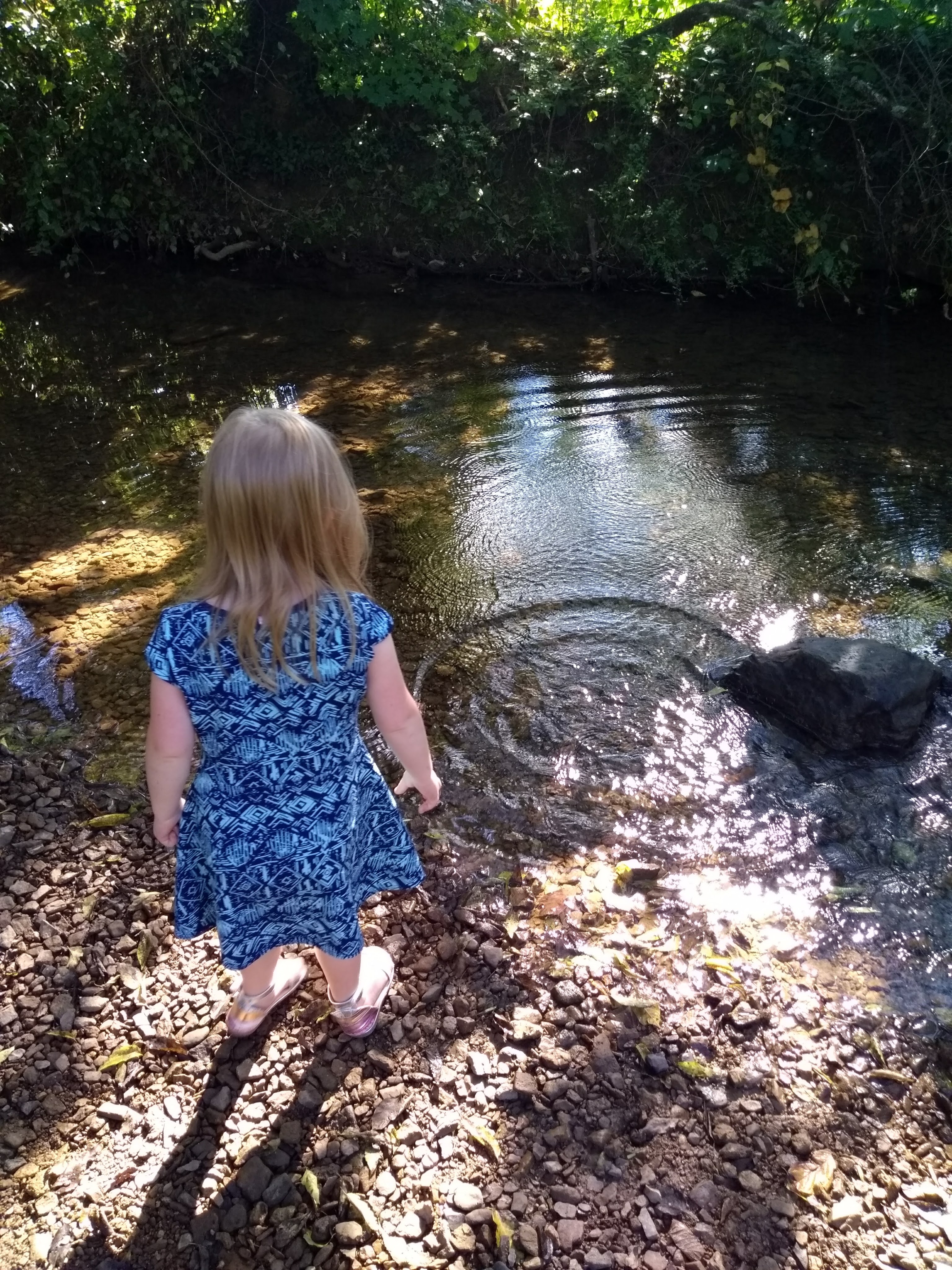
As we got to the end of the trail today, she asked if she could throw rocks in the water and “make music” with her splashing. I told her yes and watched her pure joy for several minutes. It struck me how different my unhesitating response is to her than when my oldest was her age. It has taken me more than a decade to grow into a mom who can say yes to their many requests about exploring the outdoors on their terms. Watching a lot of webinars from experienced early childhood educators has helped me revisit the limitations I used to set out of my exhaustion or anxiety. Their refrain is always the same: Just let them play. Let them learn about the world in their own way.

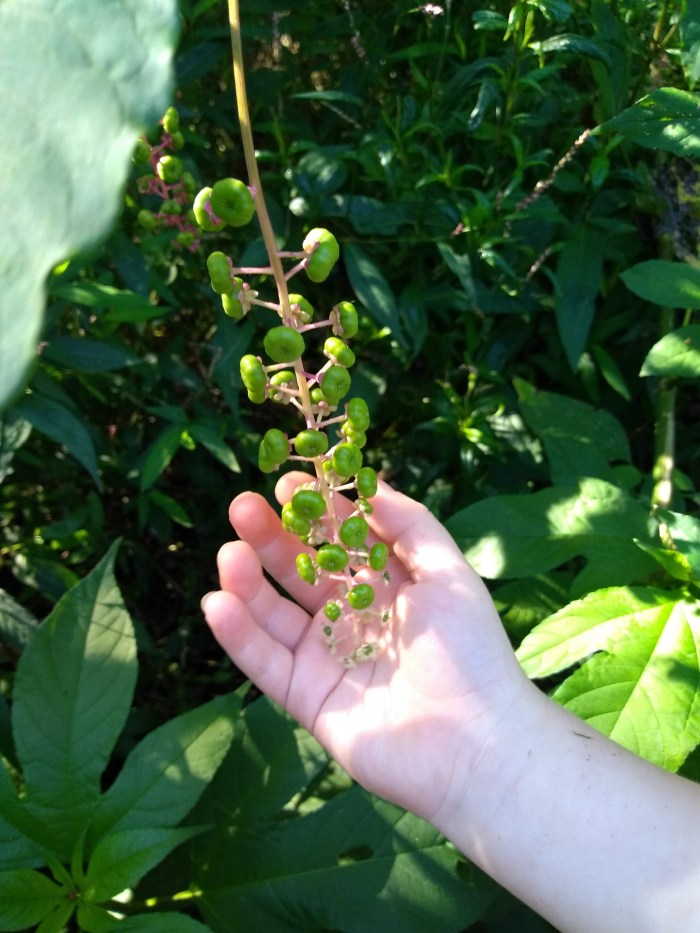
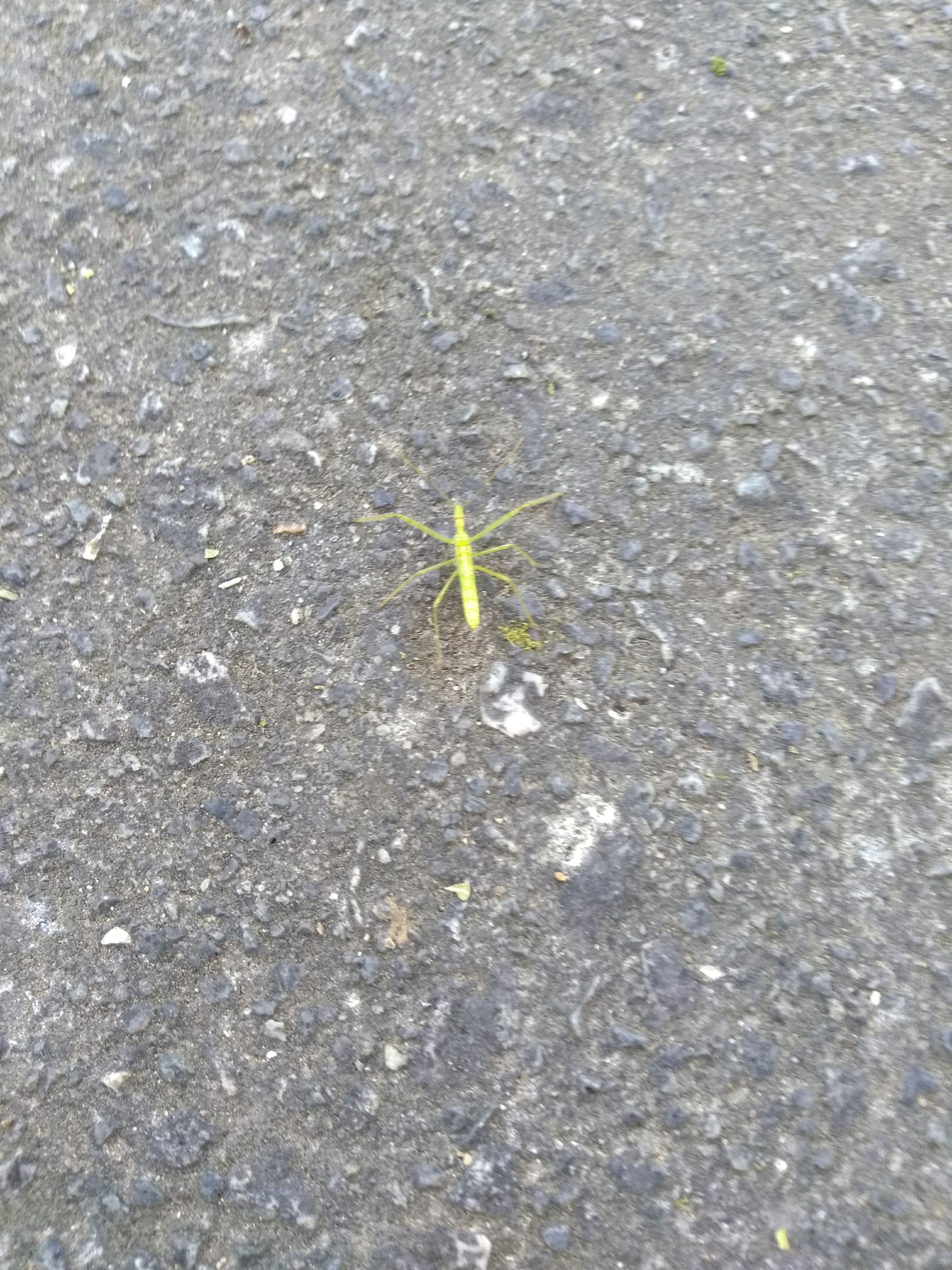
So I did. She tossed stones, carefully held and observed a pokeberry, asked me to take a picture of a small green bug she spotted, requested a smartweed plant be put behind her ear, wondered how to pronounce the plant I picked up (‘Osage orange’), and took her precious sweet time coming back to the building when we needed to collect sisters to go home.

I can’t believe she spotted this guy!

If there is a takeaway from these little excursions of ours it’s that every time we in the larger culture make time for these moments, we are teaching the next generation that accepting nature’s invitation is a worthy pursuit. Eventually observing nature will no longer be a pursuit, but a lifestyle that has “snuck up on you” as we say in the South. My husband has steered our family in this direction in the most humble and patient ways, and yet he always foremost credits his grandfather who grew up surrounded by gardens and animals as showing him a slower, more intentional way to live.

Sweltering in Summer

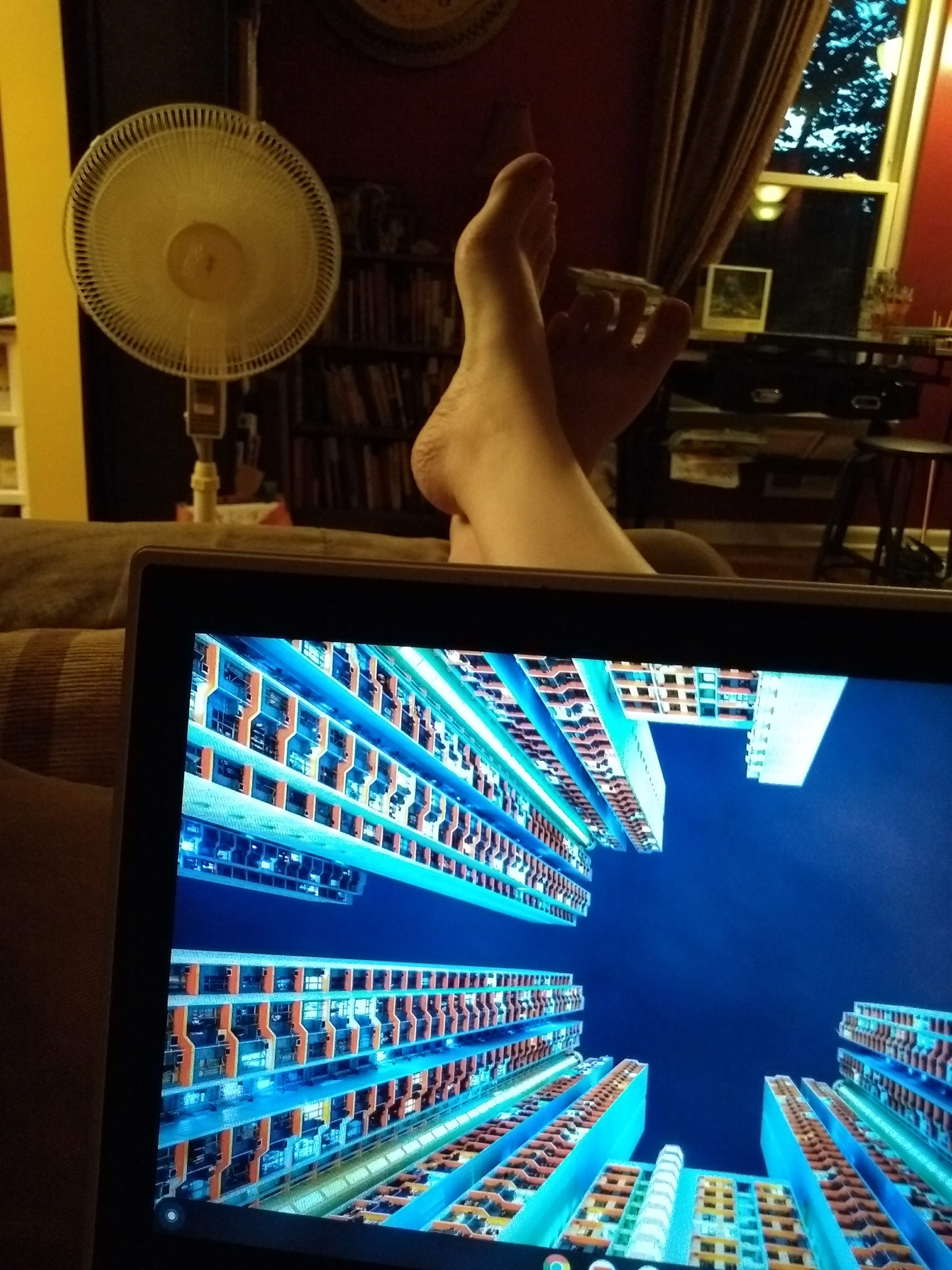
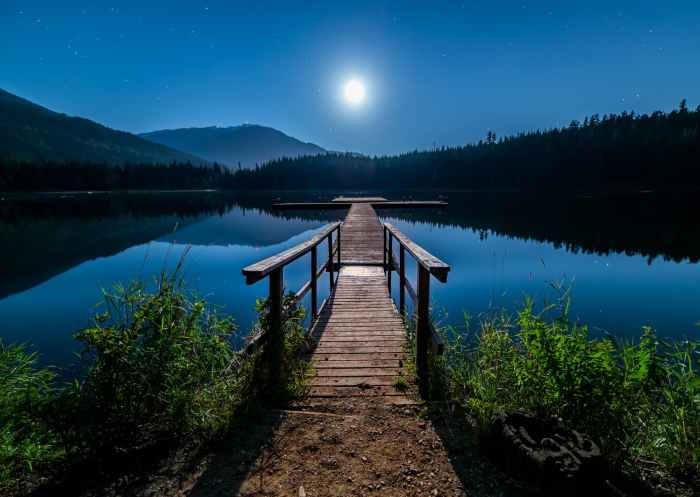
The view from my house this summer

They say to draw readers in, the more senses a writer can incorporate the better — show, not tell. Make the reader smell what soiled laundry your character is washing, make the reader taste the rosemary butter steak your character is eating, making the reader hear the mysterious rustling in the woods. Concrete over the abstract.

For example, I can try and make you feel the temperature in my house earlier this summer when our air conditioner was broken. I was constantly thinking: how sticky and damp the painted walls felt, how I told the kids if they just want to wear a bathing suit for a few days that would be fine, too, how irritable and unfocused my mind was unless a heavy fan was blowing directly on my face, how it was actually hotter and more humid inside the house than it was outside the house. The patina of malaise was slowly coating the activities of everyday life. I reminded myself that it was going to be fixed, but the constant beads of sweat trickling around my hairline was making me delirious.

So why am I telling you this?

It occurred to me that as my family endured this “house camping” inconvenience that robbed our sleep for several days, I had encountered this “sweaty” feeling before. I have read poems and books that describe the very things I was physically feeling yet with so much more at stake. Families for whom air conditioning is either non-existent or a luxury. The poets and authors described them with such nuance that I felt like I was transported to their open-air houses, packed apartments, or small villages.

Even though us suffering through a few days of grimy sweat is entirely insignificant compared with the poverty and marginalization of those whom I have read, there is still a small sense of overlap. If we have the eyes to see, literature is constantly showing us Venn diagrams — where do we have connection and where do our lives differ?

As a reader, our job is to take those weighty observations and say, “So in light of this… what do the comparisons and contrasts mean for my community, the world, and me?”. As a writer, your job is to keep playing with language and reading your work aloud to see if your words are carrying the sensations you want your reader to feel.

Flower in the Crannied Wall

Flower in the crannied wall,

I pluck you out of the crannies,

I hold you here, root and all, in my hand,

Little flower—but if I could understand

What you are, root and all, all in all,

I should know what God and man is.

Alfred Lord Tennyson

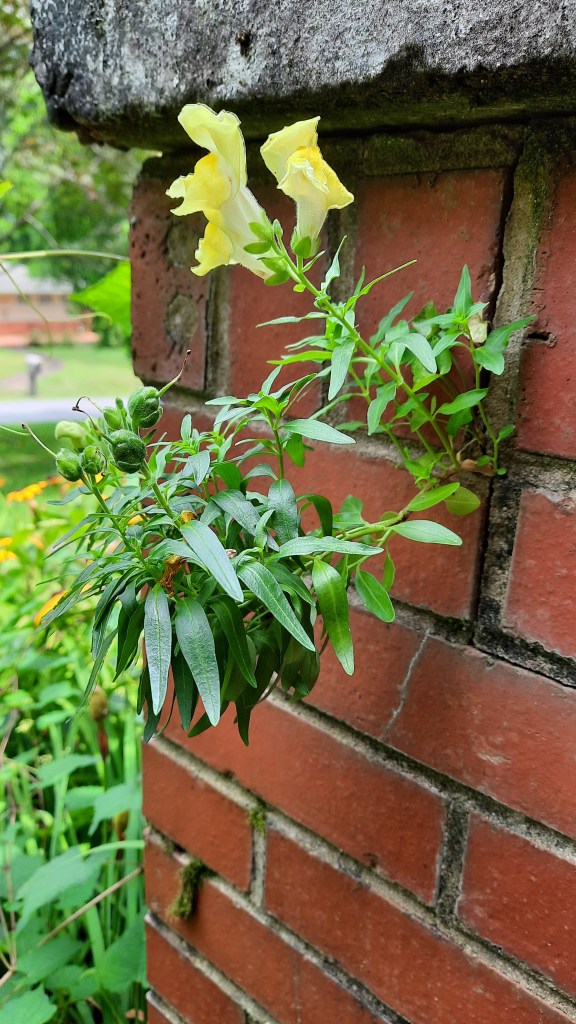
This poem by Alfred Lord Tennyson is what my 6 year old is working on for recitation this term in her tutorial. I had her read me the title and was about to proceed when I thought to ask, “Do you know what the word cranny means?” She didn’t “dictionary define” it but instead said something I didn’t expect, “Mom, is it like the snapdragons we found growing out of the wall in the front yard?”

YES.

I smiled and said, “That is the perfect picture for this poem!”

She read it through twice and asked what it meant, so we talked for another minute about the poem. However, the joy for both of us was not “the point of the poem is…” (like so many of us were taught to treat poetry) but the shared connection to it from our own front yard. As she gets older and revisits the poem for insight, that picture will be etched on her heart.

Being in nature, noticing the most seemingly insignificant things can lead to much inquiry. I asked my husband (who knows all the plant things) how that large cluster of plants could grow out of a crack. He said a seed must have somehow gotten in there and with all the rain we have had, decided to live.

Truly an everyday miracle from God.


Lament and Gratitude

The end of the school year is has come. Last night the girls performed their Shakespeare with friends or showed their various coordinated dances. They all said they are sad to not see their buddies so often, but are excited to be home and have lots of unstructured time this summer.

In reflecting on life after another school year, I opened my commonplace book where I write down quotes from books I’m reading. One passage I wrote was talking about why teachers teach specifically (but I think the sentiment applies to engaging with humanity in general), saying, “You must do without the traditional pedagogic luxury of believing that the people you teach are lazy, rude, or entitled. You do it instead, knowing that they are all straining under the load of their own grief.”

It reminded me of a conversation with a friend about how a gratitude journal and a lament journal go hand in hand. We agreed you can’t see either thing rightly unless you can acknowledge both. If everything’s about gratitude then you have to hide the hard things. If everything’s about the hard things, then you find nothing to be grateful for. I know all too well which side I err on. My prayer is that God would continue to show us those who are straining under the load of their own grief so we can be salt and light in a heavy world. And once we see them that we would not turn away from them, but instead first do our own heart work to be able to give in abundance and service.