Poetry Power

I generally have 3 categories for books I pick up.

1. Classics I have never read

2. Books friends have written or recommended

3. Accidental finds

The book I just finished is in the 3rd category.


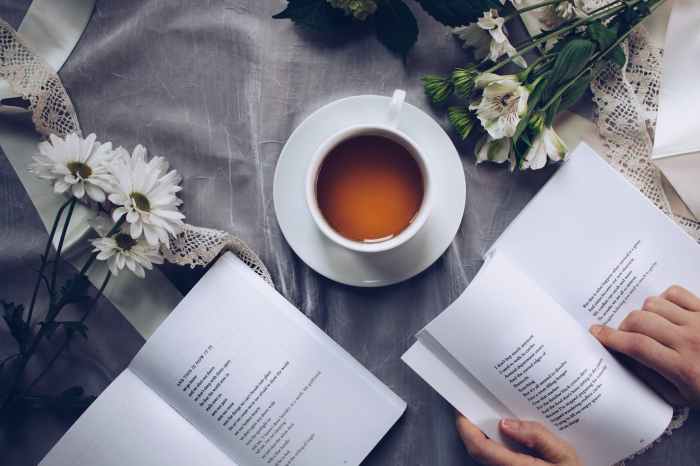
How to Say Babylon is a memoir from a Jamaican poet, Safiya Sinclair, who, like me, is 39. Her story is an incredible journey of poetry and the long memory of self-discovery. She shares about the constant hostility and abuse in her home due to her father’s strict Rastafarian beliefs, juxtaposing them with the discipline of poetry, writing, and reading that helped her see her calling as a poet and author. The book just came out in October, but I imagine it will be named one of the best works of creative non-fiction of 2023. I am so grateful she chose to share her story with the world. It’s a reminder that there are many young poets out there pursuing words and how to string them together with their heart. It means I have an obligation to help nurture that with my students. Because I have always felt like poetry was my weakest link in my education, I have had to work hard to understand the ear qualities and brevity it often requires. It would be so easy for me to just double down on novels, but if I did I would have no sense of language’s beauty and form which is essential for excellent writing and understanding yourself. So I continue to look for ways to incorporate it into our days at Maple Key and the local writing group I am in. One of the ways is through poetry prompts.

This one is from Joseph Fasano’s to-be-released, Magic Words.

Here is what I wrote:

The fox cannot help being clever.
The bleeding heart cannot help being ephemeral.
The star cannot help being luminous.
And I cannot help being Rach.
Even in my sleep, I dream of words.
Even in my sadness, I love my compassion.
I swim in the rivers of my unsureness.
I climb through mountains of my fatigue.
I travel for years and years.
And on the other side
is Rachel, beautiful Rachel,
her unruly curls cascading in the breeze.


It was good to dig deeper and not write it like a Mad Lib where you just put the first thing that comes to your mind. I encourage you to surprise yourself and give this prompt a try. Feel free to leave your work in the comments here or on the Maple Key Facebook page.

A friend from writer’s group gave us this prompt for this month from The Poet’s Companion by Kim Addonizio and Dorianne Laux. She said the repetitive form lends itself to writing about a common dream experience (whether true or made up). It is called a pantoum and you write lines that weave back through the poem (hence the numbers that guide it). Here’s my example based on the anxiety people have about being unprepared for a class:

1 Today’s Lesson
2 Written in thick, black letters
3 Teacher wants us to know
4 But I cannot write

2 Written in thick, black letters
5 Her misplaced enthusiasm.
4 But I cannot write.
6 I cannot speak.

5 Her misplaced enthusiasm
7 Smashes against the teenage clamor.
6 I cannot speak.
8 I will suffer for this.

7 Smashing against the the teenage clamor,
9 My muteness a target.
8 I will suffer for this.
10 I close my eyes.

9 My muteness a target.
11 I cannot be the dependable one today.
10 I close my eyes.
12 No paper. No pencil. No notebook.

11 I cannot be the dependable one today.
13 A test I will not pass.
12 No paper. No pencil. No notebook.
14 Everything a swirl of noise.

13 A test I will not pass.
1 Today’s Lesson:
14 Everything a swirl of noise.
3 Teacher wants us to know.


Give this one a go and discover what comes up for you even if no one sees it but you! Play with the punctuation. However, you can also feel free to put your completed poem in the comments here or on the Maple Key Facebook page if you want to share.

I believe poetry has immense power, so challenge yourself to dip your toes in — the water is fine!

Featured Student Work: Poetry By Sage

“Noise”

By Sage

Tiiiiz Tiiiiiz Tiiiiiz

The crickets’ restless chirp

sshhhh whoosh

The peaceful breeze on a warm day

fftch fftch fftch

The leaves hitting one another as the tree sways

Baaa

The goats’ laughter


Noise. Never ending. Noise.

A shout of life.

a cooling comfort of… Noise


Now, as I walk, I hear the surface change

from crunchy leaves, 

to rolling gravel

to a stable sidewalk.


Let there always be Noise!


From time to time I will feature student work here on the blog (always with their permission). Sage wrote this poem in 2023 during her “siesta time” where the girls are free to roam on the farm and just be. I love how she captures the farm life sounds in letters, almost as if she is composing the sound map her ears are experiencing in real time. Sage always uses her keen senses and imagination to spill thoughtful descriptions onto the page!

For the Love of Handwriting

Can you picture in your mind the handwriting of someone close to you?

I can see my dad’s tiny angular script for lists and labeling. I can see my mom’s crisp, legible rounded letters almost connected like cursive (very much like her organized self). I can see my husband’s almost-shorthand with quick letters that make sense to him because he has to take so many notes for work and classes. I can see my own teacher-informed style written on whiteboards and handmade cards with equal parts legibility and could-be-a-font.

I started down this line of thinking because of a piece of paper my youngest daughter brought home form her Kindergarten co-op. I saw her name written at the top by her teacher, who by God’s eternal goodness, happens to be one of my college roommates. Seeing her script at the top of the paper was sort of like the cherry on top as I was already excited about her knowing my daughter as a learner in the classroom.

My roommate was an incredible elementary education major and hearing about all the passion, fun, and child-centered respect she brings to the kids in her class each week reminded me of all the notes we passed back in forth in education classes before the days of cheap personal laptops and WiFi being strong enough to carry the load. I still have shoeboxes of notes and memorabilia in my closet from each year of college, filled with the handwriting of all my friends from those 4 years.

Perhaps what I am encouraging all of us to do is to welcome being surprised by the little joys in life, like handwriting. When the people we love are no more we will hang on to many memories of how their life intersected with ours and one of the most unsuspecting things is through something that is uniquely them — their words scrawled on a piece of paper.

Featured Student Work: Poetry by Charis

“Mosaic”ย 
by Charis

Red, blue, gold, silver.

Shiny, matte, transparent, cloudy.

Rough, smooth, worn, jagged.

Look at all these broken pieces.

They have shattered.

They are useless. 

They are broken.

Abandoned. 

Lost.

Weary.

Afraid.

Alone.

There is no hope,

Not for mere shards,

Not for these.

What now can they produce?

What more can they give?

They lie defective on the ground,

Overlooked by the productive ones.

But defeated pieces have a purpose,

If only they will come together,

Unified

Under something larger than themselves

โ€“Than their brokennessโ€“

A Mosaic.

Different colors, tones, and textures

Now complement each other

Because shattered fragments are beautiful

When mortar binds, cures them together

These lives are changed forever

And create a lovely community.

Now there is hope. 

Red, blue, gold, silver.

Shiny, matte, transparent, cloudy.

Rough, smooth, worn, jagged.

Look at all these broken pieces!

Would you have thought that they could fit together

In such unimaginable, beautiful ways?


From time to time I will feature student work here on the blog (always with their permission). Charis wrote this poem in 2023 after one of our tutoring sessions that involved trying to use vivid imagery. I particularly love her use of punctuation in this poem — the variety brings the words and word-pictures to life! She is a talented writer who has a lifetime of word composing ahead of her.

Bushhogging Your Writing

If you’ve never been exposed to the verb bushhoggin’ (which spellcheck says is not actually a verb), it’s a great one, useful as a metaphor for so many scenarios in life.

The word actually came from two words “brush” and “hog” because of the nature of the machine — a tractor attachment that whacks big or stubborn plants like small trees and bushes down by sheer force of a dull rotary blade. To be clear, it’s not a tiller which has sharp blades to disrupt the soil and dig it all up. It is said that a farmer noted the machine worked like a “hog eating brush” and the rest is history.

Jill, the farm manager, has had her neighbor come bushhog our garden area twice before and we got to see it in full action for the spring. She said it’s about time for a summer cleanse against all the pigweed that is growing way too fast. I tell her it’s hard to see the crops get demolished.

The backstory… When I got to the farm this week, I was so overwhelmed by how bad the weeds had gotten in just 3 weeks since we left school. With no one to really help me, I just did what I could, but it still seemed like it was just a jungle of mess — a cluttered room of grass, pigweed, clover, random flowers, fire ant hills. This was the exact opposite of what I experienced in the fall with virtually no weeds to contend with. Ultimately, it seemed that the only logical option was to knock it all down so the plants could decompose (i.e. self-compost) on the land to be ready to plant in August.

But truthfully, I didn’t want it to be bushhogged. I just wanted the monstrous weeds to go away so I could hold on to all the hours of work we put into the kale crops. There are still so many greens that are viable in including some basil near the potatoes and various lettuces scattered about. The okra also has sort of popped up in between the strawberries. I just want to keep bits and pieces of the garden going, but that’s not how a bushhogger works. It’s a HUGE attachment, so it’s more like an all or nothing proposition. If I want a better crop in fall, I have to let go of the work that has been done that is not as fresh or organized as it once was.

Part of this “letting go” work meant relocating the fruiting strawberry plants we cared for so meticulously during the year. I salvaged what ripe berries I could to eat and had to say goodbye to the rest of the small white ones. My daughter and I dug them up after we located each plant in the middle of all the weeds. We then snipped all the runners and replanted them safely in a raised bed Jill donated to us. It took about 2 exhausting hours from wedging the plants out of the garden to watering them generously in their bed at the end. Now, even if they can’t produce anymore fruit this season, they can safely grow next year for my students to eat and tend and perhaps for nature journaling for the students at Ingleside (who use the farm before we get there in the afternoon).

I was telling a close college friend about having to say goodbye to the garden and we started discussing how bushhogging can be like the writing process. You have to be willing to knock down the labor you have already put in if it no longer serves your purpose or it’s got too many weeds. You may have to move your words to a new bed. It’s painful to see the words and imagery get deleted, moved, rearranged, saved for another piece in the future. Bushhogging your words means you will have to do some hard aspects of writing and revising all again.

However, there is a silver lining for both the garden and writing: having the plants decompose doesn’t meant they just die. Rather, through the plants you’re actually enriching the soil for the next go round. As I mentioned in a previous post, the garden already has magic dirt so the plants, through decomposition, are giving back the nitrogen and all the other goodness the soil already provided the plant. When you understand that bushhogging is not a zero sum game, but rather part of the process of enrichment and discipline it’s less heartbreaking and more like a tool to help increase your ability to write better.

But…next year, I also plan to be more proactive in staying on top of the weeds with some new strategies and more help. Learn as you are going, I say!

Gardening Trial and Error

Saying “we’re going to learn together” can be a scary thing for an adult to say. We are so conditioned to be arbiters of knowledge. I think it’s a double scary thing for teachers to say. Unless you’ve been trained by programs that have a child-centered focus, people expect you have the answers, show up, and deliver the product. Maybe that’s why I have enjoyed teaching writing more and more — there are so many ways to get to the finish line* and the work doesn’t come exclusively from me.

I’m discovering that teaching gardening is rather similar.

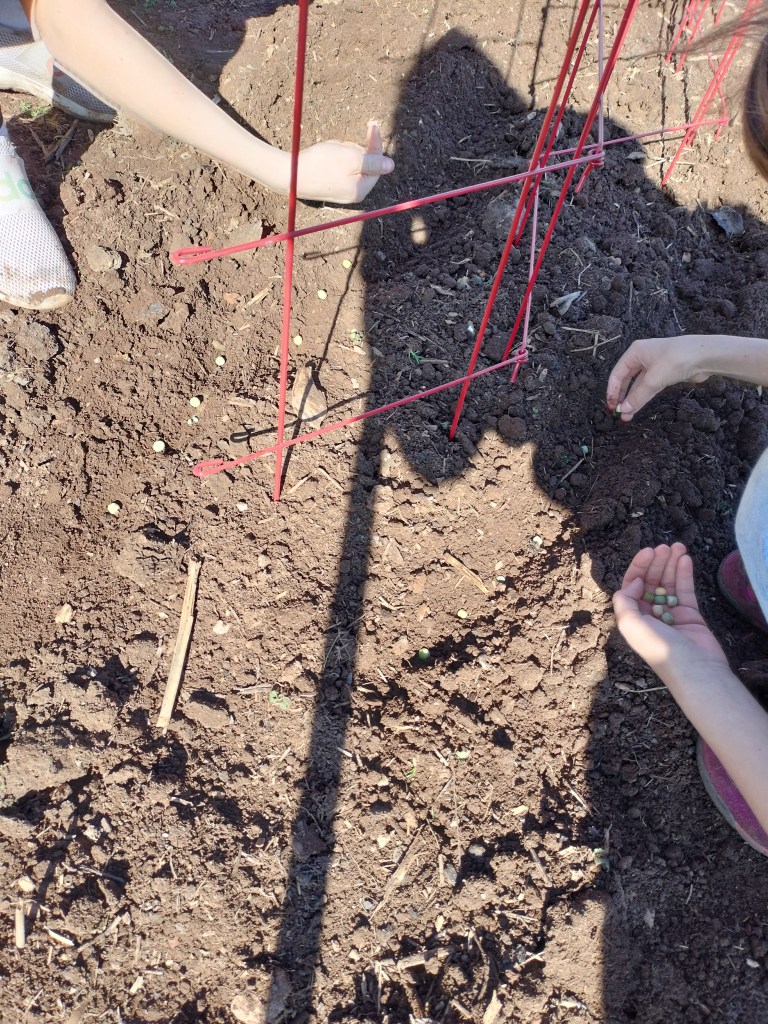
This year we are tinkering with plants I have never tried to garden: sugar snap peas. I remember helping plant them on the farm with Jill and a handful of farm enrichment students last year. However, it was more like supervising. She had already started the plants in the greenhouse and had the trellis ready for staking. The plants grew well and the Maple Key girls harvested a ton of them on the last day of our program in May.

So on the same plot we are trying to grow sugar snaps once again, but we chose to directly sow them and are using a red collapsible trellis.


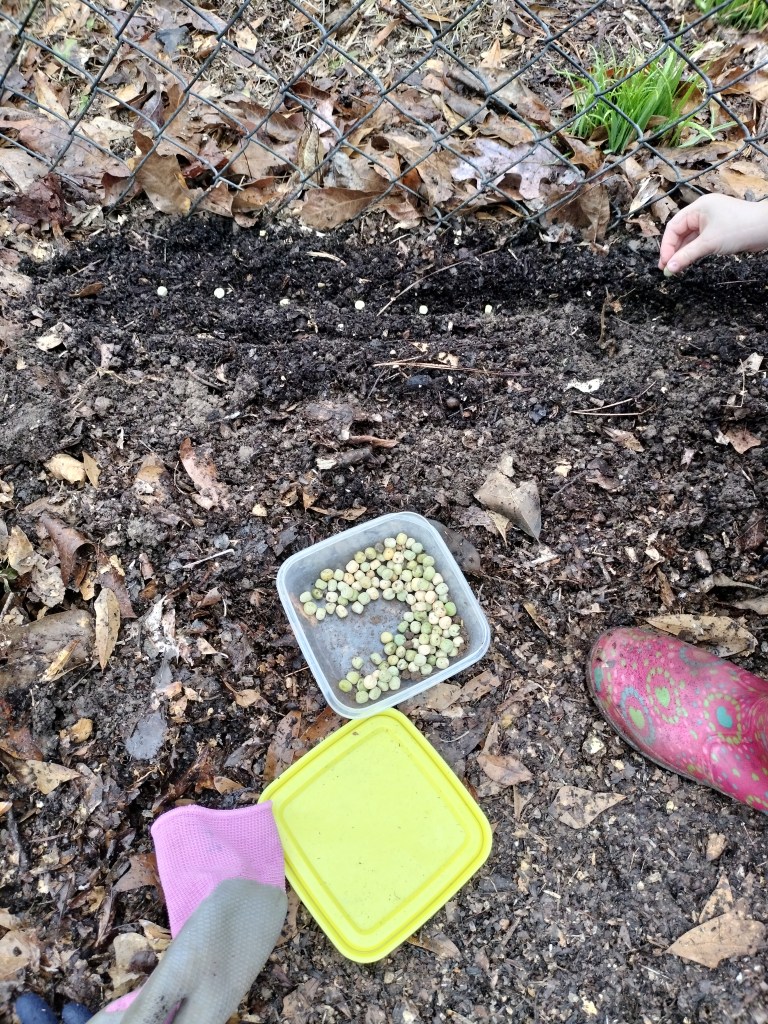
I was so inspired by this opportunity my daughter and I even planted some along the corner of the back corner of our chain link fence (natural trellis!) at home.

As I mentioned, I have never grown sugar snaps peas, so I did some research and am hoping for the best. Depending on what website or YouTube channel you look at you get SO many different ways to have a successful crop. One person swore by pre-planting indoors and transplanting to the garden. Another person said the exact opposite — sowing directly was better for the roots than transplanting. Some suggest pre-soaking the beans before you plant them (chose to do this) and adding an inoculant to the beans as a microbial additive to help nitrogen processing (chose not to do this).

At first all this conflicting advice was aggravating, but then I was reminded about all the conflicting advice we received about our winter garden and it miraculously survived and thrived. Gardening is a chance to explain to the girls that we can do our research, but ultimately we just experiment, make the best decision we can with what we’ve got, and see what happens. The opportunity to be surprised or fail is much better than thinking you’re going to nail it because you know so much. Gardening helps brings into view a more humbling, realistic view of ourselves and the rhythms of life!

Another thing I learned about this year was “seed tape”. You can purchase it pre-made or you can get a roll of toilet paper and seeds to try it yourself. It helps keep the plants in a straight line, avoids thinning, and prevents using a ton of seeds. When I asked the girls about seed tape, no one knew what I was talking about, so we made some at Maple Key for them to try at home. I did also buy some at Ace Hardware and planted it now in February to see how that will turn out in 60 days. We’re in zone 7, so it’s a gamble but an inexpensive one.


Here’s to experimenting!

*To be clear, I don’t know that I believe there is a “finish line” when you write, but there is often a point where you have to turn in the paper or manuscript and stop tinkering.

Taking ChatGPT For a Spin

I did it. I caved. I read too may articles not to. Whether people in my profession like it or not, chatbots are changing the writing landscape and teachers and professors are adapting to the new technology seemingly overnight.

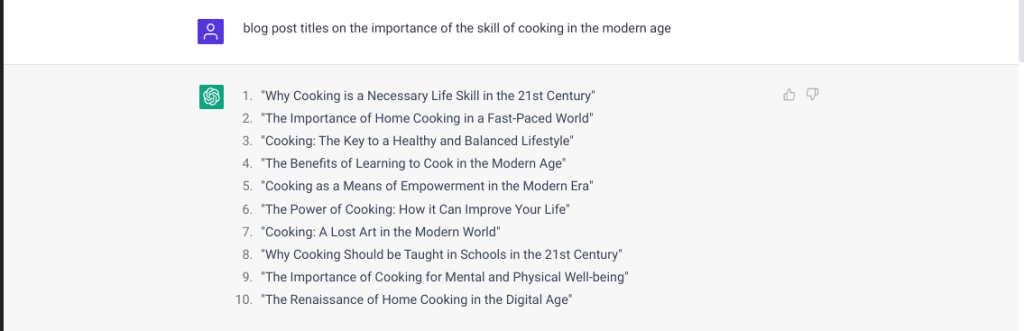
My husband’s cousin says its great for generating content for his IT newsletter. It has saved him time and energy and he can tweak it by asking it to do more specific things. My husband (whose co-workers generally have grad degrees or more) said that they have used it to generate blog post titles and the suggestions have actually been pretty solid. I have seen articles interviewing realtors who say it saving them a ton of time on content creation. I have seen it suggested that ChatGPT is also a fantastic “study buddy” who can help generate questions on a topic you’re going to be tested on. It does seem to have many uses in field of writing, so I tried to see if it could title a blog post I had been thinking about composing.

They all sounded like clickbait. So I gave it some feedback and its responses were way better!

I settled on #5 and then asked it to write a blog post based on the title. That’s where it got interesting.

Its first attempt read like a Wikipedia article — factual and logical but devoid of any voice. I suggested it give me more sophisticated syntax and poetic style. Its next attempt was markedly better in style, but still too broad. I said I needed more specific stories or narratives to incorporate into the ideas of the piece. It gave an example of “cooking grandmother’s lasagna” but that’s about as close as it got to being relatable. I asked it to write more like the New Yorker. It just shuffled sentences and paragraphs around. I asked it to write like The Atlantic and it did the same thing. In frustration I finally said “this needs to be more literary” and it just couldn’t do it.

What are my conclusions? Nothing definitive because my understanding is that these bots are only going to evolve and get smarter the more we use them and tinker. It seems to have the 5-paragraph-essay (blech!) down to a science, but it could not create a unique voice. I wonder how long that will last? Let’s just say, for now I am going to keep writing my own blog posts!

“Some People Cry, Some People Do Other Things”

I have a thin scar between my chin and mouth. It’s offset to the right of my face. When I was in 3rd grade, I was hitting a beach ball over the swingset with my sister in our backyard. Our next door neighbor was playing on the tandem swing seat at the same time. I dove for the ball while he was gliding forward with all his momentum and suddenly an ER visit was born. Thankfully, my dad was home when my face started gushing blood. What do you put on a face wound like that? My memory recalls an ice pack or cold water in the mix of temporary relief in order to get me to the ER (ultimately a drenched washcloth compressed to my face did the trick).

I have a strong memory of my dad driving like a banshee in his red S-10. It was the first and only truck he ever owned because a few years later a drunk driver hit his truck bed and the sports trading cards he was transporting for his business flew all over the road. It’s a strange irony knowing that my dad’s body experienced reckless driving for different kinds of numbing — himself full of adrenaline driving a hysterical child whose face needed an anesthetic and colliding with a driver whose ability to cope with his trauma that day was maxed out.

Eventually my mom showed up and waited with me in the emergency room, too. Before they stitched me up, there was a part of me that wanted to see what the pain I was experiencing actually looked like on my face. I was too afraid to actually push hard for a mirror, but I remember my mom telling me that I really didn’t want to or need to see the hole. I somehow soldiered through the suturing that eventually left a bright red scar which showed up prominently in my class picture along with my brushed out curls (not sure which was worse my or hair or the scar). However, at age 38 even my own four children haven’t noticed the scar that I used to get a lot of questions about, so the doctor apparently did his job well.

My husband recently got to experience a similar fate as my dad, our first ER visit with a child after 13 years of believing we could avoid it. We were camping with church friends watching a movie at someone else’s site while he was about to put our four year old to bed. She had been monologuing and wildly gesticulating as children her age often do for 30 minutes. His wise strategy was to let her keep talking until she wore herself out. Unfortunately, as he was about to get up to escort her to her sleeping bag she made a miscalculated movement, tripped, and fell back into the smoldering fire. He quickly yanked her out as her favorite nylon princess nightgown instantly melted in the back. He rushed her to water and mercifully none of her outfit stuck to her. Her right hand did get licked by the flames though and it required some quick decision making. Both flooded by adrenaline, we ultimately decided for him to take her to the ER back home an hour away and I stayed at the campsite with the other girls until morning. Her initial care went smoothly and she got the ointment she needed to start the healing process.

When we all got home, my husband asked me if I wanted to look at her melted gown and I immediately said, “No!” My body’s reaction took me right back to the ER of my childhood, being so thankful I chose the parental wisdom in not being permitted to see the hole in my face. Instead of carrying that image in my mind for the rest of my life, I can now only see through my scar the healing that took place. I hope my daughter doesn’t ask to see her gown again, having to see the image of the gaping hole and the knowledge that she can no longer wear it and the memory that it burned right off her. But if she does, I will lovingly explain why I threw it away. I might wonder if that was the right decision for her as it was for me? Taking away the images of what could have been and focusing on the healing that lies ahead.

The papers from the hospital said there’s a possibility that even with the ointment her hand might be slightly discolored from the healing process. Our hope is that it will heal up entirely with no trace. But if not, she’ll end up like me, with her own story to tell about how her daddy showed up tender in his own way with a wound care variety pack and a box of fruity tic-tacs.


Before taking me to the ER, my dad was no stranger to hospitals because of the many surgeries my sister had to have due to her hydrocephalus and seizures. He showed up time and time again for her, my mom, and me. He still shows up in how he treats his granddaughters with the same level of sacrifice, spoiling, joke telling, and concern when someone is upset. Seriously, if there was an award for the grandfather who has played the most games of Candyland to calm someone down, he would win it no question.

I knew I wanted to marry my husband when I saw how deeply he thought about the implications of life. He read tons of books, was an incredible writer, and always kept his dorm room exceptionally neat. I don’t know that I believe the adage you try to marry someone like your father. There are many ways my husband is not like my dad at all, but I find that to be a healthy thing. In the ways that truly matter, I have two men in my life who are just alike — they.show.up.


Given the nature of this post, I am crying while writing it. I choke up a lot more these days than I used to: tears mean that my mind and body are processing well together. Writing out my memories means a similar healthy expression as well. Our oldest daughter, when chided by her younger sister about not crying at the news of her younger sister being burned, had her notebook out and was trying to write the events of the day by headlamp in the tent. She said as stoically, confidently, and slowly as a firstborn can, “Some people cry, some people do other things”. Her attempt at writing the facts helped her nervous system process in a way that kept her from completely losing it over her littlest sister’s injury. She might have taken my somber marching orders for everyone to get good sleep and not freak out a little too seriously, but I hope she heard my tears on the air mattress, too.

The Editing Process

I was recently given an advanced copy reader by a college friend whose book is coming out in July. I was so moved by her words that I wrote a book review to hopefully help it get some early press. I spent several hours over several days typing up an opening story and deciding on the section headers and how to flesh them out. I edited it multiple times and thought, “This is long, but it’s pretty good after all the effort I put in!”

And then I let my husband edit it.

Comments and edits galore in the margins. At one point my hand got tired of clicking all the accept changes. In full disclosure, editing is part of what he does for a living, so I know anything I give him is in capable hands. However, it’s still hard to “watch the sausage being made” as the saying goes. I want to believe that I can dash off something amazing with no help — my ideas are pure and unadulterated. But if I buy into that kind of idealism, it only hurts my work, not helps it. My tunnel vision can end up squandering my gift, not nurturing it.

Per his advice, I went back and worked on it some more. He promised to look at it again before I submitted it to a publication. If it gets accepted it, there will be minimum of one more set of eyes to shred it again.

After my husband told me he was finished, I asked him if he thought the place I wanted to send my work to would shave my work down substantially. I reminded him that he had submitted a book review there that was 1900 words and they chopped it to 1400. He said it depends on what the publication is going for, but that he actually appreciated the edits he received because nothing the editor did took away from the big picture. Even editors liked being edited well!

To be a better writer you have to be vulnerable and acknowledge that your idea might need help. When you think you’ve done your best work, there will always be someone out there to suggest an opportunity for more word color or to say, “I see where you’re going, but this train of thought doesn’t fit.” If you’re always defensive about a comment or think that your words are right up there with Shakespeare on the first draft, you’re in for a harsh reality check. Consider the editing process a collaborative effort, not a competitive one. You’re all on the same team with the same goal– making your work shine for maximum impact. Having your words filtered through multiple lens (of which include might include people of a different race, gender, geographic location, etc.) before your piece gets sent out into the world can be a blessing not a curse*.

*A slight caveat. I have had a friend say that she worked on a piece for over a year and she shopped her work around. Some places rejected it, some said it needed tweaks, and finally one publication took it as is. She chose that publication for that particular piece. There were other pieces where she received some feedback and gave both pushback and acceptance of their edits. Ultimately, you have the choice to negotiate (or not!) whether the other person looking at your work is catching your vision and voice. On the whole though, most editors have had enough experience to craft and not wound.

Sweltering in Summer

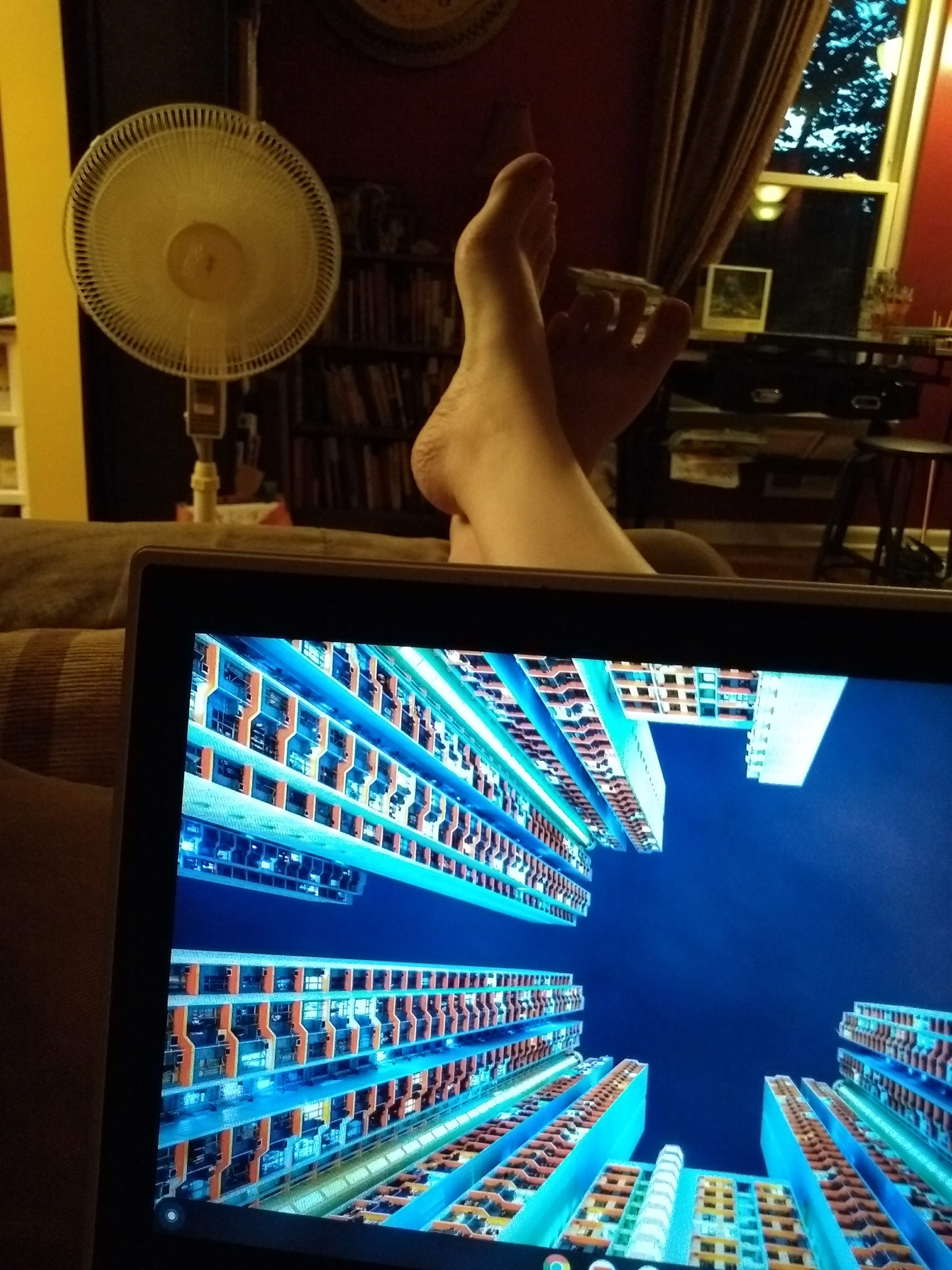
The view from my house this summer

They say to draw readers in, the more senses a writer can incorporate the better — show, not tell. Make the reader smell what soiled laundry your character is washing, make the reader taste the rosemary butter steak your character is eating, making the reader hear the mysterious rustling in the woods. Concrete over the abstract.

For example, I can try and make you feel the temperature in my house earlier this summer when our air conditioner was broken. I was constantly thinking: how sticky and damp the painted walls felt, how I told the kids if they just want to wear a bathing suit for a few days that would be fine, too, how irritable and unfocused my mind was unless a heavy fan was blowing directly on my face, how it was actually hotter and more humid inside the house than it was outside the house. The patina of malaise was slowly coating the activities of everyday life. I reminded myself that it was going to be fixed, but the constant beads of sweat trickling around my hairline was making me delirious.

So why am I telling you this?

It occurred to me that as my family endured this “house camping” inconvenience that robbed our sleep for several days, I had encountered this “sweaty” feeling before. I have read poems and books that describe the very things I was physically feeling yet with so much more at stake. Families for whom air conditioning is either non-existent or a luxury. The poets and authors described them with such nuance that I felt like I was transported to their open-air houses, packed apartments, or small villages.

Even though us suffering through a few days of grimy sweat is entirely insignificant compared with the poverty and marginalization of those whom I have read, there is still a small sense of overlap. If we have the eyes to see, literature is constantly showing us Venn diagrams — where do we have connection and where do our lives differ?

As a reader, our job is to take those weighty observations and say, “So in light of this… what do the comparisons and contrasts mean for my community, the world, and me?”. As a writer, your job is to keep playing with language and reading your work aloud to see if your words are carrying the sensations you want your reader to feel.