Group Activity: Writing a Villanelle

With having our largest group ever this year (12 students), we have had to get creative about how we do certain activities. This often means breaking up into smaller groups, but having another tutor there every week makes this possible! Recently, we took two weeks to write a specific kind of poem called a villanelle.

(^ Above image from: https://elliefleurjohnson.com/2017/12/04/understanding-the-villanelle-form/)

I chose this activity because I had just been to my own local writer’s group where we wrote a villanelle collaboratively (thanks, Olivia!) and I thought this might be an interesting opportunity to do the same thing with my students.

I read them some famous villanelles and then took a line to incorporate from this one by poet W.H. Auden
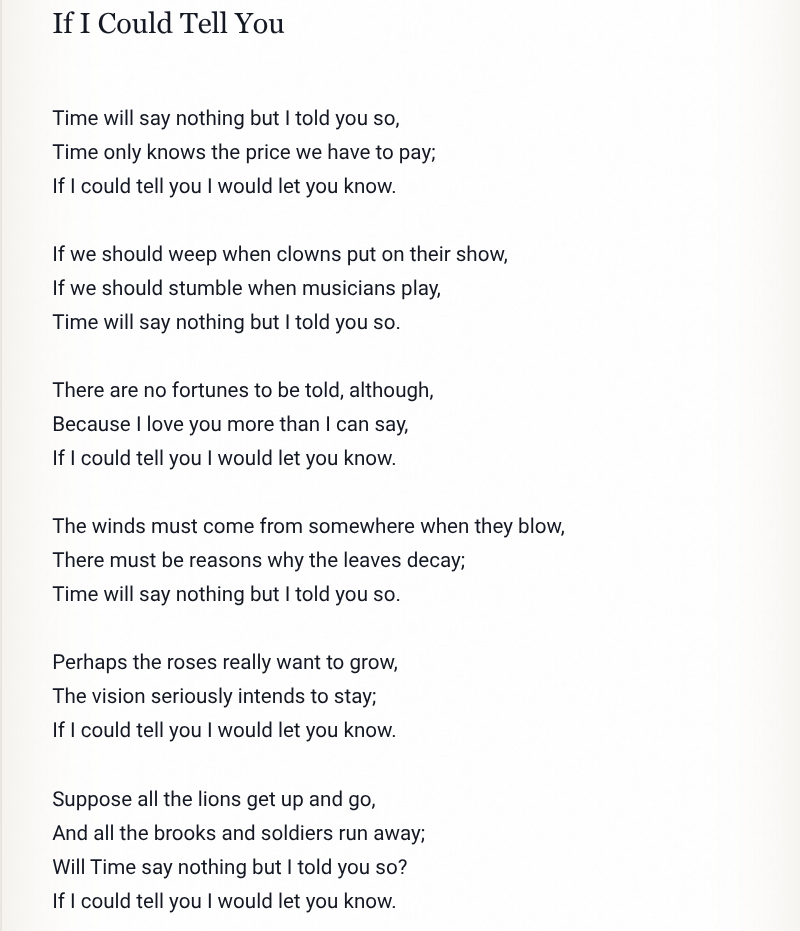

Each group brainstormed some ideas that would lend to strong imagery and then shared lots of laughter around figuring out rhymes that fit within it. Someone would spit out a line and their group would accept, reject, or rework it until it seemed like it belonged. For middle schoolers, this collaborative effort took a lot of time and patience and was frustrating at times, but it was also so much fun watching us frantically count on our fingers to make sure we had 10 syllables for each line! I love that both poems turned out to be nature related — fireflies and fields.

As leaders, my tutor, Ashley, and I mainly facilitated the students’ ideas, not trying to steer anything in a direction or shoehorn something in, but rather learning with them as a part of the creative process. Here are the results:

Perspectives of Fireflies

Fireflies in the dark forest night glow
Why do they flicker with unearthly light? 
If I could tell you I would let you know

Where’d they go when the world was white with snow 
Did Winter miss their warm, engulfing light?  
Fireflies in the dark forest night glow 

Spring winds call them with their inviting blow
Do flowers push up to call them with might?
If I could tell you I would let you know

Lazy summer nights tell them where to go
Do their hearts burn with great envy or spite? 
Fireflies in the dark forest night glow 

They dance under the stars with their wee toes
When the leaves fall do they dance or do they fight?
If I could tell you I would let you know

They swim in the slippery white moonbow
Running with silvery, sparkly sprites
Fireflies in the dark forest night glow
If I could tell you I would let you know

(Currently Untitled)

The vast field where the wildflowers grow
Asters, goldenrod whisper with the wind
“…If I could tell you I would let you know”

The creek is low as it hums its solo
The long stalks of velvety clover bend
The vast field where the wildflowers crow

The sparrow sings, its white wingtips it shows
The dandelion sways, its seeds it sends
“…If I could tell you, I would let you know”

The lone oak, its branches spread, its leaves blow
The crickets sing a song that never ends
The vast field where the wildflowers flow

13 The creamy clouds drift across the sky, slow
14 The orange sunset and the horizon blend
15 “…If I could tell you, I’d let you know…”

16 Horses whinny, feeling free, letting go
17 Sweet silence and secrets they will not lend 
18 The vast field where wildflowers sow
19 “…If I could tell you, I’d let you know”
Changing It Up In The Garden

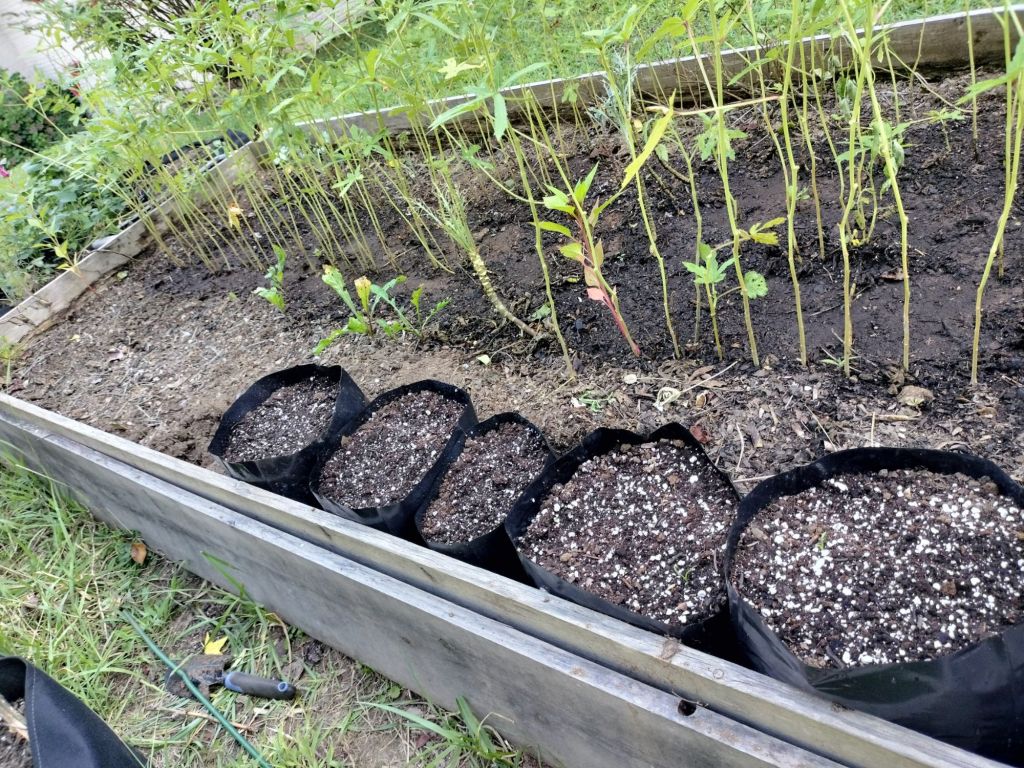
The raised bed at my house has been frustrating me. Each season I keep amending the soil only to find it going back to root balls and compact soil. This fall I have decided I have agency, and am going to completely redo the bed…into containers.

Normally, I wouldn’t go through the hassle since I have so little margin already with my time, but a fortuitous (but also sad) thing happened this month — our local horticulture supply store decided to close its doors forever and mark everything 50 percent off. So I went a little crazy (more on that in a minute) and one of the purchases was something I had never tried before — very inexpensive grow bags that have holes pre-punched in the bottom.

img2025090717460019781904534971270

I bought them in various gallon sizes and while I also obviously plan to use them for Maple Key, I have other places I can share the love of gardening such as the library I work at or the homeschool tutorial my children go to.

As you can see, I am still growing spindly, but producing okra right now, so I am doing the bed bit by bit. I am taking the compact, dusty soil (that’s partly my bad!) and putting it in a paint bucket, adding homemade compost and vermiculite to provide nutrients, good bacteria, and aeration for the soil. Then, I dish it back out in each bag.

I really think this is going to be much easier to manage than what I had been doing and it’s just one more reminder that you can always change what you’re doing in gardening if it’s not working for you! Nothing about gardening is locked in, so do what’s best for your season of life and environment.

Now onto my big purchase…!

img202509041019381411436653280902632

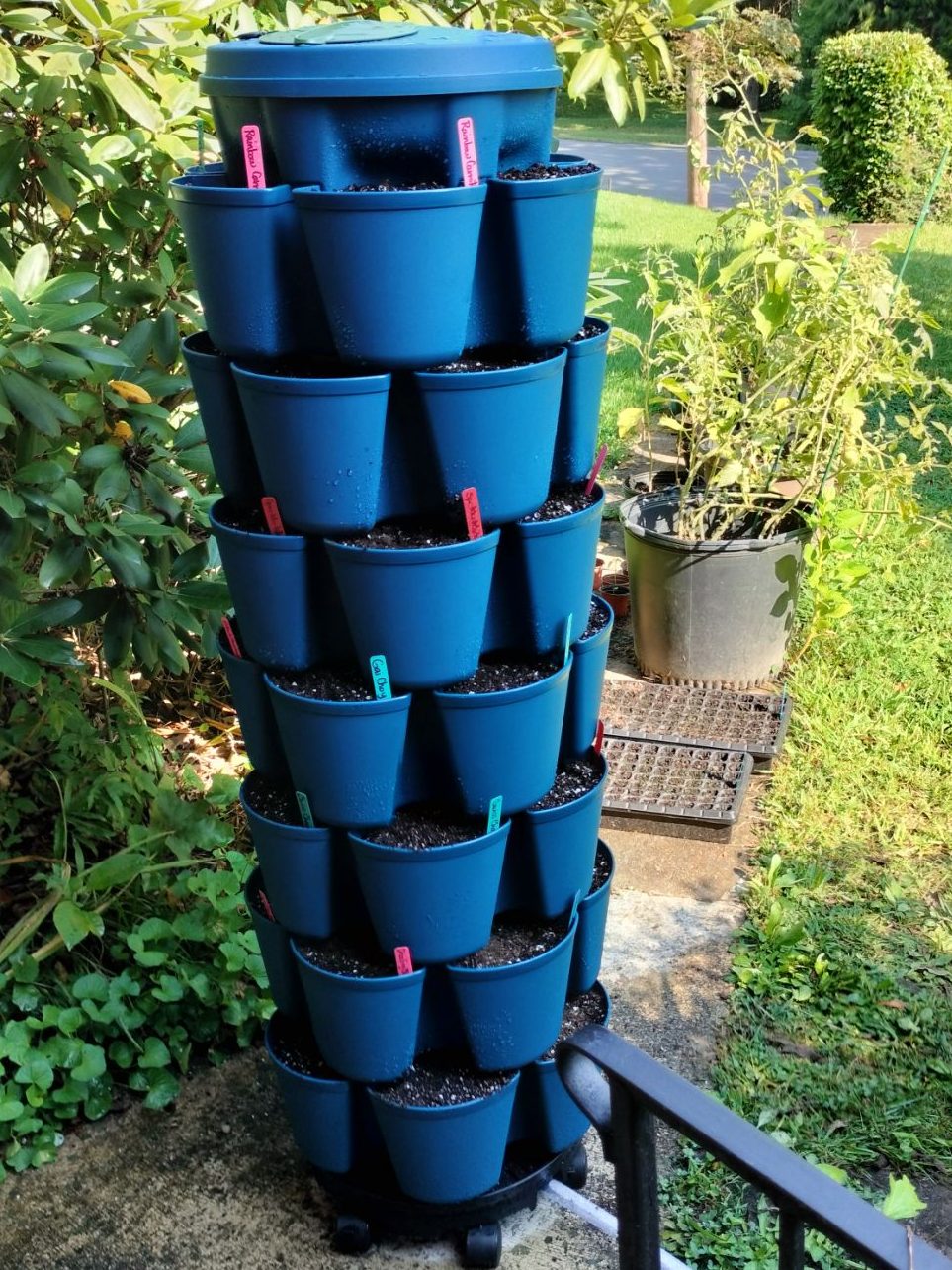
The other big change I am trying this year (again, thanks to the going-out-of-business sale) is vertical gardening. I bought a GreenStalk 7 tier planter with a bottom spinner! I was already excited about it (less pests, less bending down, right outside the door), but then I found out they are a local-to-Tennessee business, just up the road in Knoxville. That made me proud that this innovative, family-owned business is exporting such a great product all over the world! I even convinced my friend to buy a matching one with me and my mom to buy the 5 tier design, so we’re all planning for some great fall harvests.

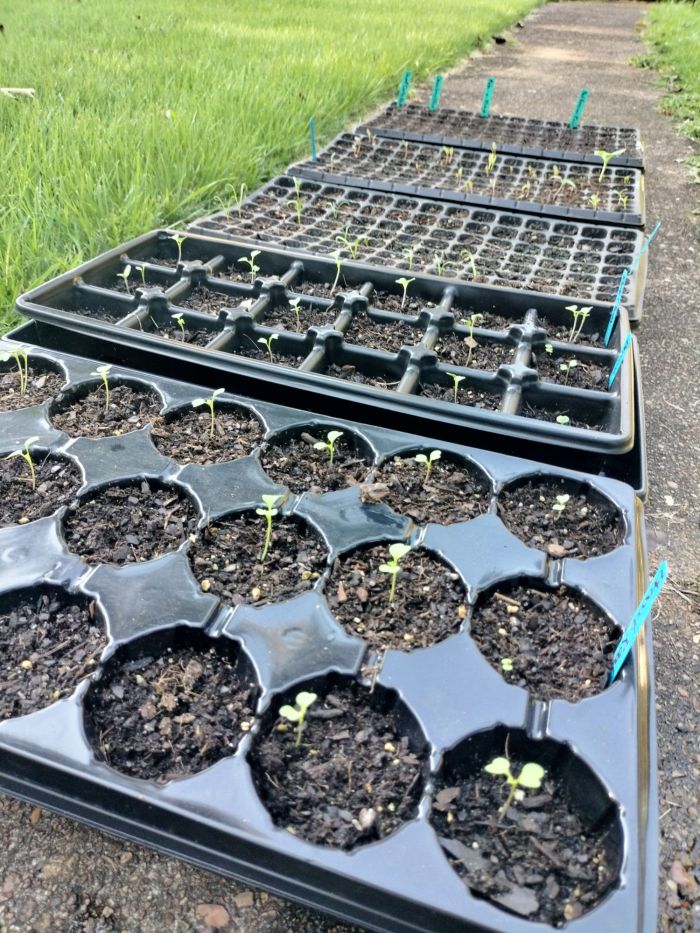
After spending the money on the planter and the ProMix soil, I didn’t want to shell out for plants, so I started everything from seed. So far, the kale, spinach, bush beans, and radishes have all popped up and I am sure the others will, too at some point. This is another great experiment that I am hoping to bring to the library (so we can start our own library gardening programs) and the farm to add to our growing list of trials to see what grows!

Honestly, it’s great to have jobs that all tie into each other in some way, so that when I do good work over in one area, another one benefits from the new knowledge! At the library we are currently applying for a $1000 grant to get GreenStalk vertical gardens for the library so that we can make gardening accessible to all age ranges and demographics — children, elderly, differently abled.

I can’t wait to talk to Maple Key students about my new way of playing and planning in the garden that supplements what we’re doing in the traditional garden beds. My hope is to inspire them with even more things to put in their bag of gardening tricks for when they desire to start their own gardens. I want them to always carry a sense of play, have fun, learn new things 🙂

Featured Student Work: Literary Analysis by Emma

Friendships and Feuds: Learning to See Past Beefs in Strawberry Girl

We all have that friend that is complicated. The friend that is hard to deal with but not an enemy, just one you don’t get along with all the time.  Friendships are not something that you should take for granted, they are something to be cherished and well loved.  Some people can be hard to understand but once you get the feel of them you can see what they are like. In the book Strawberry Girl, two kids, Shoestring Slater and Birdie Boyer, share this kind of friendship. They are not friends all of the time, but they will come to one another if they need something.  The two kids have very different backgrounds, one came from Carolina and the other already from Florida, where the story is set.  They learn to be friends because their families are so different and because they are honest with each other as well as being literal neighbors and schoolmates.

Though the Boyers and Slaters are neighbors, they have very contrasting lifestyles. The Boyers have a lot of land and hard working animals and good, healthy children. The Slaters have less land, less food for their family, and they have animals who get less attention, therefore are less tame. The Boyers are polite and well looked upon because of their kindness to others. The Slaters are looked down upon because they are poor (we see Mr. Slater spending most of the little money they earn on alcohol). Also several of them (but not all) are obnoxious and rowdy. The fact that Shoestring is not like the rest of his family, being more sensitive and caring, he understands the Boyers more. He trusts Birdie and that makes it a lot easier for them to be friends. Birdie also trusts in Shoestring even if she doesn’t always trust his family. 

The first day Birdie went to school, she got a bad impression of the Slaters. Shoestring’s brothers attacked the teacher and that made Birdie more fearful of them. The brothers acted out of their shame, like most bullies do. Shoestring is different from his brothers because he does not have as much pride, but he also does not like to be looked down upon either. It seems like he is able to be a different person at school versus the pressure he feels to be like his dishonest father at home. At school he uses his literal name, Jefferson Davis Slater, instead of Shoestring, indicating he is different than his family. He wants to try and change things for the Slaters and sees the Boyers as perhaps a “new start”, even when his father forbids him to help them various times in the book. For instance, he still chooses to reach out to Birdie to tell her about the pliers in his father’s back pocket that he will use to cut the Boyer’s fence.

Later in the book, Birdie is proud to introduce Shoestring to the teacher, Mrs. Dunnaway, because he is different from his scary, bullying brothers. He assures his frightened teacher that he is not here to fight, but “come to git book-larnin’” (189). He shows more compassion and pays closer attention to his feelings than his family. She is not ashamed to be Shoestring’s friend and defends him because she has had experience with his capabilities. She tells Mrs. Dunnaway, ”But Shoestring…I mean, Jeff’s different!…He ain’t rough and wild like Gus and Joe!” (190).   
           
Even though they are good friends they can have conflicting feelings and they don’t always have the same point of view. This actually makes their friendship stronger. After Mr. Boyer chops off the top of Slater’s hog’s ear, Shoestring comes to warn Birdie as an act of friendship, but as a son still strongly defends his family. “Iffen your Pa don’t leave our hogs alone, Pa means what he says: he’ll git him yet! I just come over to tell you” (50). Birdie says, “her voice bitter with scorn” that Mr. Slater is being a coward by sending his son to be his messenger (51). After their shouting match they realized they didn’t want their Dad to get their guns out and escalate the situation. “Birdie thought for awhile. This was a surprise. It looked as if Shoestring didn’t want trouble any more that she did” (51).     

At the candy pulling event Birdie is looking to have fun, but she gets partnered with Shoestring who “was glum as if he were at a funeral” (88). Birdie wants to play with those who are able to enjoy the day and she has dismissive thoughts about Shoestring and his family even as he is trying to tell her why he’s upset. He trusts her and cares for her family enough to share his father’s malicious plots with her. Shoestring sees her as someone who is trusting, one of the few who can at times see past their poverty and his Dad’s foolish decisions. Birdie is always inviting the Slaters to events and to their house both because she has taken a liking to the Slater sisters and sees them as needing help. Thus, Birdie’s experience as an older sister helps her naturally take care of Shoestring’s younger sisters and his mother. She understands what they need and this dynamic helps strengthen the bond between her and Shoestring. 

We all have complicated friends, but to make the friendship work or not work it “takes two to tango”. Birdie and Shoestring both really want to be friends with each other and believe that the other person has their best interest in mind even when they raise their voices to each other. They don’t leave their problems hanging; they hash it out. They protect each other around their own family, they are honest with each other and defend each other. Strawberry Girl shows that two people from different places can become friends and trust one another by overcoming family differences and personality differences. Birdie and Shoestring provide a role model friendship for readers to experience.        

Works Cited Page

Lenski, Lois. Strawberry Girl. J. B. Lippincott & Co. 1945.
     

From time to time I will feature student work here on the blog (always with their permission). Emma and I worked on this essay in our 2024/2025 tutoring time after finishing Strawberry Girl by Lois Lenski. After given a list of options, she gravitated toward the themes around friendship. We brainstormed some contrast and comparisons and the paper was finished in about a month. Emma’s passionate voice and thoughtfulness really comes through in this paper and it’s no wonder because she herself is a loyal, welcoming friend. Taking a book written 80 years ago and infusing its meaning with modern eyes while keeping the integrity of the text is phenomenal for a 7th grader, and Emma pulled it off wonderfully. We also laughed at the title for the paper she came up with for 5 minutes after looking at thesaurus for conflict!

Growing the Future Generations

Ah… the kale palm trees! (Photo by Kindel Media on Pexels.com)

I went to my primary care physician this morning for my yearly checkup. I must say, I lucked out several years ago when I was able to get into her practice. She is always a delight to talk to — a rare mix of firm (but not pushy) and warm (like she really hears you) that makes you feel really confident in her advice. From the looks of the waiting room though, I am usually the youngest person there (despite being 40 now!) by about 30 years. I often wonder how many “young” patients she actually has.

I told her that before the holidays my husband and I started a program that promoted mindful eating (more fibers, greens, etc. and creating a slight calorie deficit from less snacking and smaller portions). She asked what my primary reason for doing this was and I explained that around age 39 is really where I noticed my metabolism just sort of gave out. I was still exercising and eating reasonably good food (with the carbs and sugar always waiting in the shadows…), but my gut was sort of done with me. My arms and legs were in great shape with walking and gym time, but I had a closet full of dresses that were collecting dust after my I’ve-had-4-kids middle was now preventing me from enjoying.

She said she wished I could stand in the waiting room and give a TED talk to her elderly patients about why it’s important to make these changes by 40 so they can recover well from things in their 70’s. She shook her head and said somberly “sometimes I worry less about foreign interference than I do the American diet. It may kill us before someone else gets to us.” As I said, she sees a lot of older folks so her statement was born less out of hyperbole and more out of a lot of doctor fatigue.

As I left the office, I was thinking that maybe part of why I do the gardening portion of Maple Key is to encourage people like my PCP. To let girls know at a younger age that trying new things, growing your own food, getting curious about how to use the food, serving others, and teaching others how to grow food is a habit you’re never too young or old for. It’s not like the girls who come into the program have a green thumb and a super refined taste for greens already; it’s not like when they leave the program they will have done a 180 and love all things verdant for dinner. It’s exposure and an invitation to the goodness of creation. That’s all I ask of them — just roll with the veggies we’ve got, but no one is forced to eat anything.

I always tell them that I was SUPER picky about food at their age, embarrassed at how much I hated salads (back when iceberg was the lettuce du jour; I still hate it), but over time as an adult I exposed myself to more things and now enjoy and tolerate more than spurn the veggies on my plate. I tell them I did not like or eat kale before I started growing for Maple Key, and now I really really love it for its freshness and versatility. Giving people space to grow and experience vegetables on their own terms is a big part of my philosophy about the environment being our third teacher 🙂

Putting Play in Its Place

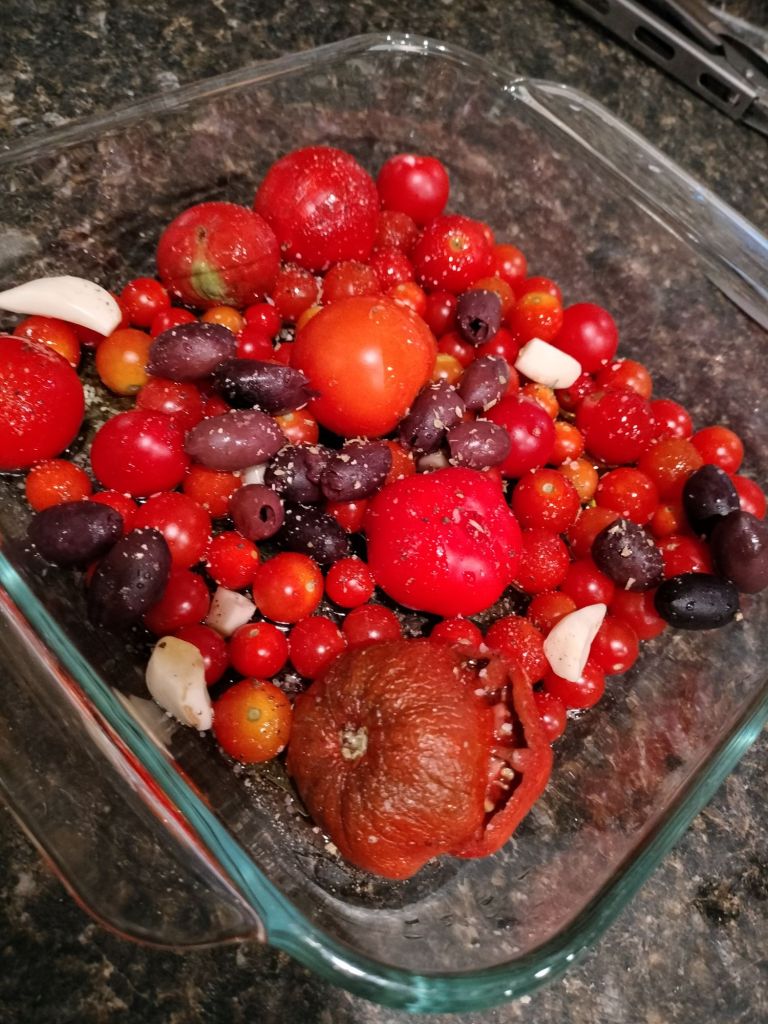
Inspired by our neighbor’s suggestion, last night my husband suggested we make pasta sauce for dinner. Our neighbor had an abundance of cherry tomatoes and sent us a picture of her one pan tomato roasting sauce ingredients — Olive oil, salt, pepper, onions, garlic, feta cheese, and tomatoes. Instructions: roast, pulverize, and voila — you have sauce. We piggybacked on her idea and made more of a puttanesca style.

img202407242034204682597817213700230

When my own children ask why I am so obsessed with gardening, I explain that it’s really just an excuse to play and experiment. I get to learn what grows and under what circumstances and environments. I get to eat what I grow which encourages more creativity and playing even if it’s a small dish or snack. So it makes sense that I want to instill (or perhaps invoke) that spirit of curiosity in the girls who come to Maple Key no matter what “skill level” they come in with. That’s the joy of being imaginative — there is an endless supply of creativity available!

Perhaps because right now my children don’t have bills to pay or places to drive or multiple schedules to organize, they don’t see what the big deal is for an adult to make space for play even if it’s for 5 minutes of checking on and watering your okra and bush beans. It often just looks like a chore or a huge investment of time to them. But I assure them that for most adults play is, sadly, the first thing to go when you prioritize all the daily things you must juggle.

My college roommate (who is a new tutor for Maple Key this year!) doesn’t garden, but finds her play in singing and being in actual plays. She has spent her summer in community theater. An incredible ensemble of professional players!

img202407201429206939798844707034617

Fiddler on the Roof!

There are so many places we can find our play.

img20240717120753~27089672320991061654.

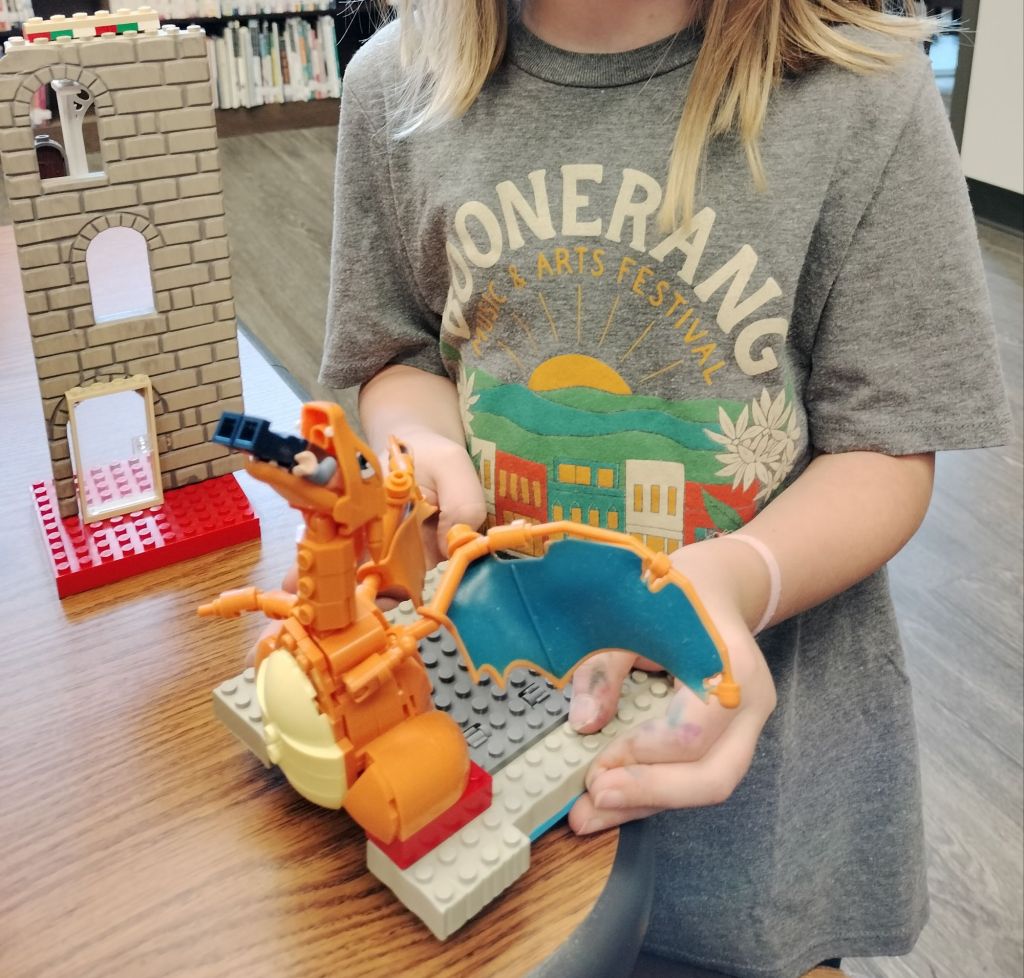
Legos at the local library!

So I say, here’s to bringing back play as a part of a healthy balance in life. Now back to more pickling 🙂

img202407242019312673057586938328104

A Little Closer to Eden

It’s been a very hot summer here in Chattanooga, Tennessee. Little rain and temps in the upper 90’s. I am convinced the only way people are keeping their plants alive is through drip irrigation. And yet despite the drought, I see a lot of people still finding ways to keep the gardening spirit alive around here.

wp-17205852876182112450030425007178

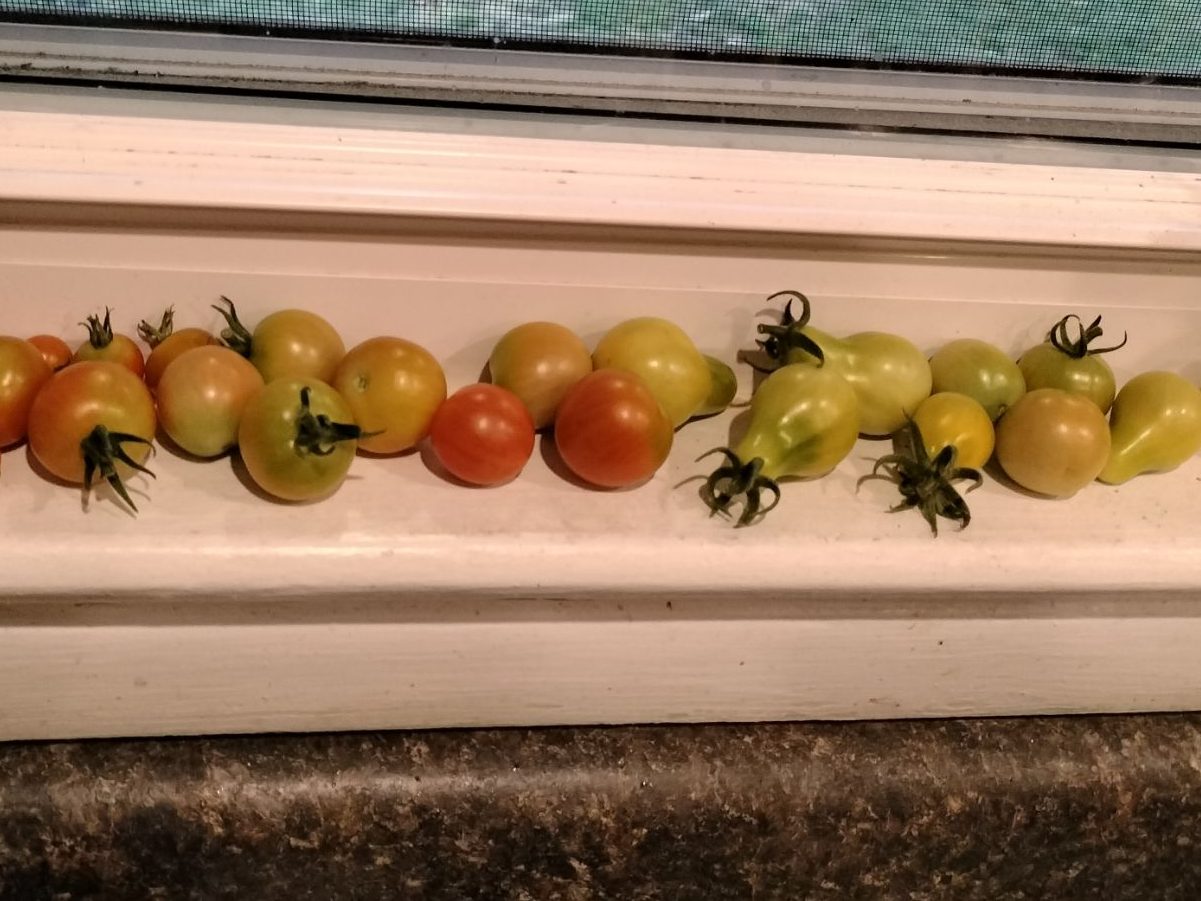
Ripening in the windowsill…


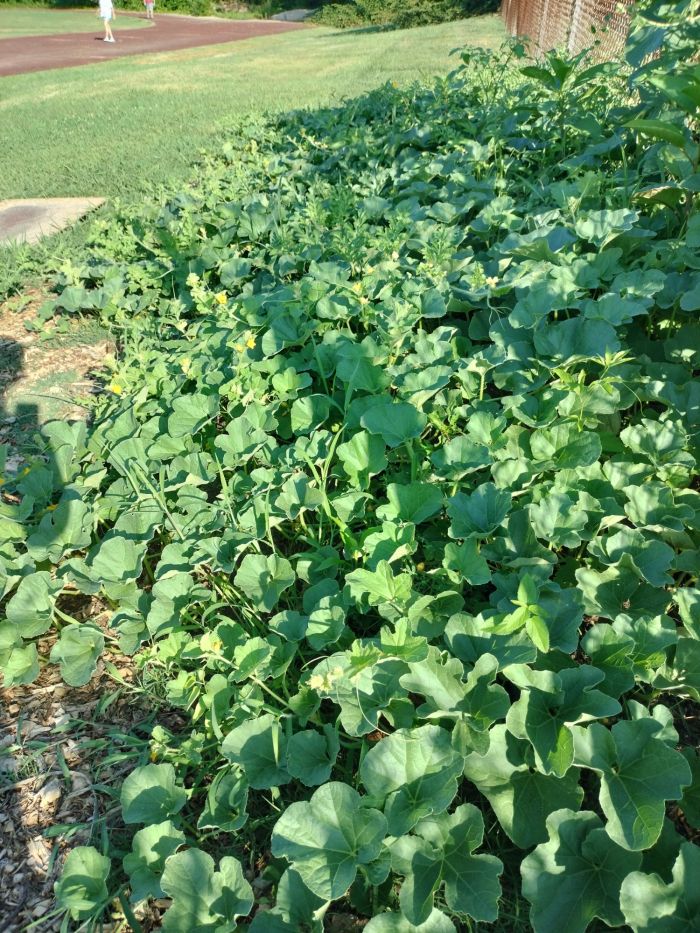
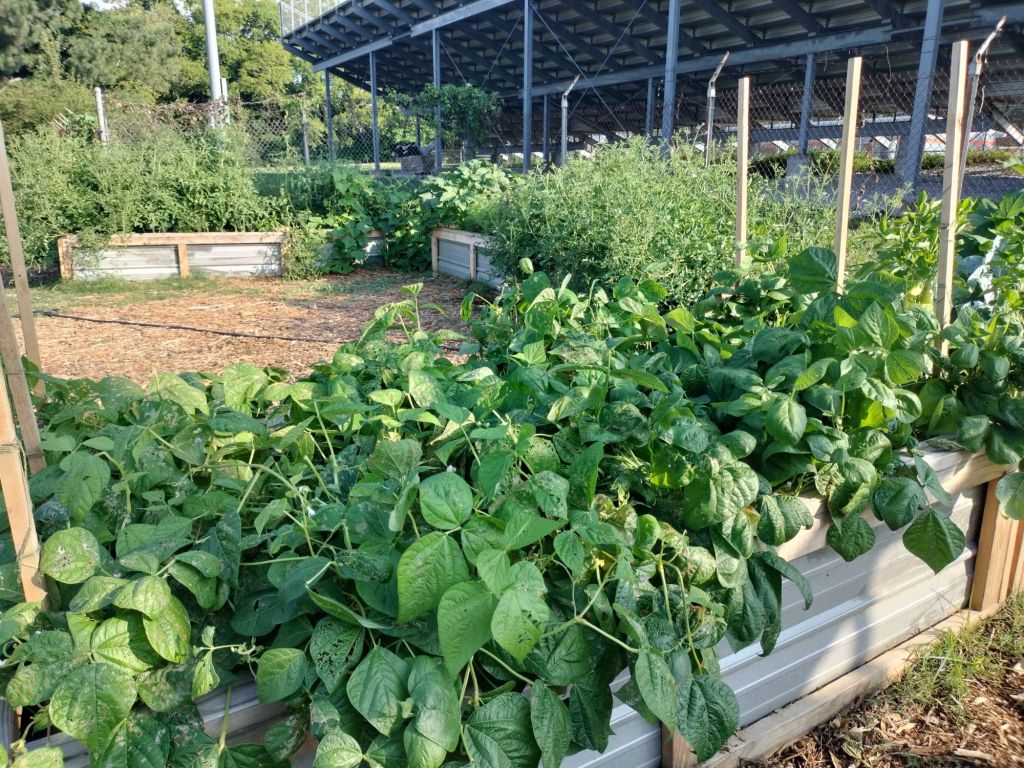
I recently visited my city’s local high school with my neighbor who teaches environmental science there. She acquired some local grants to get a garden going for her students. She has sturdy raised beds and a ground melon patch going. While I was there, some students came to help us prune the very abundant tomato plants. I asked one of them how they got into gardening, as a lot of people her age aren’t spending their summers oohing and ahhing over tomatoes. She said she worked at the local Dollar Tree and earlier they had some grow kits come in around February. She got curious and the rest is history — she has a thriving tomato plant at her house and is using some of the dirt from the kit to try other things.

img20240701084440661217144981398505

Bush beans, tomatoes, squash, cucumbers!

I was really encouraged by her answer because let’s be honest, there is a start up cost to gardening. Containers, potting soil, plants, seeds, water, tools. It adds up so quickly every year. This rising senior started small, kept costs low, saw success, and now wanted to know more and expand her own garden. Inspiration comes from so many unexpected places!

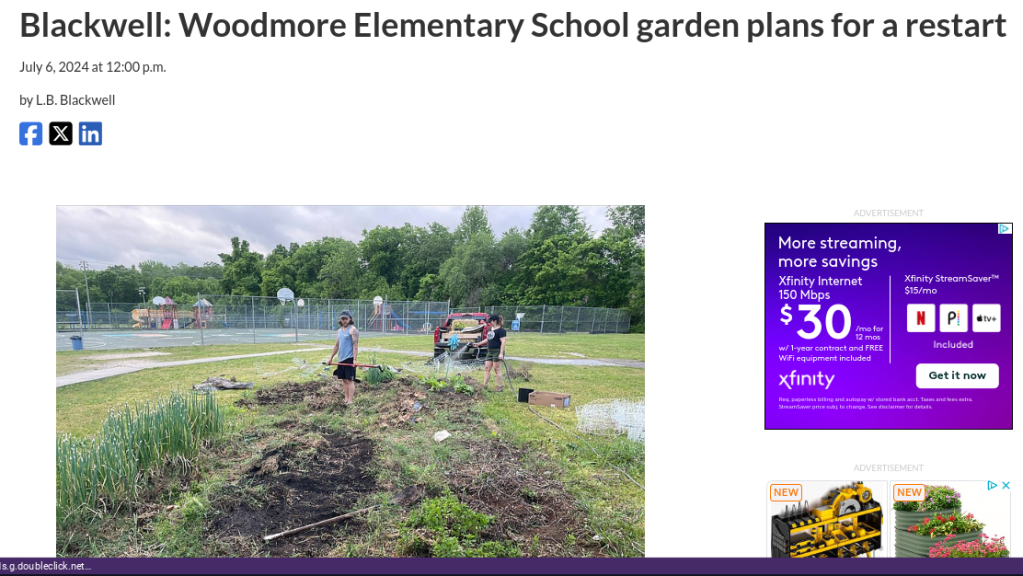
In a similar vein, this local headline caught my eye last week about one more place in our area that is recognizing that children and their communities need gardens.

They built a garden from scratch and then found out they had to move the whole operation somewhere else on campus due to needing a portable classroom in that area (I would die if someone told me that I had to do that much labor over!). But they rallied again and are rebuilding their garden so the children can be involved and eat fresh produce snacks once more during recess time. What memories those teachers are instilling in their students just by letting them be a part of growing their own community’s food (particularly in an area that is considered a food desert).

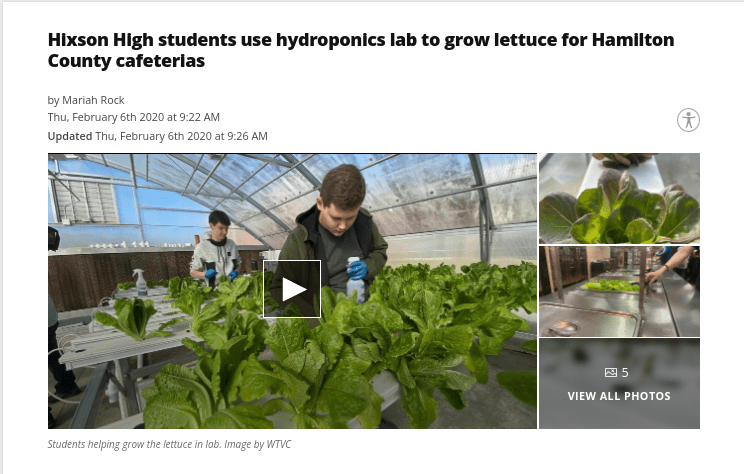
Similarly, a local high school is helping provide healthier options in the school cafeterias through hydroponics!

The school my older girls go to also focus heavily on being outdoors and having a horticultural presence in the area. This spring, they raised money through a big plant sale. All plants were grown from seed in their greenhouse by students and the teacher. I purchased a Cherokee purple tomato plant and it is continuing to do really well in the front yard.

In addition, the community center in our city has improved its community garden this year. I dropped by and noticed all the cherry tomatoes and basil ready for any child or adult hanging out at the playground to pluck and eat.

Stories like this give me hope. Having lived in this area almost my whole life, I can say that school gardening was not going on in the 1990’s and if community gardens existed as I am seeing them now, I was completely unaware. Thanks to the internet and social media, I see churches, schools, and city governments pushing for revitalization through various gardening opportunities. I am thankful to be a part of this process and excited to see what decades of gardening exposure — literally just being around gardens on the regular — normalizes for my children’s generation.

img202407091759018314157433686995974

Time for picklin’…

Composting as a Spiritual Habit

In certain educational circles you might hear about the classroom environment being the “3rd teacher” (the other two being adults and other children). It’s a concept that is only more recently being recovered in the classrooms accustomed to tidy front-facing desks and bright motivational posters instead of a more curious place for discovery of both self and others.

Obviously for Maple Key, the farm is doing a lot of work as the third teacher — the year round blooms (yes, we even see camellias in January!), the various animals, the winding creek, the structures like the various barns and MiMi’s house. Those things influence our art, our sense of belonging and stewardship, regional connections. But as we all know, life has many classrooms beyond just the ones we are required or choose to attend. That got me thinking about our first classrooms — our homes. What things do we absorb from those places? I zeroed in my thoughts and remembered a part of my home environment was compost.

Meet Benjamin, one of the baby goats on the farm!

My mom didn’t always have a compost tumbler (they weren’t as prolific as they are now), but certainly for the last 20 years. We were a thoroughly suburban family, but my guess is that she got that habit from her mom and dad whose families grew up on or around a lot of farm land in Dickson, TN. In the early 90’s my grandparents had a farmhouse built for them with a beautiful wrap around porch. They would have acres to grow things, my grandfather could ride his tractor around and they were set to enjoy their retirement years among friends and family. Unfortunately, Alzheimer’s had other plans for them as my grandfather was diagnosed with the debilitating disease only a few years into their wonderful rest. They had to make the difficult decision to sell their home and move to Soddy-Daisy to be closer to us, my aunt, and the nursing home facilities he would eventually need.

They moved to a ranch style home in a brand new subdivision and my grandmother wasted no time in carving out some little beds in their tiny yard for her zinnias, beans, cucumbers, and squash. It was such a small plot compared to what they had envisioned flourishing in Dickson, but my grandmother did it faithfully and we snapped beans on her screened in porch each year for her to can and put away.

As for our family, we had been settled in Chattanooga after bouncing around in Texas for a few years for my dad’s job, and my mom got into gardening, mainly daffodills and irises. Somewhere along the line she started saving her kitchen scraps which turned into compost tumblers which turned into feeding her beds rich, black compost for vegetable growing every year.

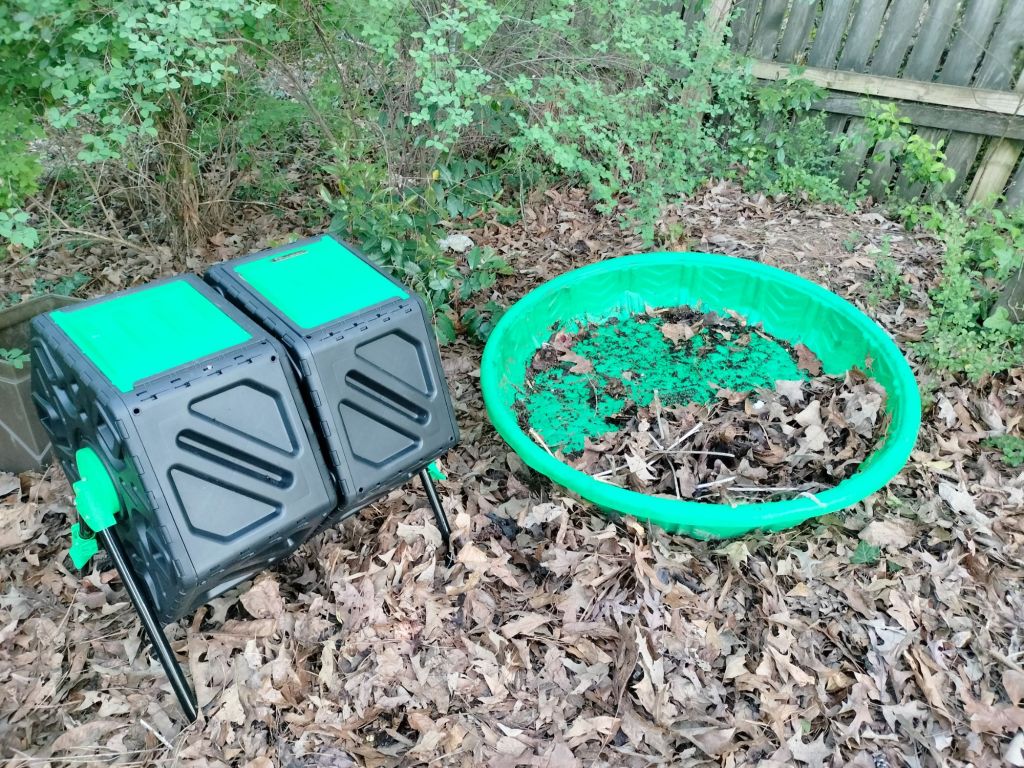
Both my new and old compost methods. Still using both.

As my mom would tell you, I would always put my scraps in the red Folgers jug she kept under the sink, but never really took any interest in gardening until after I got married and had a house of my own. Thanks to a steel compost pail and compost hut gifted from my in-laws, somehow I started the habit just like my mom if for nothing else than to keep food waste out of the trash can. Now it’s just like second nature for everyone in our house to recycle and compost. It’s just a way of life on our shady quarter acre lot. This year I am hoping to increase our compost yield by having bought a tumbler of my own and being more diligent to spin it (which takes the place of turning it in the swimming pool we had used exclusively) and process more so I can experiment with what can grow decently in the shade after some failed attempts in years’ past.

I tell this story just to say that it’s amazing how much we absorb from our “3rd teachers”. Those places we call home truly do shape us even if we can’t see it until decades later. My mom and grandmother never pressured me to continue on in their gardening footsteps, but whether I realized it or not there was always something noticeably peaceful and rewarding for them in the act of gardening and composting. To them, why would you not invest in these simple acts of beauty and stewardship in your daily life? The environment they prepared for me, even in very suburban settings, helped prepare me to desire a space like the farm that I could learn from as I teach alongside it. It helped me catch a vision for how the library and community center I work for can practice interdependence through our community gardening.

img202403261252013155714463786068158

Many of the girls in Maple Key are light years from where I was at at their age. Several compost and play in their own gardens or help their family plant things each year. They take me around their property before tutoring time and tell me stories about what grows where or what new plant they are trying out. They harvest basil for pesto and grow okra in the summer. They give me free plants. Of course some of them don’t garden but enjoy getting to indulge in it and work hard during our time on Tuesdays. They, like me, may never own a farm, but their many classrooms are teaching them valuable lessons on what it means to help something grow and tend it faithfully. This is a spiritual habit if there ever was one.

Have you ever stopped to consider what “environments” were your 3rd teachers? Particularly those things or spaces you perhaps unintentionally neglected but you can see with more clarity as you get older? I’d love to hear about it in the comments.

Faithful with Little

Towards the end of June we came home from our family vacation to see our blueberry bushes bursting with gorgeous blue fruit. While we were gone it rained considerably (we definitely needed it) so the berries were plump. We harvested them by the cup full.

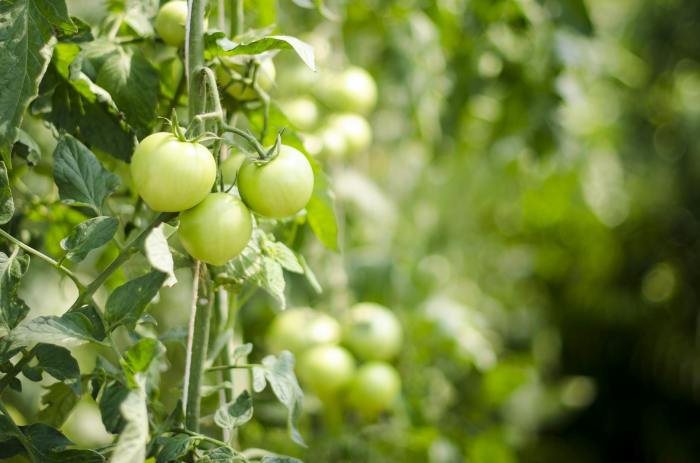
The basil still looked happy and I took some leaves for dinner’s pizza sauce and got a few orange Roma tomatoes to put in the windowsill to finish ripening before the bugs eat them. The potatoes we planted seemed to be holding steady.

As I walked around the yard, I was thankful for the small amount of produce we are able to grow in so much shade. The weeds barely grow, but most of the plants do only slightly better. This is unlike what I have been describing all year at the farm where the weeds outpace the plants but both grow abundantly with such rich soil and direct sunlight.

But I know my house is not a farm and so we do what we can with what we’ve got. Our blueberry bushes were given to us by some church friends as a housewarming present almost 16 years ago. Unless a late frost or drought nips them, they produce wonderfully all summer long. The other items (minus the potatoes) I buy as tiny seedlings every year from a local produce stand and plant in a raised bed.

Honestly, it’s nice to take a break from a lot of heavy, hot work that the farm requires. Long experience with my dreadful yard soil tells me that it is impossible to recreate the farm magic at my house anyway, so I have learned to be faithful with what does work and enjoy it. Having a small amount of things you can tend faithfully is a blessing in its own right — it helps remind you of your finitude.

And yet I acknowledge I struggle with that concept. I want to taste it all which means I can take on too much too quickly. It means my husband and kids have to put up with my always having a full plate to care for our family and community. But I truly believe that learning to live with limitations is the first step toward true contentment. I am not meant to do and be it all, but my community can also help encourage me to be faithful with little.

Bushhogging Your Writing

If you’ve never been exposed to the verb bushhoggin’ (which spellcheck says is not actually a verb), it’s a great one, useful as a metaphor for so many scenarios in life.

The word actually came from two words “brush” and “hog” because of the nature of the machine — a tractor attachment that whacks big or stubborn plants like small trees and bushes down by sheer force of a dull rotary blade. To be clear, it’s not a tiller which has sharp blades to disrupt the soil and dig it all up. It is said that a farmer noted the machine worked like a “hog eating brush” and the rest is history.

Jill, the farm manager, has had her neighbor come bushhog our garden area twice before and we got to see it in full action for the spring. She said it’s about time for a summer cleanse against all the pigweed that is growing way too fast. I tell her it’s hard to see the crops get demolished.

The backstory… When I got to the farm this week, I was so overwhelmed by how bad the weeds had gotten in just 3 weeks since we left school. With no one to really help me, I just did what I could, but it still seemed like it was just a jungle of mess — a cluttered room of grass, pigweed, clover, random flowers, fire ant hills. This was the exact opposite of what I experienced in the fall with virtually no weeds to contend with. Ultimately, it seemed that the only logical option was to knock it all down so the plants could decompose (i.e. self-compost) on the land to be ready to plant in August.

But truthfully, I didn’t want it to be bushhogged. I just wanted the monstrous weeds to go away so I could hold on to all the hours of work we put into the kale crops. There are still so many greens that are viable in including some basil near the potatoes and various lettuces scattered about. The okra also has sort of popped up in between the strawberries. I just want to keep bits and pieces of the garden going, but that’s not how a bushhogger works. It’s a HUGE attachment, so it’s more like an all or nothing proposition. If I want a better crop in fall, I have to let go of the work that has been done that is not as fresh or organized as it once was.

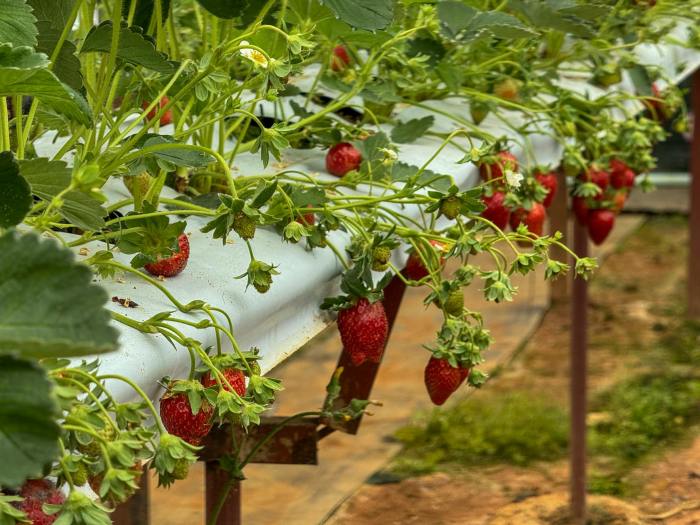
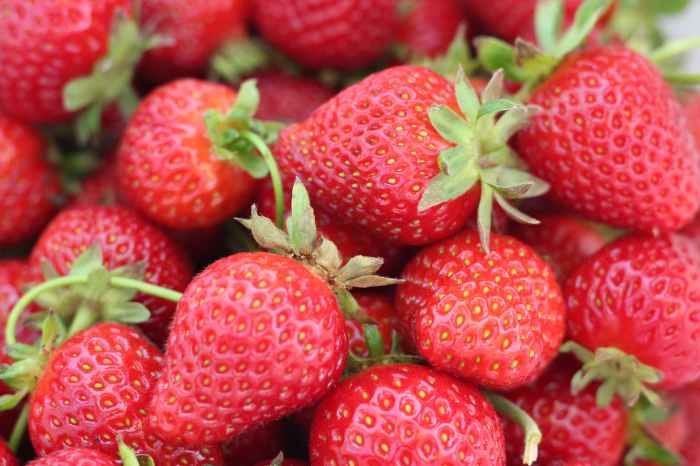
Part of this “letting go” work meant relocating the fruiting strawberry plants we cared for so meticulously during the year. I salvaged what ripe berries I could to eat and had to say goodbye to the rest of the small white ones. My daughter and I dug them up after we located each plant in the middle of all the weeds. We then snipped all the runners and replanted them safely in a raised bed Jill donated to us. It took about 2 exhausting hours from wedging the plants out of the garden to watering them generously in their bed at the end. Now, even if they can’t produce anymore fruit this season, they can safely grow next year for my students to eat and tend and perhaps for nature journaling for the students at Ingleside (who use the farm before we get there in the afternoon).

I was telling a close college friend about having to say goodbye to the garden and we started discussing how bushhogging can be like the writing process. You have to be willing to knock down the labor you have already put in if it no longer serves your purpose or it’s got too many weeds. You may have to move your words to a new bed. It’s painful to see the words and imagery get deleted, moved, rearranged, saved for another piece in the future. Bushhogging your words means you will have to do some hard aspects of writing and revising all again.

However, there is a silver lining for both the garden and writing: having the plants decompose doesn’t meant they just die. Rather, through the plants you’re actually enriching the soil for the next go round. As I mentioned in a previous post, the garden already has magic dirt so the plants, through decomposition, are giving back the nitrogen and all the other goodness the soil already provided the plant. When you understand that bushhogging is not a zero sum game, but rather part of the process of enrichment and discipline it’s less heartbreaking and more like a tool to help increase your ability to write better.

But…next year, I also plan to be more proactive in staying on top of the weeds with some new strategies and more help. Learn as you are going, I say!